I Don't Like Flowers. Can I Still Have a Garden?

If you saw the story on the Garfield Park Conservatory City Garden in Chicago, you couldn’t have failed to notice the riot of spring flowers erupting at every turn. 

Flowers are all around us; helping plants (and people!) get their groove on.

I remember being sent two dozen new season peonies once, by a lovely man who looked exactly like Daniel Craig in Casino Royale.  Actually, no, that never happened. Focus, Landscapology.

But what happens if you’re not that keen on flowers?

I don’t mean if you have sinus-shattering allergies, or you break out in hives if you come within cooee of a chrysanthemum. I mean what if you just plain don’t like ‘em, can’t stand ‘em, and don’t want them in your park or garden?

Does it mean you’re a bad person, willfully denying yourself and others oceans of horticultural pleasure? 

No, of course not!

What is does mean though, is that you’ll have to be a whole lot more selective when choosing plants.

There are two types of plants available to you.

The first are the true non-flowering ones. Whilst nearly all plants use flowers to help them beget more plants, some ancient plant families do not use flower power at all.

Mosses are flowerless plants that are incredibly beautiful, but often overlooked. Worse, they are sometimes dismissed as undesirable, and blasted out of their quiet lives in wall and paving joints, or under trees. I have quite a thing for moss, and can't resist patting its velvety verdure whenever given the chance. If mosses thrive where you are, why not embrace their delicate beauty.
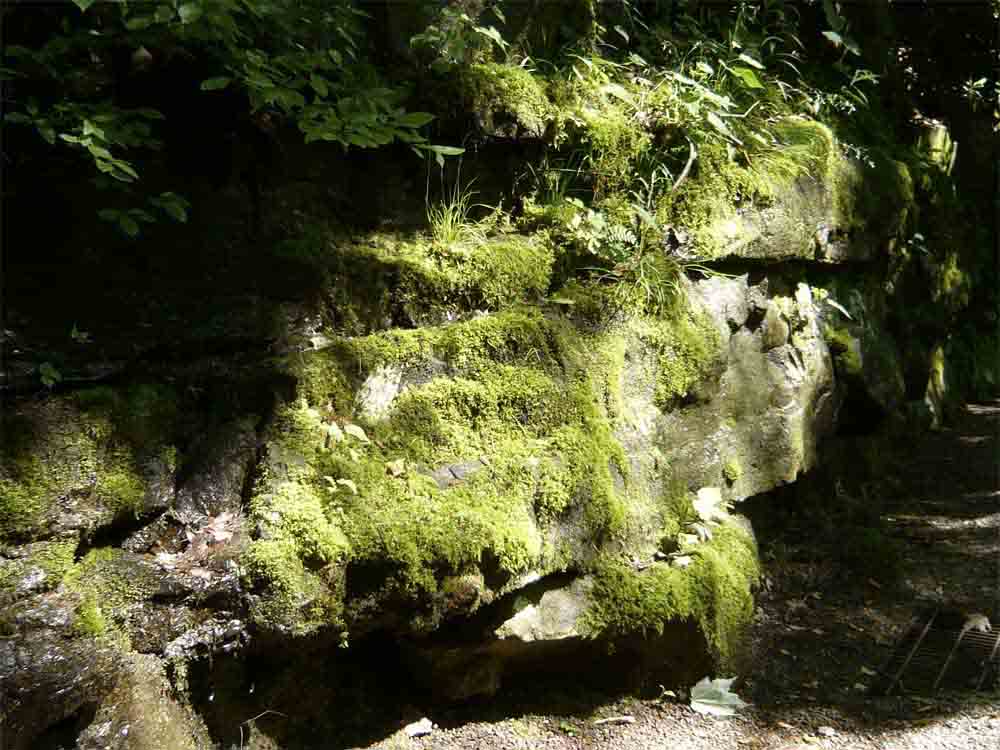
The original 'green wall': moss cascades down a rock face at Fallingwater in Pennsylvania.

The original 'green wall': moss cascades down a rock face at Fallingwater in Pennsylvania.

Delicate filaments catch the light on top of this wall at the Medellin Botanic Gardens.

Delicate filaments catch the light on top of this wall at the Medellin Botanic Gardens.

Like mosses, ferns do not have flowers, but reproduce using spores.
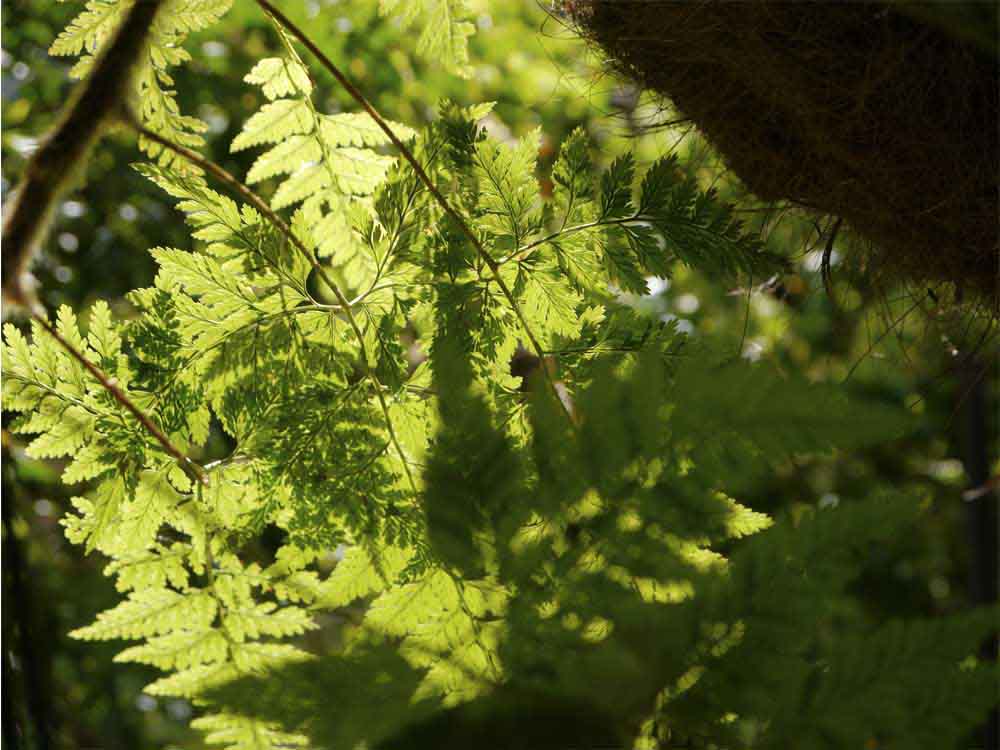
From the delicate fronds of this hanging fern...

From the delicate fronds of this hanging fern...

...to the tough leaves of the birds nest.

...to the tough leaves of the birds nest.

Conifers are also plants that do not have flowers. In Australia, the kauri, huon, hoop and bunya pines are just a few of the conifers that reproduce using seeds rather than flowers.

The unmistakable form of the mighty Bunya Pine.

The unmistakable form of the mighty Bunya Pine.

The second type of plants increases the options considerably, but may not be strictly by-the-book for the botanical and horticultural purists amongst us. Just so you know.

Included here are those that produce very insignificant flowers, flowers that ‘don’t look like flowers’, or those that flower incredibly infrequently.

The following represents just a tiny selection of plants in this category.

Palms are grown for their foliage rather than their tiny flowers. When they do get around to it, some palms also bloom only once, at the end of their lives. 
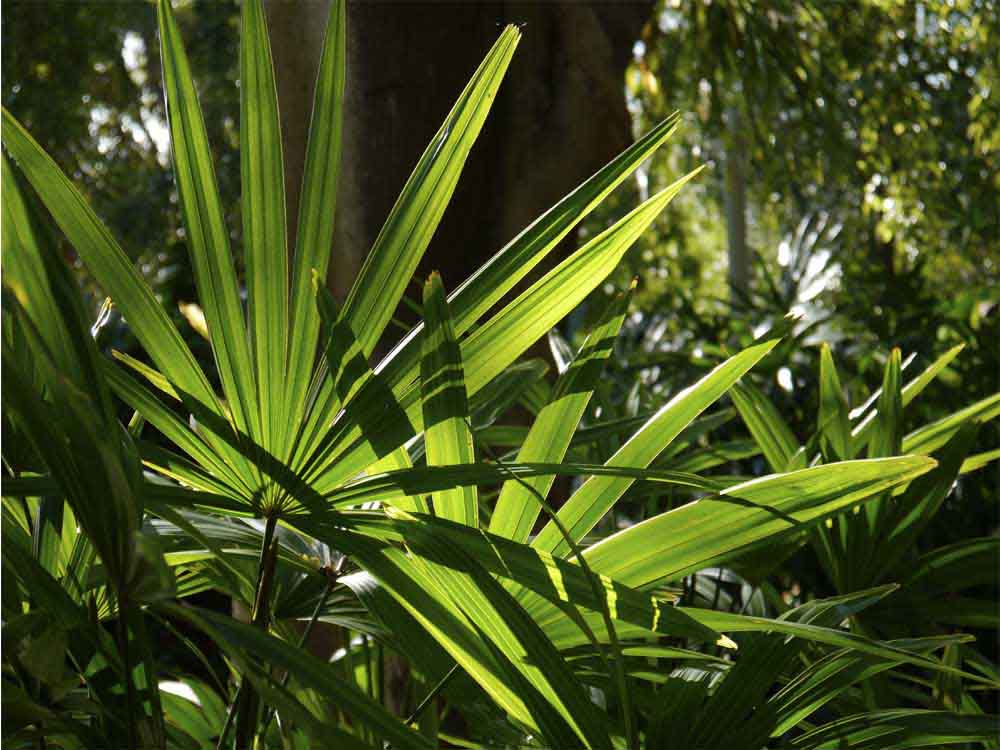
Grasses have fine foliage in a range of colours and textures, and many have feathery flowers that ‘don’t look like flowers’, helping you get around your self-imposed flower ban.

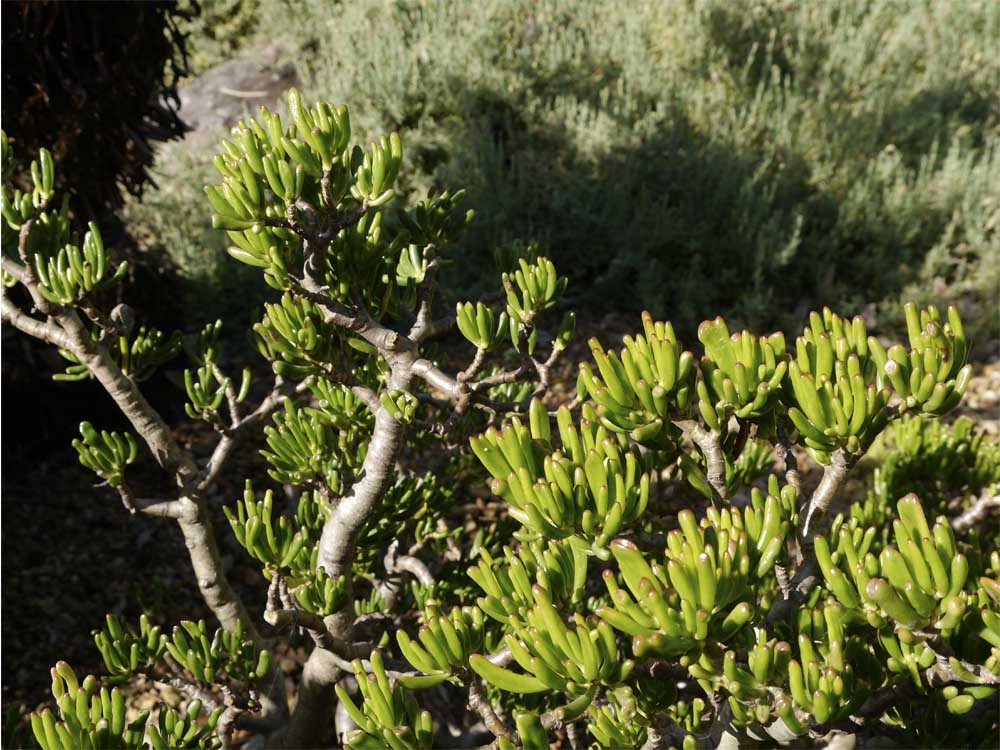
Many succulents have tiny flowers, or a very short bloom time. (Some are totally OTT though, so choose carefully). 
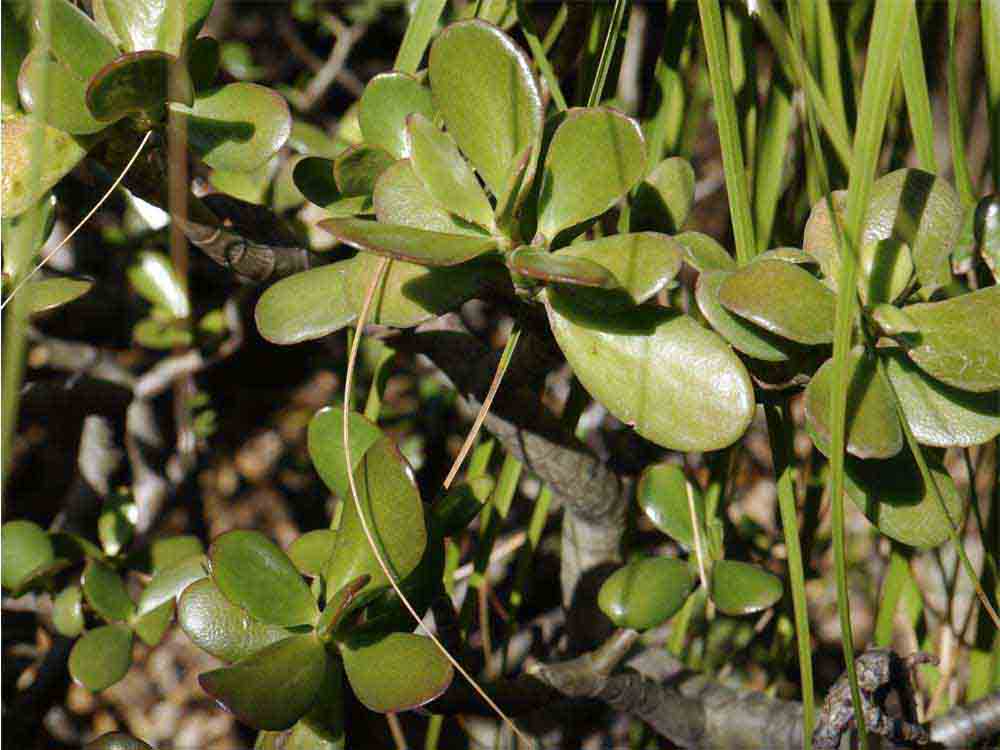
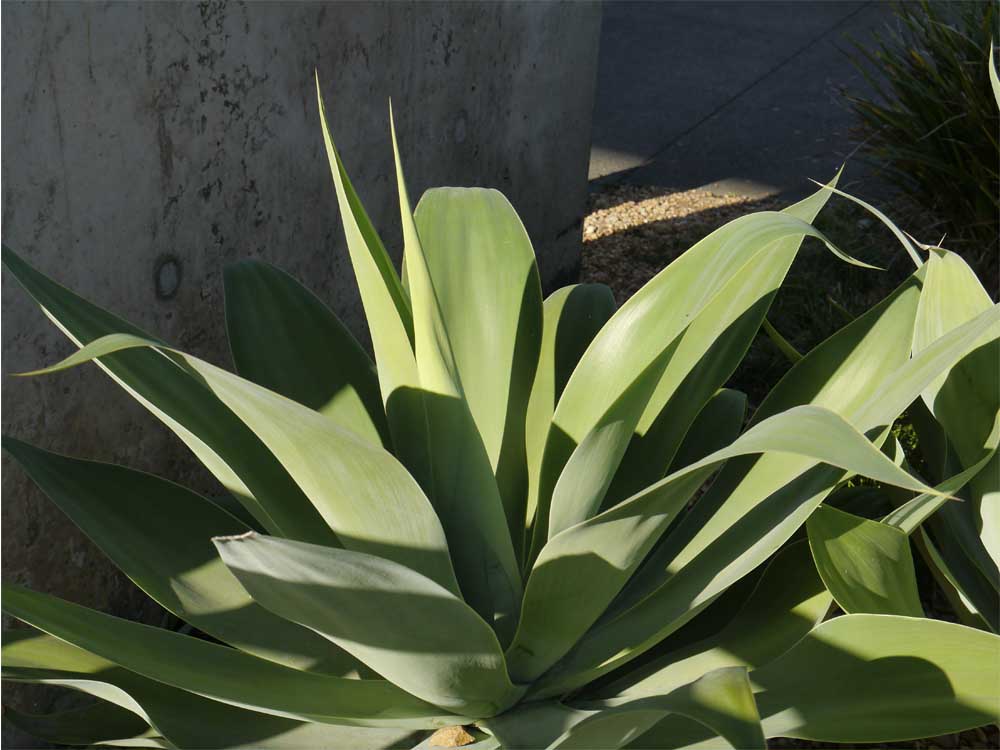
Agaves are succulents that grow for years and flower but once, in a spectacular vertical eruption that is not for the faint-hearted. Following this the plant dies. Until then they are sculptural, hardy, and flower-free. 
Culinary herbs all produce flowers. During the growing season we usually want to encourage the production of more aromatic foliage by pinching out any flower buds as they emerge. At the end of the season you can avert your eyes, let the plants flower, then look back in time for them to go to seed and pop off the twig. 

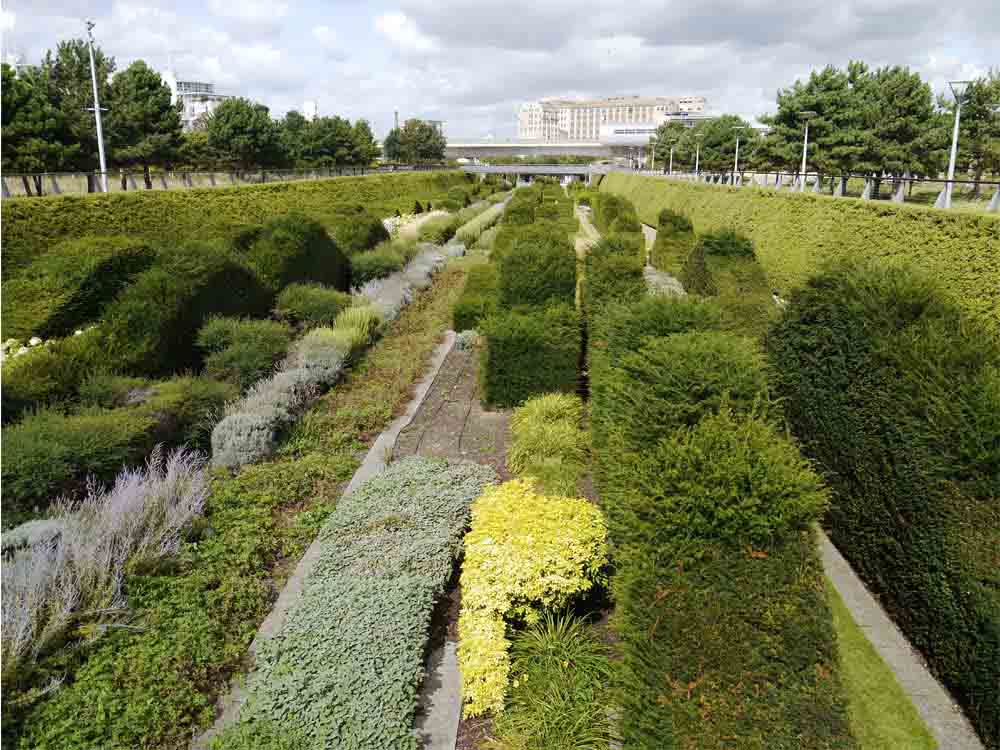
Finally, the composition of different types of foliage plants can produce incredible results. Tightly clipped hedges form the structure of the Green Dock at Thames Barrier Park. Whilst some flowering plants do make an appearance, it is the grasses and foliage plants of many forms and colours that are the main attraction. 
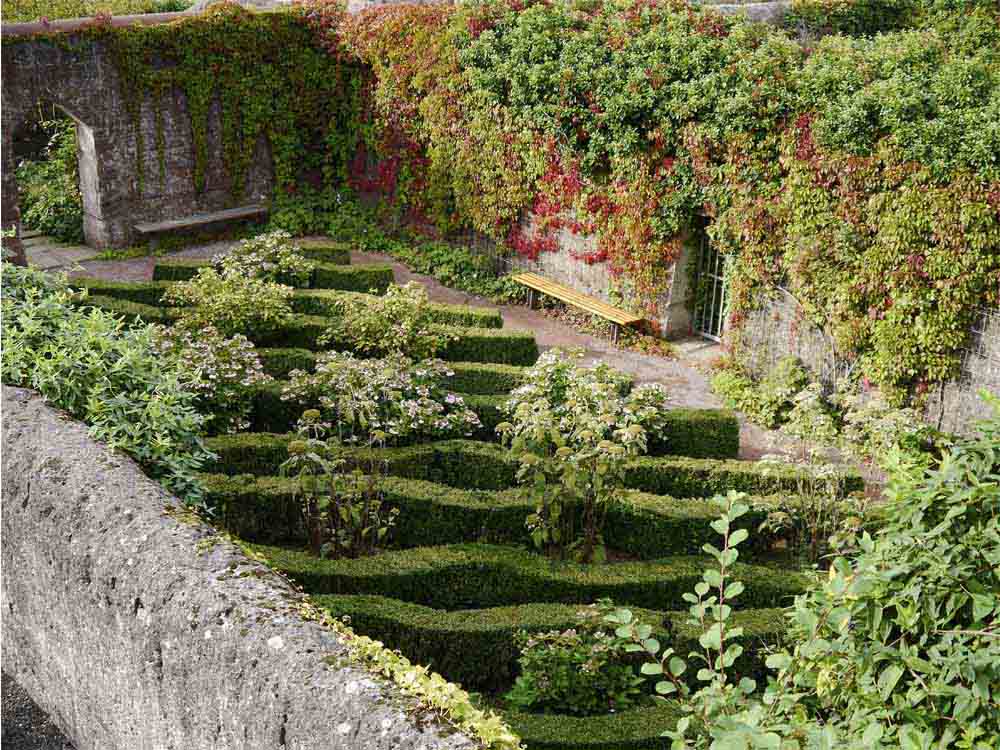
Similarly at Landschaftspark Duisburg Nord, hedges form an important part of this garden, but so do the rampant climbers displaying their look-at-me seasonal colour change. 
But you know better than me!

Wherever you are in Australia or around the world, what plants would you suggest for our anti-flower friends out there? If you're a flower-averse reader we'd love to hear from you too!

Share the love in the comments section. Of course if you know someone else who’d enjoy this story, be sure to pass it along, and to check back soon for more landscape inspiration.

A Park with Great Ideas for Home Gardens

Most designers, art lovers and recent visitors to Chicago will be familiar with Millennium Park.

A special project of former mayor Richard M. Daley, Millennium Park converted a vast lakefront railyard into a spectacular public parkland. Leading architects, artists and landscape architects including Frank Gehry, Anish Kapoor and Kathryn Gustafson were amongst those involved in bringing Daley’s Millennium Park vision to reality.

Less well known today is Garfield Park. Located in Chicago’s west side, it was opened in 1874, one of three great western parks and pleasure grounds built for this part of the city.

Jens Jensen, acknowledged as the pioneer of prairie-style landscape architecture, (yep, landscape's Frank Lloyd Wright) was superintendent of the western parks system, implementing many significant architectural and landscape projects at Garfield Park.

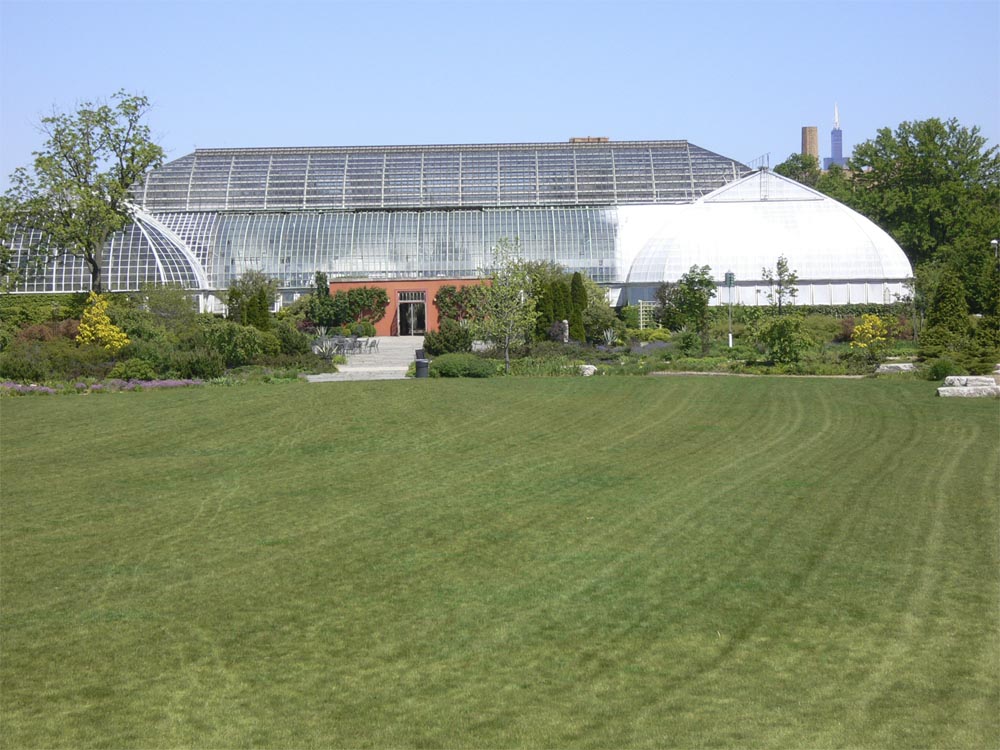
The focal point of the park is the Conservatory, particularly the ornate and popular Palm Room. One of the largest in the United States, the conservatory encloses over 18,200m2. It's a lovely place to take a turn around, and I can imagine it being quite the destination in its day.

Sadly, a 2011 hailstorm damaged large sections of glass in the display and production greenhouses, and repairs to some parts of the buildings are still underway. 

Behind the conservatory lies a new park.

The City Garden aims to provide additional parkland and green linkages in this park of the city.

The central organizing element is a large lawn. Its elliptical shape is a tip of the hat to a shape that Jens Jensen once used to define spaces within Garfield Park.

Beginning the journey around the great lawn.

A large landform wraps around one edge of the lawn. From its summit, the dramatic Chicago skyline is visible in the distance.

The lawn tilts up into an encircling landform.

The lawn tilts up into an encircling landform.

The 442 metre, 108 storey Willis Tower, (the artist formerly known as the Sears Tower) can be seen above the Palm House.

The 442 metre, 108 storey Willis Tower, (the artist formerly known as the Sears Tower) can be seen above the Palm House.

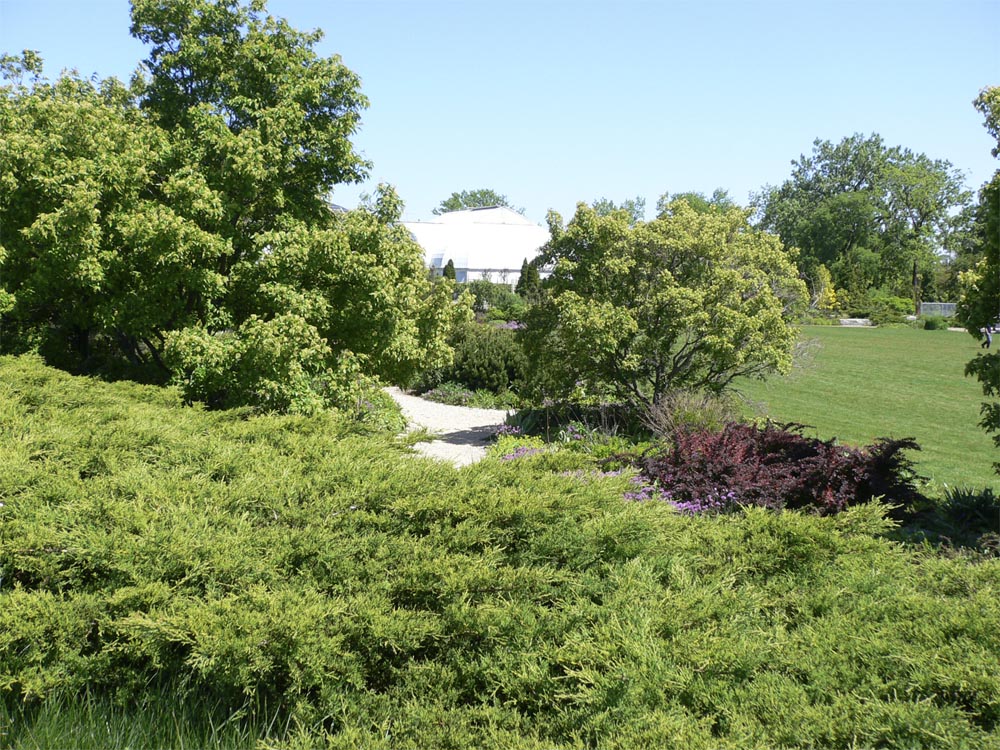
Different plant communities thrive in the varying conditions – shady and protected, sunny and exposed, flat or sloping. They enclose the lawn, frame the Palm House and shield the working conservatories. 

Small paths weave their way through the planting, like streams braiding their way to the lake.

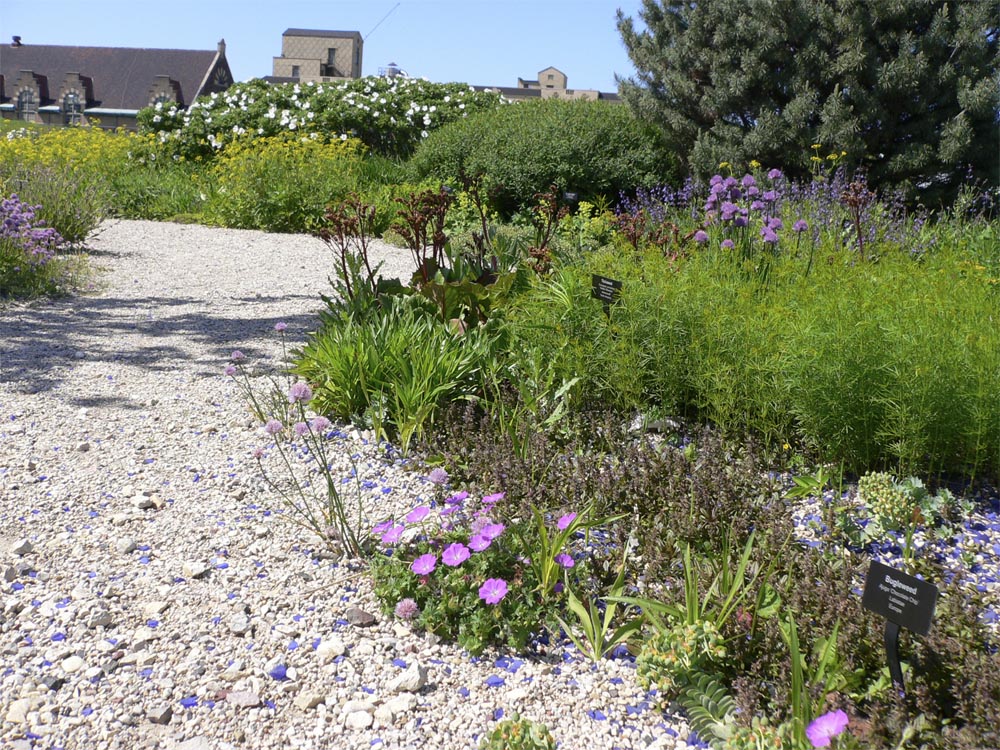
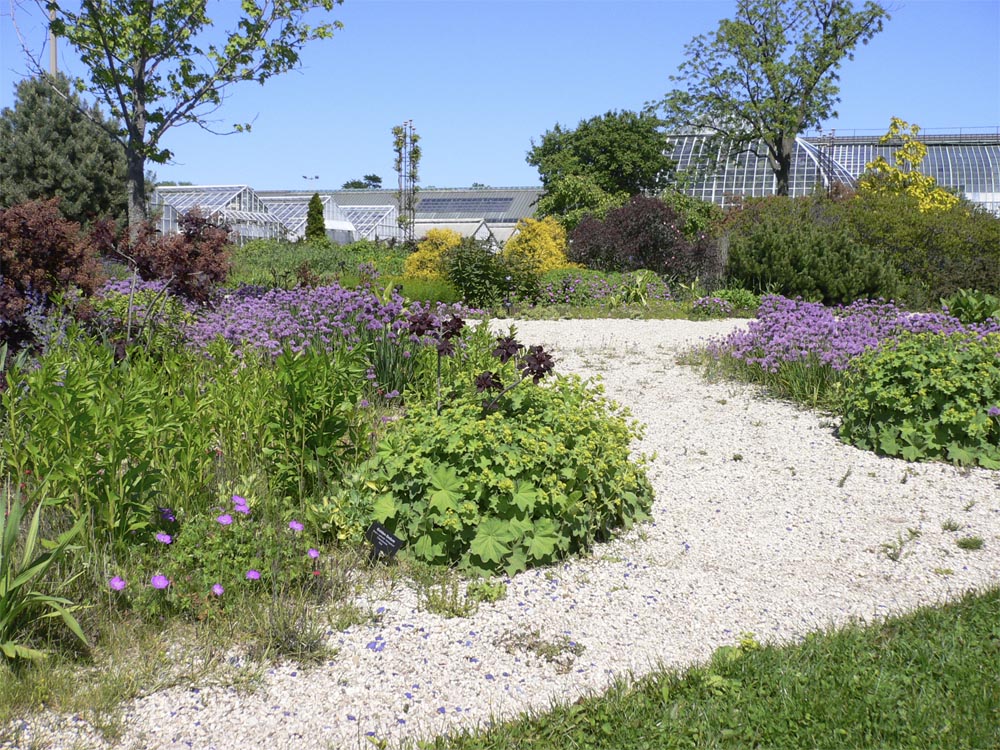
A gravel garden allows you to steps off the paths altogether. Here, the entire ground surface is gravel, interspersed with flecks of blue glass. Plants that tolerate hot, dry environments take centre stage. Oh my hat, don't they look spectacular in the summer sun.

A lily pond, empty for cleaning and maintenance when I visited, is off to the side, and traversed by a bridge.

The bridge continues the curve of the great lawn.

The bridge continues the curve of the great lawn.

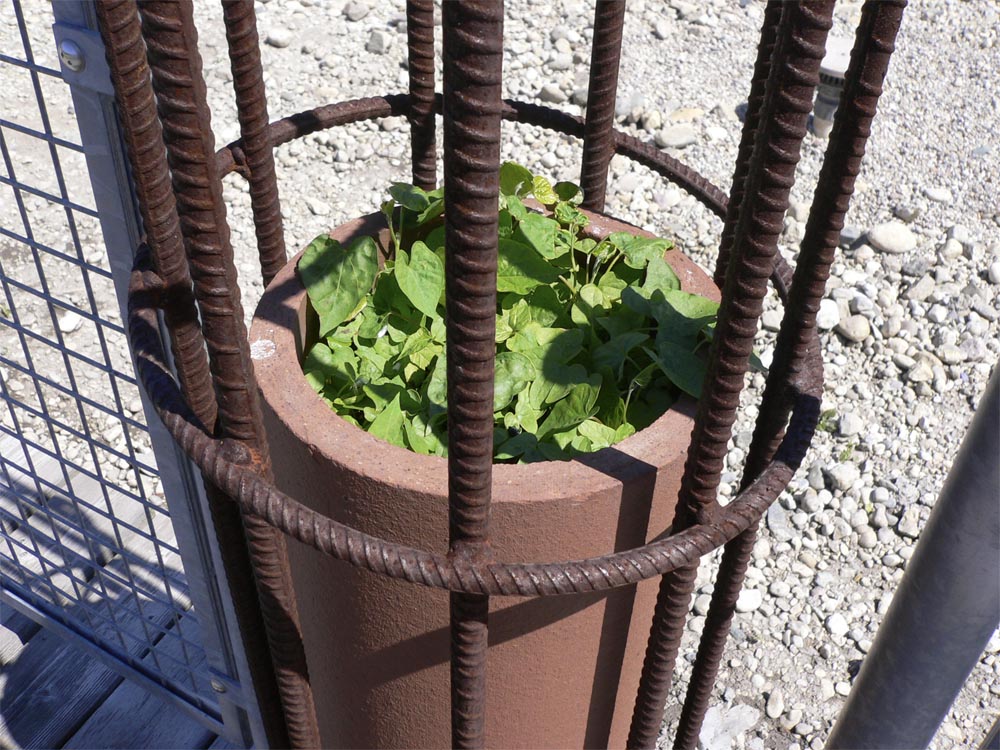
Details on the bridge are repeated elsewhere, particularly those using reinforcing steel as columns to support plants and climbers. I love the way the endcaps on the reo towers almost seem to reference details from Frank Lloyd Wright Midway Gardens, another great Chicago landscape, now sadly lost.

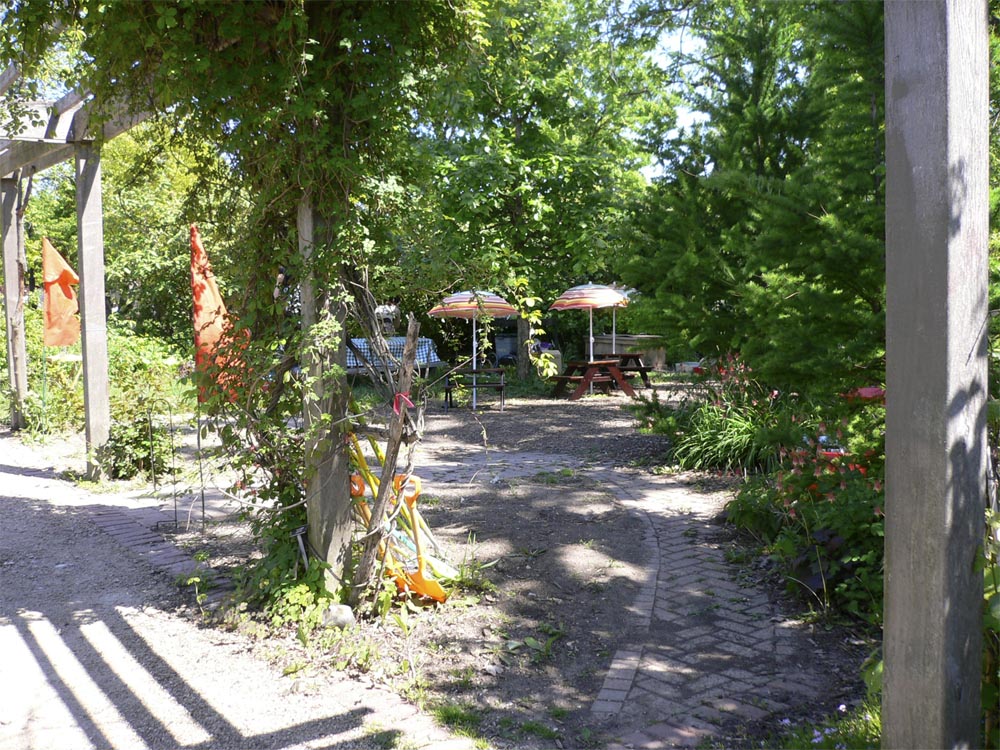
Heading back to the great glass conservatory you pass by a childrens’ garden, rows of tiny plastic shovels at the ready. 

Finally, there is a great bluestone terrace, looking out over the entire landscape.

The big Chicago sky sits above the big green lawn. Yet strolling the City Garden allows the beauty of every individual plant to be experienced up close.

What do you think?

What aspects of the City Garden would you consider using in other parks and gardens? Could the gravel garden be created using crushed recycled concrete instead? Would you consider using the reinforcing cages as sculptural plant supports? And what about the idea of using different types of pathways to encourage different ways of moving through the garden?

I’d love you to leave a comment below letting me know.

If you know someone who’d enjoy reading this article be sure to share it, and check back soon to visit another Great Park.


Garfield Park Conservatory and City Garden is located at 300 North Central Park Avenue,
Chicago. Read more about the park’s history, activities, events, how to get there, and ways to be involved in the conservancy at the Garfield Park Conservatory website.

The City Garden was designed by Hoerr Schaudt.


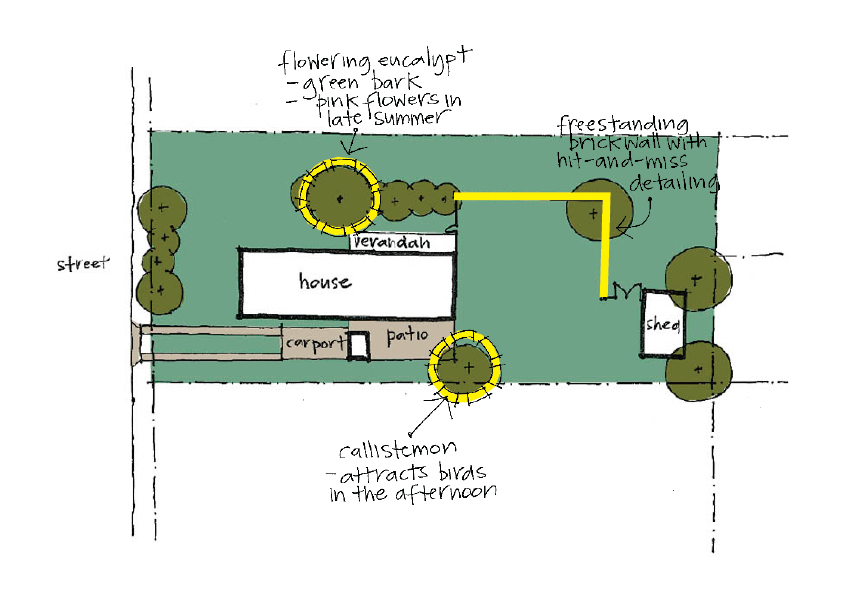
Design Class: 5 more site conditions to look for before designing

In our last Design Class we introduced  5 things to be on the lookout for in your garden or landscape: Orientation, Noise, Privacy, Drainage, and Access and Movement.  Observing how these things work gives a solid foundation to begin design work. This week we're going to add 5 additional things that are helpful to understand.

6.  Gradients and slopes

You’ll know if your block or your garden is sloping.  It’s also useful to know which direction it slopes, where the high points are, and if the slope is even or varied.  

7.  Existing vegetation

What is already there, where is it, and what condition is it in?  You can do this exercise for all vegetation, including trees, shrubs, groundcovers and climbers. Are there plants that change with the seasons, or have distinctive form, foliage, colour, scent, texture or flowers? 

8. Soil conditions

Even without carrying out a pH test you’ll have some idea about the condition of your site soil based on what’s growing successfully in your garden and nearby.  Similarly, looking at building sites or excavations in the area, and chatting to neighbours, is a good way of understanding the basic local geology before your engineer orders a geotechnical investigation. 

9. Services and utilities

Apart from overhead power lines, you mightn’t know exactly where service lines occur, but there are often tell-tale clues to their existence.  Manhole covers in the street or footpath outside your property are a clue to the presence of underground services.  Drains and pits often signify underground stormwater or sewer services.

10.  Special highlights

Are there any treasured parts of the garden that either work really well now, or have great personal value, such as a plant grown from one in your mother’s garden, a beautiful architectural element, or a favourite piece of sculpture?  

In future posts we will start looking at different ways you could respond to the findings of your site analysis. This is where it gets interesting, as two people might agree that a site has the same characteristics, but feel that different responses are required. That's where design comes in!

Now it’s over to you.

Has this exercise encouraged you to look at familiar scenes in a new way? It's only natural that if you find delight in chasing sunny spots in your garden, you may not have even noticed that some of the access points are a bit awkward, or that some garden areas don't drain very well.

Let me know in the comments section.

Of course, if you found this interesting and useful, why not double the fun and share it with a friend. 

Delight: mystery beach structure

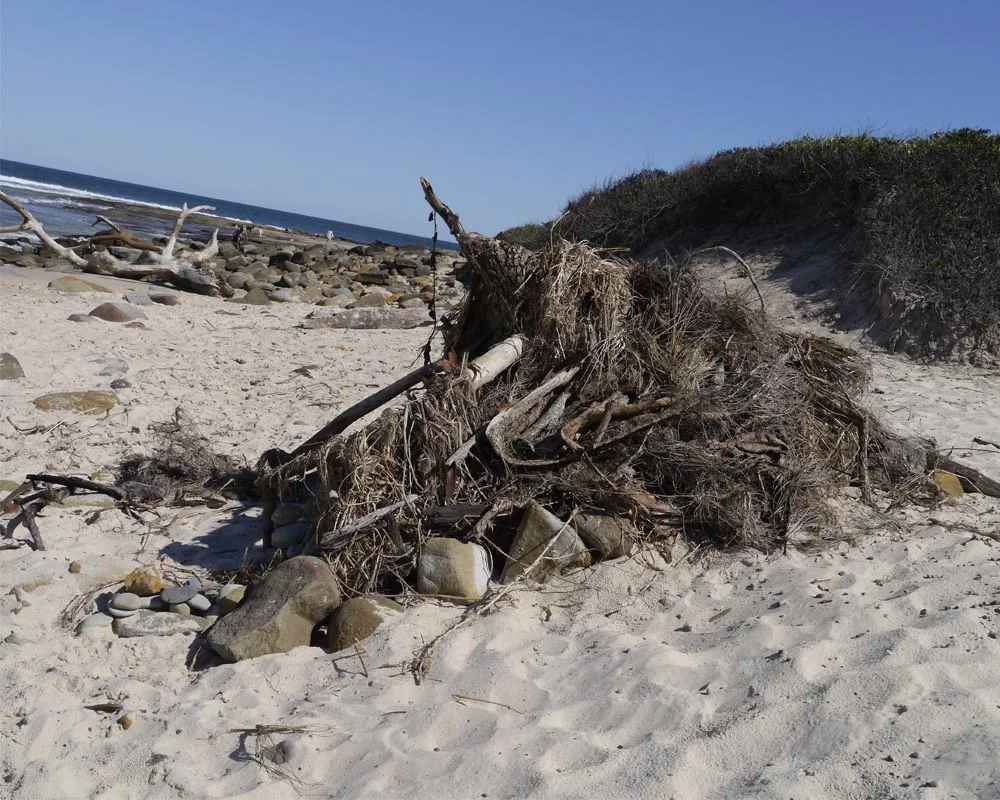
This week's Delight takes us to the sea side. We are off to Yamba, a town with a truly spectacular coastal setting in northern New South Wales.

In November last year, this intriguing structure was seen at the southern end of Pippi Beach.

Is it a shelter? A play structure? A den of iniquity for unsavoury practices? 

Does it really matter? I think not. Isn't it lovely though...

How I Visited Colombia and Ended Up With a Book Deal

Remember what you were doing on the 8th of June 2008?

I was leaving Colombia, having visited Bogota (the capital), Medellin (the city you’ve seen on the news), and Bucaramanga (the city you may never have heard of, high in the mountains).

My visit to this fascinating country was possible because I’d been fortunate to win a travel bursary, awarded by the Centre for Subtropical Design here in Brisbane.

In my bursary application I'd proposed visiting Medellin, a city that had been brought to its knees by cocaine, but was fighting back with a determined vision to re-engage its people with their hometown.

A public transport system of metro, buses and cable cars was in place. New public parks and plazas had been built all across the city: high quality, well-designed places, nearly all paired with public buildings such as libraries, museums, council offices and schools.

The Orchideorama, at the Medellin Botanic Gardens

The Orchideorama, at the Medellin Botanic Gardens

Plaza de Cisneros (known also as Plaza de las Luces or Plaza de la Luz- Light Plaza) with the EPM Library in the background.

Plaza de Cisneros (known also as Plaza de las Luces or Plaza de la Luz- Light Plaza) with the EPM Library in the background.

In Medellin, parks were being used as agents of social change.

Bucaramanga was different. I wanted to visit Parque del Agua, a public park built by the local water authority on its grounds. The water treatment plant had operated here for many years, with locals using the land around as an informal park.  This eventually stopped as the plant grew, and the authority moved its headquarters into town.
 In 2001, the manager moved his operations back to the original site, and with support from the mayor, proposed a public park for the site.

Administrative and treatment functions are co-located with public parkland at the Parque del Agua.

Administrative and treatment functions are co-located with public parkland at the Parque del Agua.

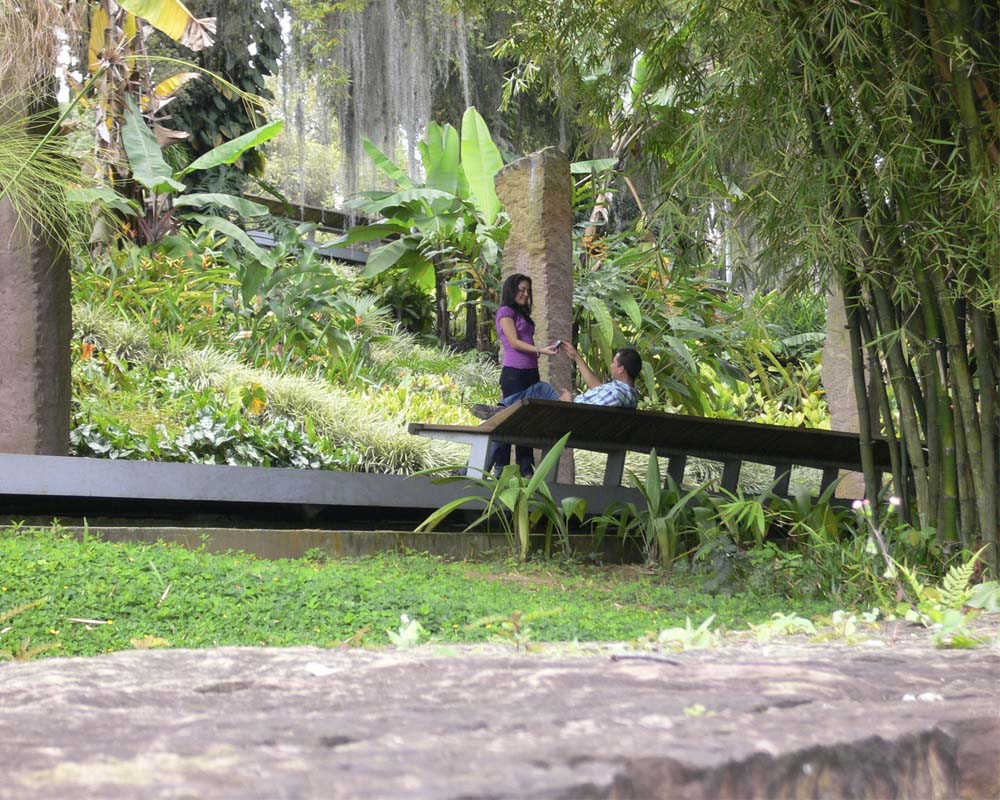
The park is lush, cool, and incredibly popular.

The park is lush, cool, and incredibly popular.

In Bucaramanga, Parque del Agua showed one way to co-locate a park with another public utility.

From Colombia I travelled to the United States, where I'd arranged to meet with Friends of the High Line.  At the time, work had just begun on transforming the disused, elevated rail line into a park, but there was already a buzz about the project.

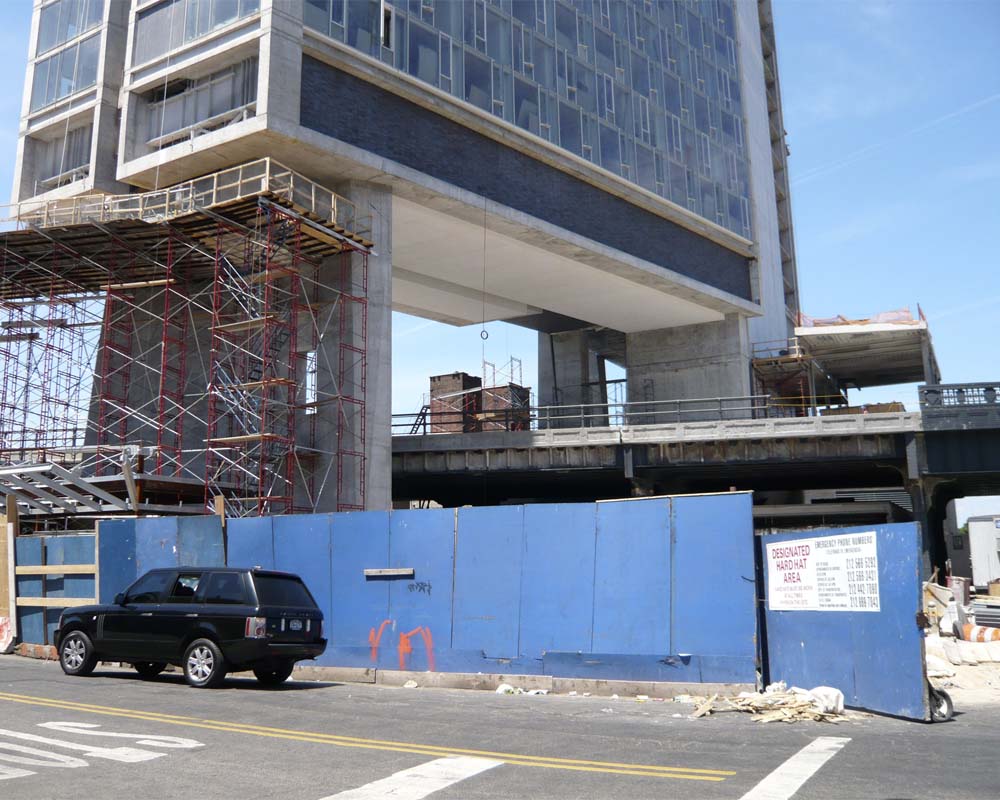
Renovating the structure of the High Line in 2008, prior to its reinvention as a park. The Standard Hotel is under construction over and above the rail line.

Renovating the structure of the High Line in 2008, prior to its reinvention as a park. The Standard Hotel is under construction over and above the rail line.

The same section of the High Line in 2010, a year after opening. The Standard had also enjoyed its first year of encouraging guests to wear robes when standing adjacent the full height windows, lest they startle park strollers below.

The same section of the High Line in 2010, a year after opening. The Standard had also enjoyed its first year of encouraging guests to wear robes when standing adjacent the full height windows, lest they startle park strollers below.

In New York, the High Line was showing how a park could link and reveal previously disconnected places.

From each of these places the germ of an idea was born.

On my return to Australia I was interviewed for ABC Radio's long-running weekly radio show, By Design. And that interview was heard by the fabulous Mr Ted Hamilton at CSIRO Publishing, who presented me with an opportunity to develop my fledgling ideas into a book.

Three years later I had visited many more inspiring parks, and read about the work of visionary designers, researchers, artists, managers, governments and communities around the world.  All of them had the courage to address the urban challenges they were facing, and to think differently about the ways public parks and people places could provide solutions.

It's been a long time coming, but finally, this week, Future Park: imagining tomorrow's urban parks has left home to be printed.

One of the hardest things has been stopping: with new, creative approaches to making city parks emerging every week, it’s been a constant temptation to include ‘just one more’.  Now, when I find projects that look interesting and relevant I share them on Twitter.

One of the most amazing things has been the encouragement and contributions of so many brilliant people.  There may just be one person tapping at the keyboard, but the human infrastructure supporting this project has been extraordinary. In particular, I had the extreme pleasure to collaborate with Nicole Phillips as my book designer.  When you see how great the final product looks, I think you'll agree that she has done a damn fine job.  It’s a cliché to say it wouldn’t have happened without all of you, but it’s true nonetheless.

So there you have it.  For everyone who has asked how it all came about…now you know!

There’s usually only one final question - now what?

The book is due for release in September.  If you’re in Brisbane, there’s going to be a launch event at Avid Reader bookstore in West End on Wednesday, 25th September. 

Come along and say hi!

Design Class: make analysis your friend

Have you ever had a designer ask if you’ve done any analysis?

Has it given you pause for concern, wondering if the headscarf and Jackie O sunnies you’ve been wearing to your therapy appointments are not proving such a great disguise after all? 

Fear not.

The type of analysis we’re talking about will leave your darkest thoughts blissfully unprodded, whilst helping you clearly and methodically understand what’s going on in your own back yard.

Site Analysis

A site analysis is best undertaken before starting any design work. Your designer should carry out her own analysis, based on research and observations on site.

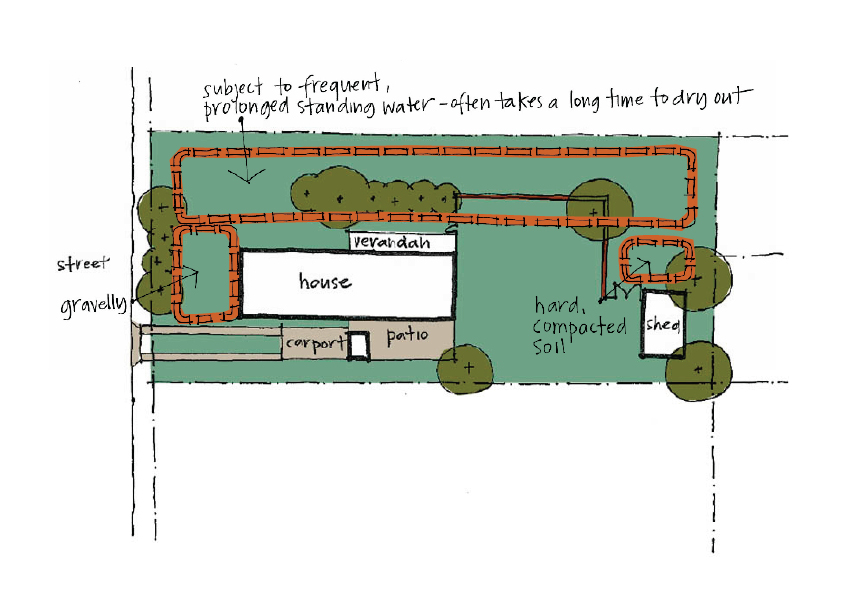
You’re carrying out your own site analysis when you notice things that occur at different parts of the garden, at different times of day or year.  All of these observations can be compiled onto one or more site analysis diagrams.  We'll start with a simple plan that shows the location of your house on its site: 

Here are 5 things to consider when analysing your site: 

1.  Orientation

We’ve discussed Orientation in an earlier Design 101 post, so check in here to learn why it’s important to know where the sun rises and sets in relation to your place. 

2.  Noise

Whether it’s the teenage drum champion next door or the birdsong from the trees up the road, it’s useful to understand the source of both welcome and unwelcome sounds. 

3.  Views and Privacy

Who can see you, and who can you see from different parts of your property?  Where are there great views? 

4.  Drainage

What happened in the last big downpour? Where did the water go? Did it flow freely and soak away quickly, or did it pond in one place for ages? 

Landscapology_Analysis7.jpg

5.  Access and movement

Are there some parts of your garden you never use (or maintain) because it’s just too hard to get there? What about the connections between important destinations, like the house or street?  Where do different types of movement intersect: vehicles, pedestrians, bicycles? How about fencing: are there fences and gates, and who or what are they protecting - kids in? cars out? pets in?

In our next Design 101 we will complete our Top 10 things to analyse on your site before starting design. We will spend more time in future posts looking at different ways you could respond to your findings. Everyone’s response will be different, but the important thing is to start with a clear understanding of what physical conditions you have to work with on your particular site.

Now it’s over to you.

Look at your garden (or house, or room, or park) again with fresh eyes, and quickly run through these first 5 points of analysis.  How many of these items are things you’ve always been aware of, without describing what you were doing as a site analysis?  How many other things have you just noticed, even though they were there all along.

Let me know in the comments section.

Of course, if you found this interesting and useful, why not double the fun and share it with a friend.