
The delights of Perth City Farm.
Read moreQueensland Architecture Awards
It was an honour to receive the Hayes & Scott Award for Small Project Architecture.
Read moreDesign Class: The Secret to Successful Garden Steps
Two things to consider when planning steps for your garden.
Read moreA Real Jewel in the Crown
10 Hectares of Remnant Bushland at Government House

Government House, or Fernberg, was built 150 years ago, one of the first houses in the Paddington area. In the 1860s it was converted into a grand Italianate mansion, by local architect Richard Gailey. Over the years Fernberg has been extended, and outbuildings added, including stables, guard houses, sheds and pavilions...providing a neat little time capsule of architectural styles.

Fernberg’s grounds cover 14 hectares, and many Brisbaneites are familiar with its presence high above Fernberg Road.

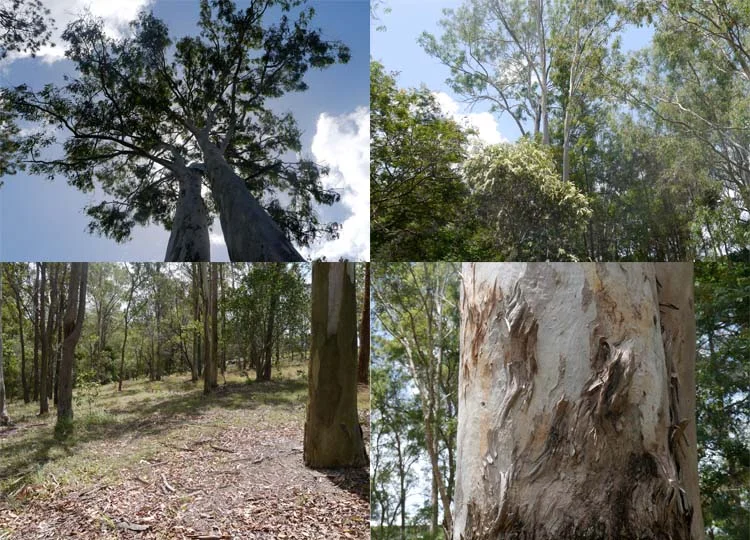
Less well known is that two-thirds of the property is preserved remnant bushland.
Like the entire property, the bushland portion sits over a very shallow layer of soil, with rock below. It is steeply sloping, with a number of gullies.
In the 1920s a number of unsealed ‘Woodland Walks’ were constructed through the grounds. The 250 metre long ‘Jubilee Walk’ was constructed during the term of the current Governor.


Several tree families are commonly found, including Ironbarks (Eucalyptus siderophloia), Spotted Gums (Corymbia citriodora subsp. variegata), Forest Red Gums (Eucalyptus tereticornis), and Brush Box (Lophostemon confertus).
The Jubilee Walk links a pair of ponds constructed in the 1990s as examples of the ‘bush style’ of Australian gardening. They were intended to reflect an awareness of ecological and environmental issues, and they provide habitat for a variety of native animals.

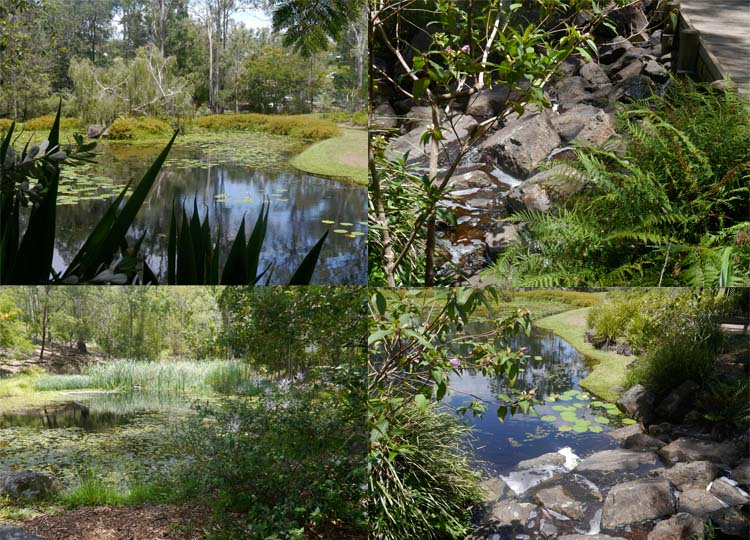
As the walk takes you closer back to the house more constructed elements appear, including stone retaining walls.

From there it is into the formal gardens, which we will visit in another story soon.
Government House is at 168 Fernberg Road, Paddington. Details of Open House and Garden days are posted on the website, along with more information about the history of Fernberg.
Grounds: Cafe Gardens & Garden Cafes
Engine Room Cafe
With a long weekend coming up, it’s time to start planning the all-important city exodus. Why not turn your thoughts to a scenic trip through the Lockyer Valley and up over the range to Toowoomba?
Beat the Carnival of Flowers crowds by going at this time of year, and if you do, consider popping in to the Engine Room Café. No matter what you select from the menu it will tide you over for a good week or two – exactly what is required from a day-trip pit stop!
The best place to sit is the courtyard out the back…it’s not obvious at first glance, but well worth backtracking from the counter, through the gift shop, and up the stairs to sit out and enjoy the winter sun.

There’s a simple timber frame structure overhead and the floor is a mix of deck and old concrete. I was most intrigued though, by the walls.
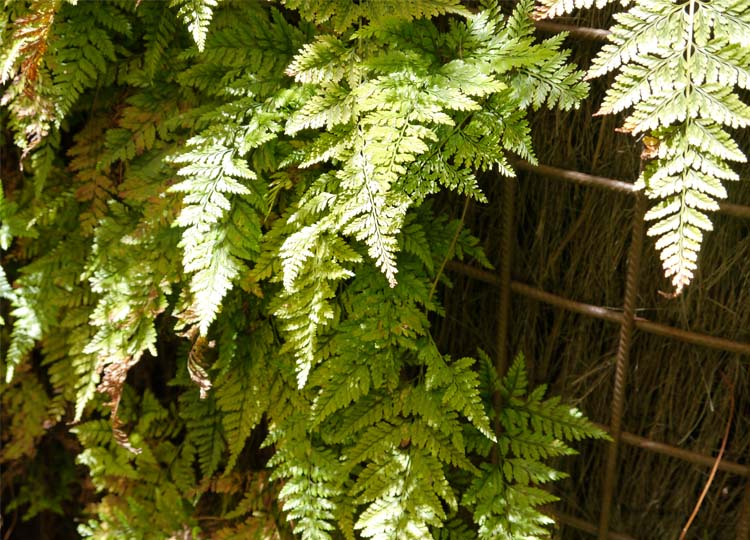
A simple and fairly cost-effective series of ‘green walls’ has been created by wrapping the courtyard in curving panels of reinforcing mesh.

El-cheapo brush fencing panels are secured front and back…

…and a healthy profusion of vegetation bursts through beneath the dappled light.

Amongst the stars are maidenhair ferns, and a host of bromeliads.

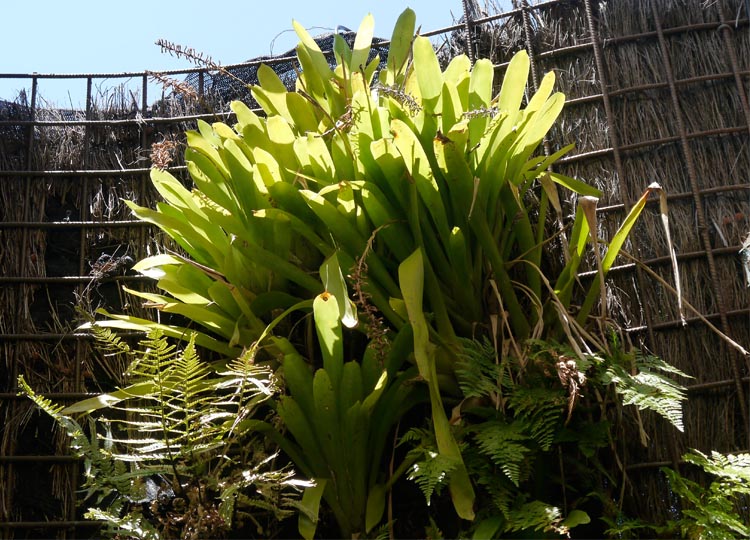
Adding colour are a bougainvillea and a native violet that’s hurled itself around the base of the screens and up the front like a rat up a drainpipe.


Being disinclined to deconstruct the courtyard I wasn’t able to see what was going on behind the screens, but I imagine the pots and growing media are all back there, hanging from the reo mesh.
If you’ve read the story on Chicago’s Garfield Park Conservatory City Garden you’ll know of my fondness for garden structures made from reinforcing bars and mesh.
I reckon the Engine Room Café shows another way to use this readily available and versatile material to good effect.
Now tell me what you think? Do you like the contrast between the rusty reinforcing mesh and the verdant greenery?
Let me know in the comments below.
Happy Long-Weekend-Planning, and see you soon for more from the world of landscape and design.
Note: the Engine Room Cafe is at 1 Railway Street, Toowoomba.
Don't Be Scared!
Overcome your fear of compost and watch your garden thrive.
In her first TED Talk, the best-selling author, Elizabeth Gilbert admitted to being scared of seaweed. Everyone has that one thing, right?
For many would-be gardeners, it is composting that throws them into a panic.
Although we’ve all been told that composting is a good idea, we have an impressive ability to conjure up an inexhaustible list of reasons not to compost:
It’s too smelly, too complicated, rats will get in, we don’t have enough space, we haven’t got time, it’s all a bit icky, there’s all that turning and rotating isn’t there, and it’s too overwhelming to know where to even start.
Fair enough. I get it.
I’ve had many of those same thoughts myself.
Some people though, are natural-born composters. In the blink of an eye they can transform last night’s potato peelings and the Sunday paper into a rich, crumbly mix that looks good enough to eat.
My partner Richard’s dad, Colin, is one such alchemist.

Meet CB: green thumb, artist, kitchen guru, fisherman, golfer, Olympic-level bargain hunter and all-round top bloke.
For twenty years I have been watching him work his magic in the garden, and after much cajoling, I've finally convinced him to share three secrets of his success.
Secret Item 1: the custom-made compost bins
CB has experimented with off-the-shelf bins but his current model is one he invented himself. It goes something like this: get hold of two wheelie bins, drill holes all over the sides, and wheel into place.
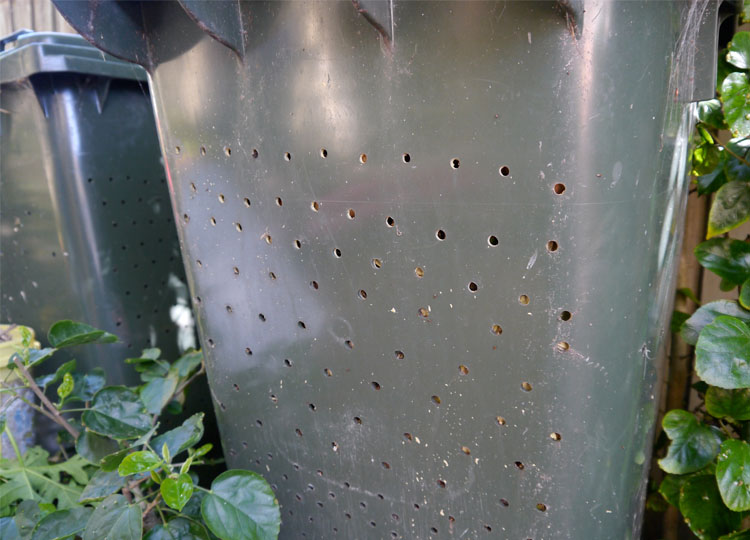
Voila! Scraps go in the top, the lid keeps birds out and conditions nice and toasty, the base keeps rats out, and the holes allow air circulation.
All the kitchen scraps go in, even citrus, traditionally a no-no. If it looks a bit wet, he adds some sugar cane mulch.

Occasionally, he’ll sneak in a bonus ingredient, like a few cuttlefish.

That’s it. Simple.
Two bins sit side-by-side, allowing one to be in use and the other available for harvest. And no, it doesn’t smell bad.
Secret Item 2: the experimental potions
CB lives at the beach, and has recently been experimenting with a DIY seaweed solution. We all know plants love seaweedy and fishy food, so why not make your own, right?
He got hold of some seaweed after big seas and put it to soak in a tub of water. Every so often he hives off some of the rich brown liquid, dilutes it, and waters it into the plants.

Secret Item 3: the icing on the cake
Topping everything off is a layer of sugar cane mulch. You can positively hear the plants cooing with happiness under their mulch blankies. The cane mulch is simply topped up as it starts to break down into the soil.

So there you have it. With these three simple things (and a few other tricks that I haven't let out of the bag today) The Colster is able to keep up a steady supply of salad greens and culinary herbs all year round. He also has a couple of pawpaws just firing themselves up to be productive.

The proof of the pudding is in the eating, or for us at least, the pictures of a healthy, productive garden. I hope this has showed you that composting needn’t be difficult or onerous, and that the rewards are well worth it.
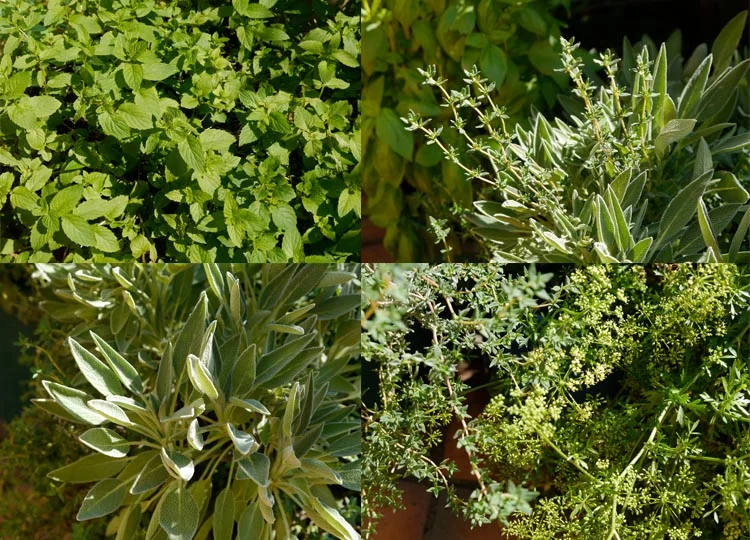

Most of all I hope this shows that a willingness to experiment lies at the heart of many a successful garden, so go boldly into yours!
What do you think?
Is composting one of those things you think you ‘should do’ but you’ve been avoiding? What one thing do you think would make it easier to get started? Or if you are a composting legend, what’s your one sure-fire tip for success?
Let us know in the comments below.
If you know someone who might enjoy this story, we’d be honoured if you’d share it, and we look forward to catching up soon for more from the fascinating world of gardens, landscape and design.