
If you didn’t know that the Olympic Games had been held at Homebush, upriver from Sydney’s CBD, you could be forgiven for thinking that the crop circle aliens had been at work: the five rings of the Olympic logo have morphed into circles that pop up everywhere across the site.
The most obvious is the Brick Pit Ring Walk.
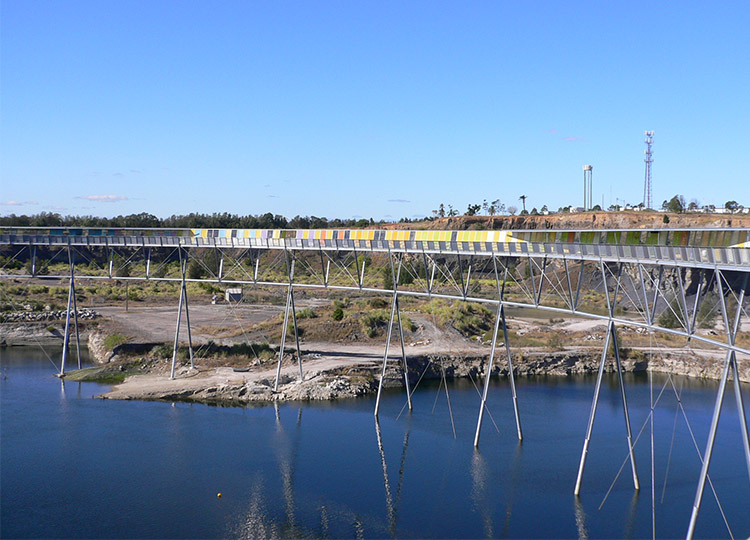
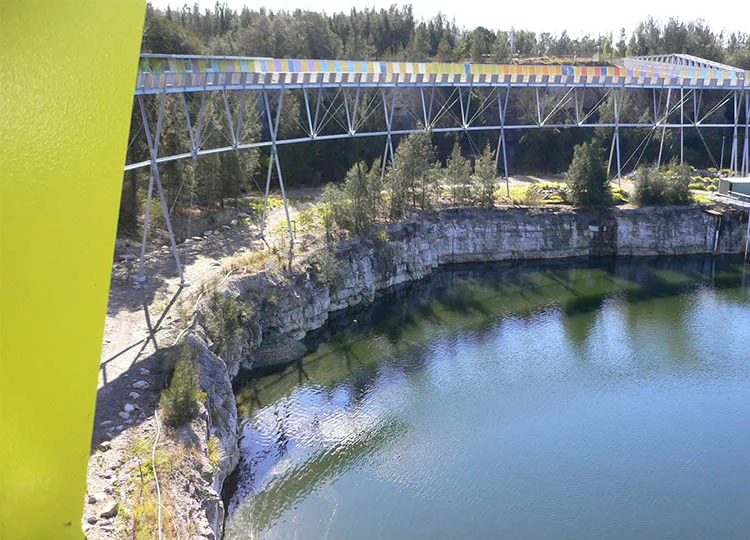
The Ring Walk perches taut and snazzy, like a multi-coloured hula hoop, 18 metres above the gnarled former workings of one of the city’s largest brickworks.
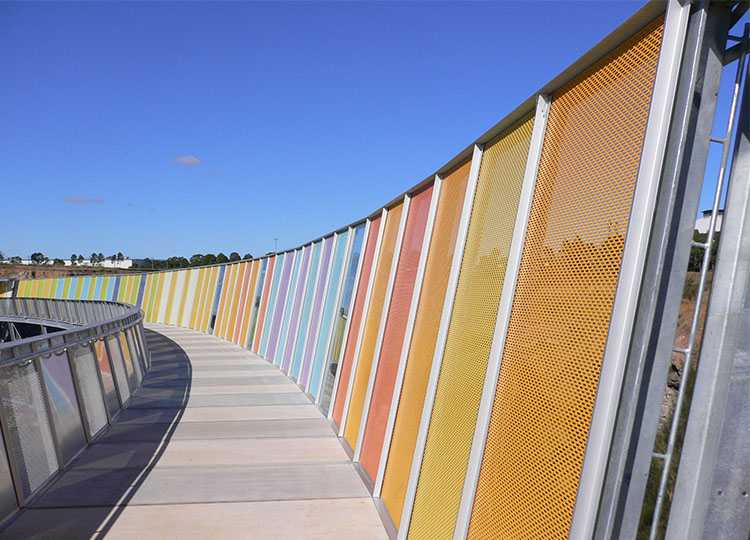
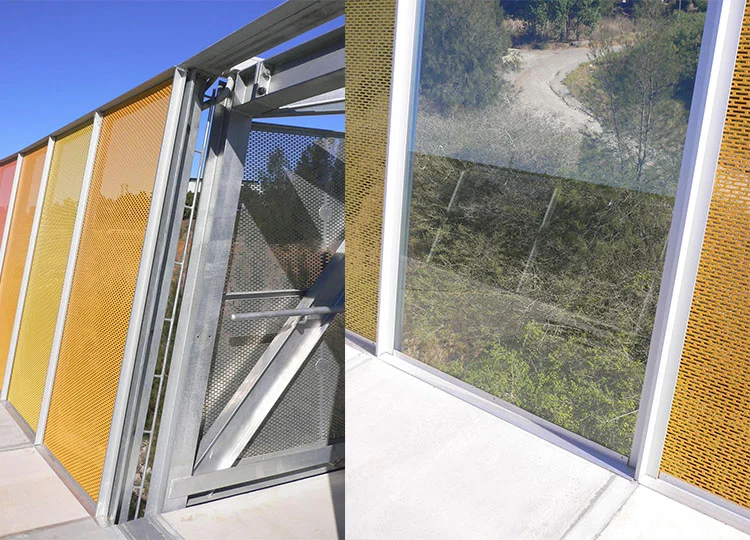
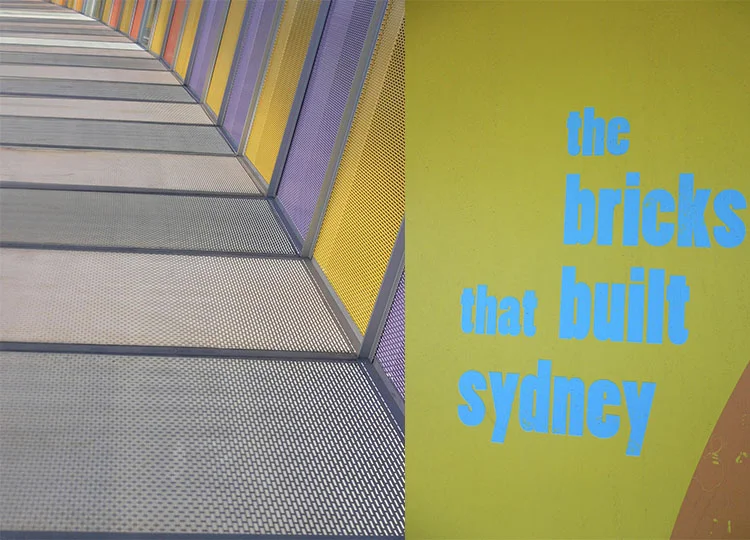
After departing solid ground via a skinny gangway, visitors traverse the 550 metres around the ring, reading and listening to stories of the place, people, process and products of the brick works.
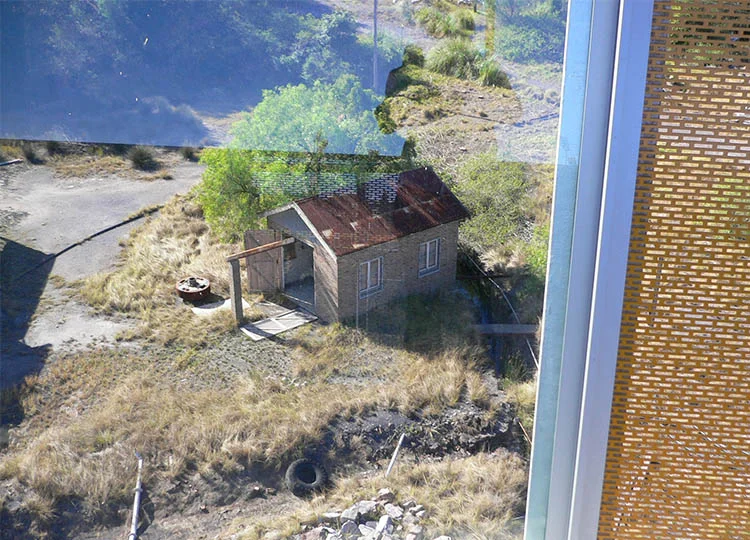
A rare frog (and indeed, hopefully more than one) is now domiciled in the watery pit, and there is also more water nearby.
It’s a wetland, through which stormwater runoff is captured and cleansed.
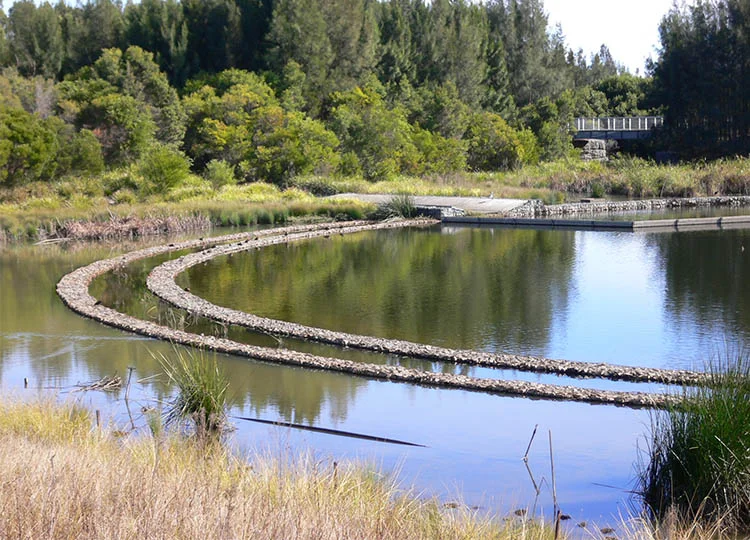
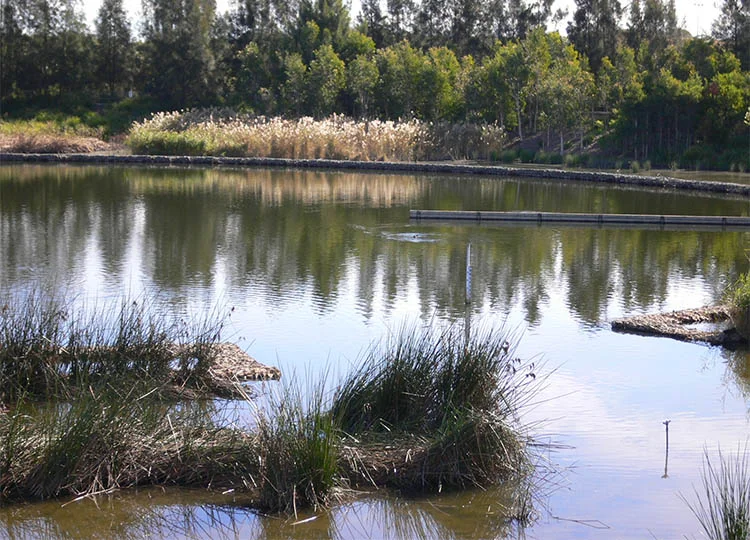
The wetland edge wanders about in a haphazard fashion, so it’s startling to see another perfect circle within.
This time the circle is formed with a pair of gabion walls – stones held inside wire cages.
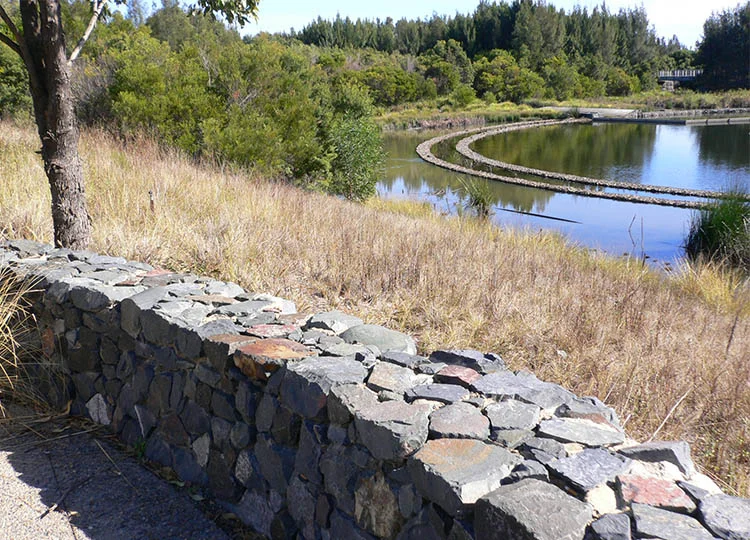
The wall appears to mark the change of depth of the wetland, with planting contained in the shallower water between (it's been chopped back in these images), and clear deep water out in the main body of the wetland.
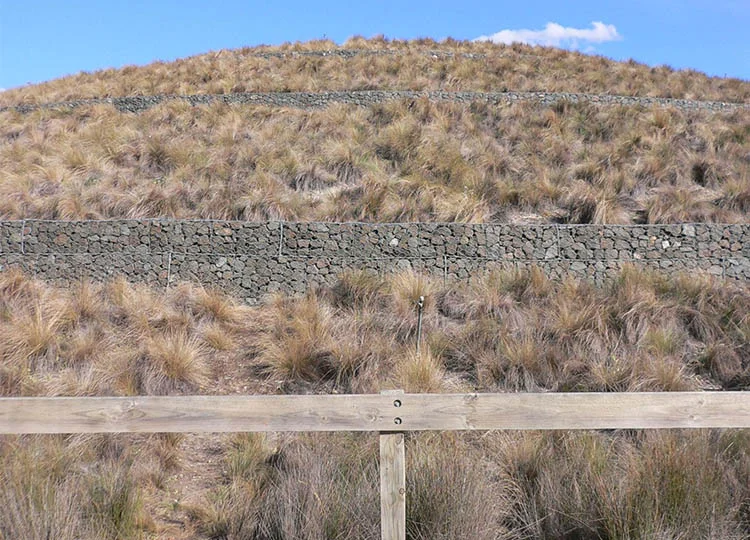
Barely a stone’s throw away the gabions have emerged from the water and started reaching skyward.
Slowly spiralling around and up, they enclose the monumentally prehistoric forms of the Millennium Markers. Whilst they’re not quite in the ‘seen from space’ category, they do make an impact on this wide, flat landscape.
Is something mysterious and woo-woo at play here?
Are the circles a tip-of-the-hat to the Olympic logo?
Or are they a clever way to bring order, and a way to navigate through such a vast and complex site?
That’s the cool things about circles, they have the potential to be all three…