Design Class: learning to love the scale

Have you ever had a designer ask what you think of the scale? Has it given you pause for concern, filling your mind with dread at the thought that last night’s seven course degustation with matching wine flight is already showing round your middle?

Fear not.

The type of scale we’re talking about here is nowhere near as scary as the ‘number-climbing-higher’ machines that we keep hidden in the bathroom so they don’t steal our will to live.

This type of scale should be treated with respect though, as it also has the ability to make you feel either very comfortable or very uncomfortable in a space.

Scale describes how something – a building, chair, tree, sculpture - sits in relation to its context. Something is called ‘out of scale’ when it’s perceived to be either too big or too small for its location, causing the overall effect to appear out of balance.

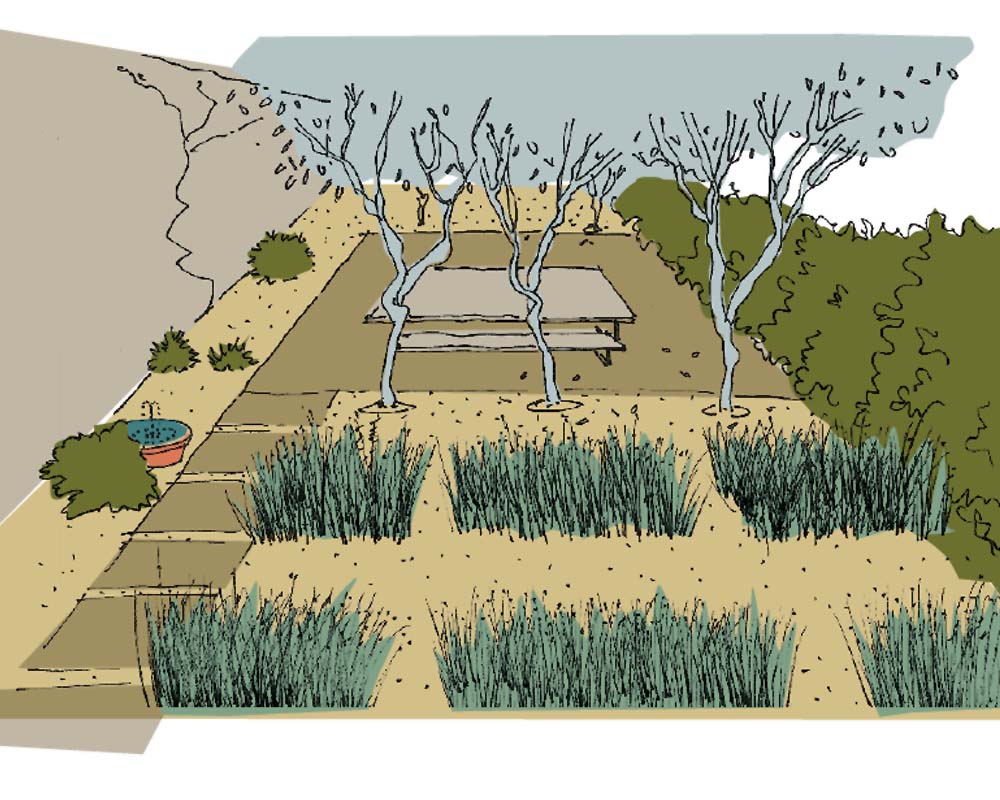
Let’s say you were considering adding a fountain of some sort to your courtyard garden, fed from recycled water you’d collected. Here’s your garden now…
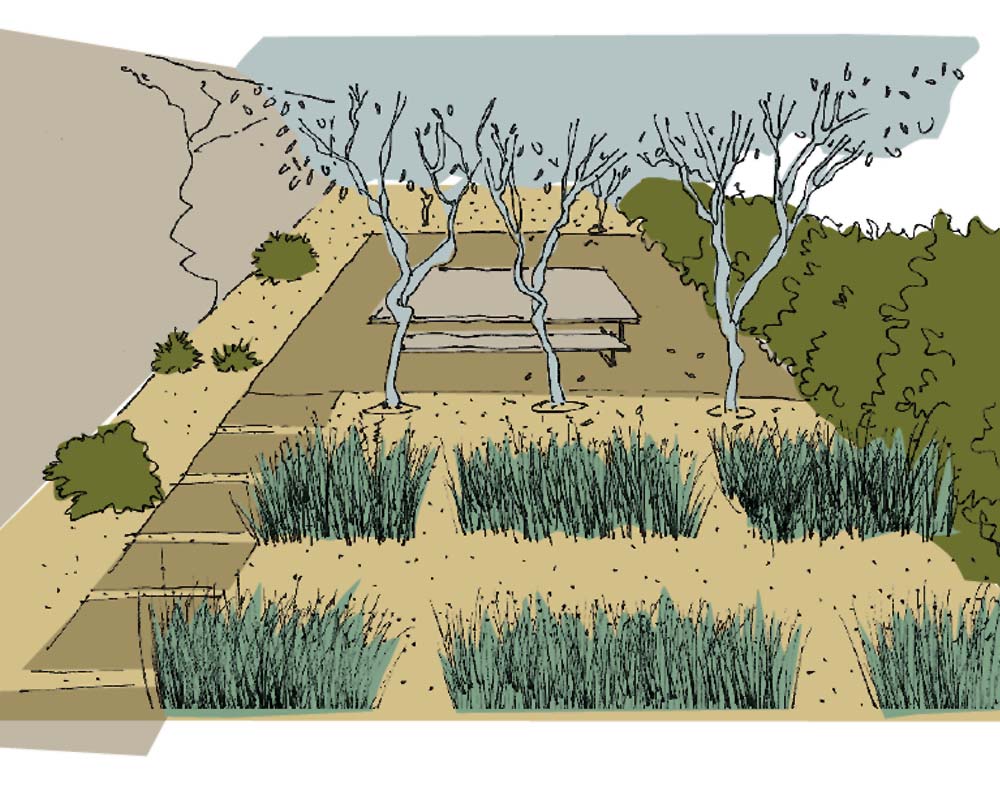
...and here are two options for your fountain.

Option 1

...and Option 2:

Landscapology_Scale3.jpg

What do you think?

You might feel that the first fountain is ‘out of scale’ because it is too small, and barely draws attention to itself.

You might also feel that the second fountain is also ‘out of scale’, this time for being too big, overwhelming the space and threatening to drench you whenever you walk past.

The right scale fountain for your garden is probably somewhere in between the two.

What happens though, if you quite like the dramatic effect of that great big fountain?

Is it OK to play around with scale?

Sure, if that helps you create the effect you’re after.

Say you spend a lot of time reading in the garden and drinking cups of tea – it’s what you do to relax.

You might deliberately choose to have an over-size (‘out of scale’) garden chair to celebrate your favourite thing.

Scale is one of the many Spatial Qualities you have available to create the house, garden, park or city you love.

Once you start noticing the scale of different elements and spaces, you’ll feel clearer about what you consider to be 'in' or 'out' of scale, and can more confidently engage in the design process for your project.

Now it’s over to you.

Have you ever visited a place (maybe a garden or a park) and noticed that one or more elements was out of scale? How did this affect your experience and what do you think would have improved it?

Let me know in the comments section.

Of course, if you found this interesting and useful don’t forget to share with a friend, and I’ll see you soon for more Design 101.

A Choice Day out at the Auckland Waterfront

How much do we love New Zealand, huh? If you’ve ever spent a lazy Saturday enjoying Auckland’s waterfront before the realities of winter set in, you’d be forgiven for thinking this was the slice of heaven Dave Dobbyn was singing about, not some pouty chick...or Footrot Flats. (Go on, listen to it.  Nothing better than a bit of da-da-da to put you in a good mood)

I enjoyed just such a day in mid-April, at the end of the brilliant IFLA landscape conference and Gibbs Farm sculpture park field trip.  Judging from the crowds, about half of Auckland had the same idea.

Auckland has one of the kick-ass-est harbours in the whole world, and sailing seems to be a compulsory activity. Boats from all round the globe cosy up to each other in the berths. Just how sassy is Janice of Wyoming?

You can easily walk to the waterfront from the downtown area. If you’re coming from further afield the main Britomart train and bus station is just on the water’s edge. And if you’re heading for one of the harbour islands, this is the place to catch the ferry.

Auckland city was born at the waterfront in 1840. For a long time before that, the harbour was a vital, sacred part of Maori life. In recent years, spurred by hosting the 2000 America’s Cup and the 2011 Rugby World Cup, the working harbour has been gradually inviting the public back in. You can read more about the redevelopment, including the different precincts (Wynyard Quarter, North Wharf, Karanga Plaza, Silo Park and more) on the Waterfront Auckland website.

Here are my favourite moments: 

1. Lay out the Welcome Mat
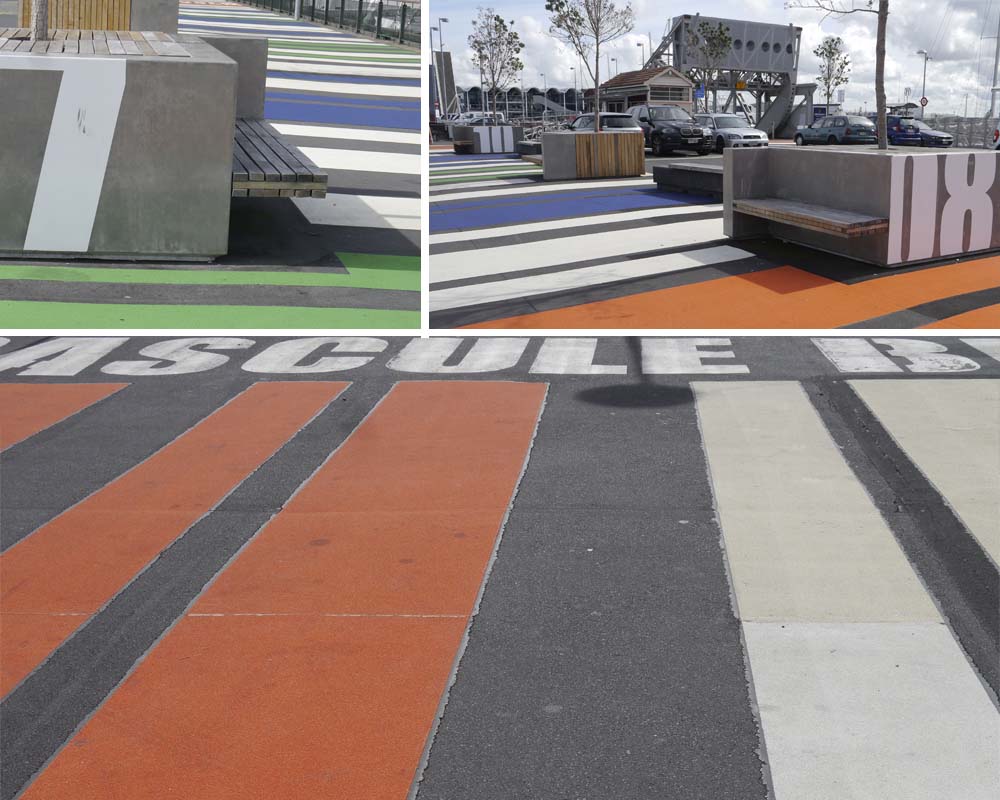
This supergraphic barcode helps pedestrians navigate two carparks connected by an operating bascule bridge on their way to Wynyard Quarter.
2. Pop-up Library

Here, another welcome mat is laid out. This time it’s artificial turf that marks a little gathering spot in front of a shipping container library. Lilliputian furniture can be moved around to suit the sun.

3. Containers

Why stop at just one. The information kiosk deftly stacks containers into a sculptural heap to anchor one corner of Karanga Plaza. The public loos are here too, and it makes a natural backdrop for events and performances. The day I visited there was a piano in the plaza (tick!) and students played all day to advertise an upcoming concert. Special mention should also go to the superbly attired lady whose fabulous orange trousers hit just the right note beside the containers.  Respect.

4.  Different Types of Seats

Sometime different types of furniture can make a place look untidy and feel disjointed. That doesn’t seem to be the case here, maybe because the bridge crossings, changing path widths and varying neighbours make each of the precincts along the waterfront feel different anyway.

The seats in Karanga Plaza roll back and forth on rails. They’re also great if you and your friends can’t bear to be apart for even a moment.  The seats along North Wharf look like miniature versions of the piled-up shipping containers.  The seats outside the Viaduct Event Centre are bar stool height, behind a long concrete counter.

5.  Oasis

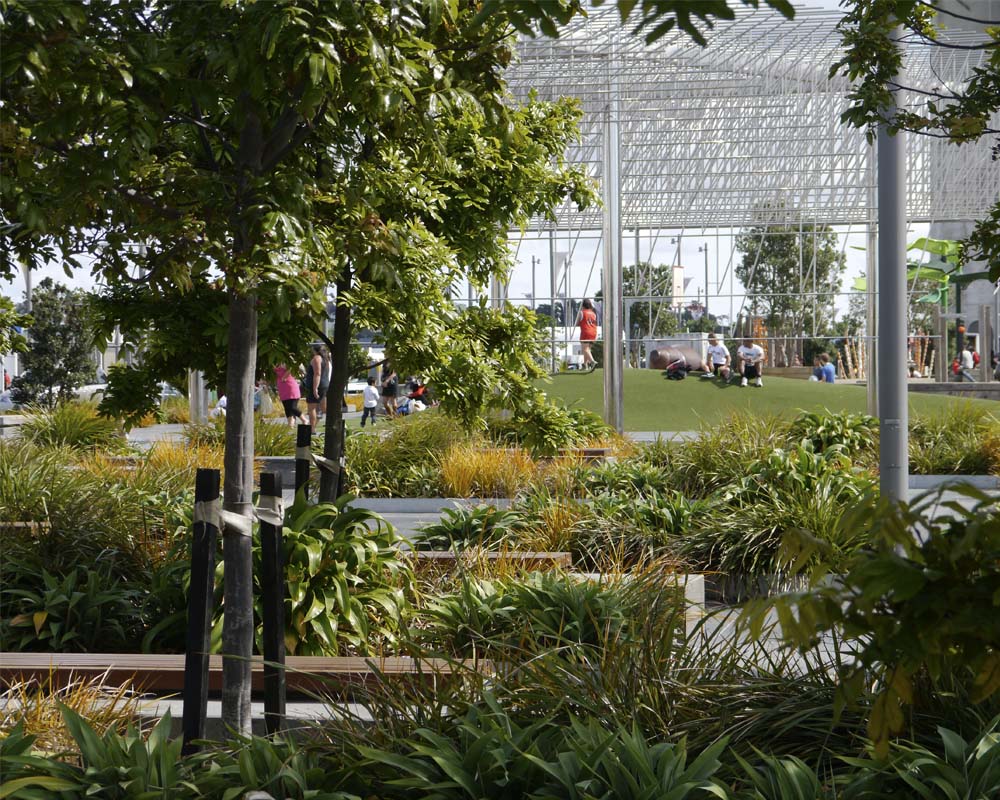
At the end of North Wharf, before it erupts into a giant playspace, is this quiet pocket with places to sit out of the hustle and bustle.

6.  Playtime on Steroids

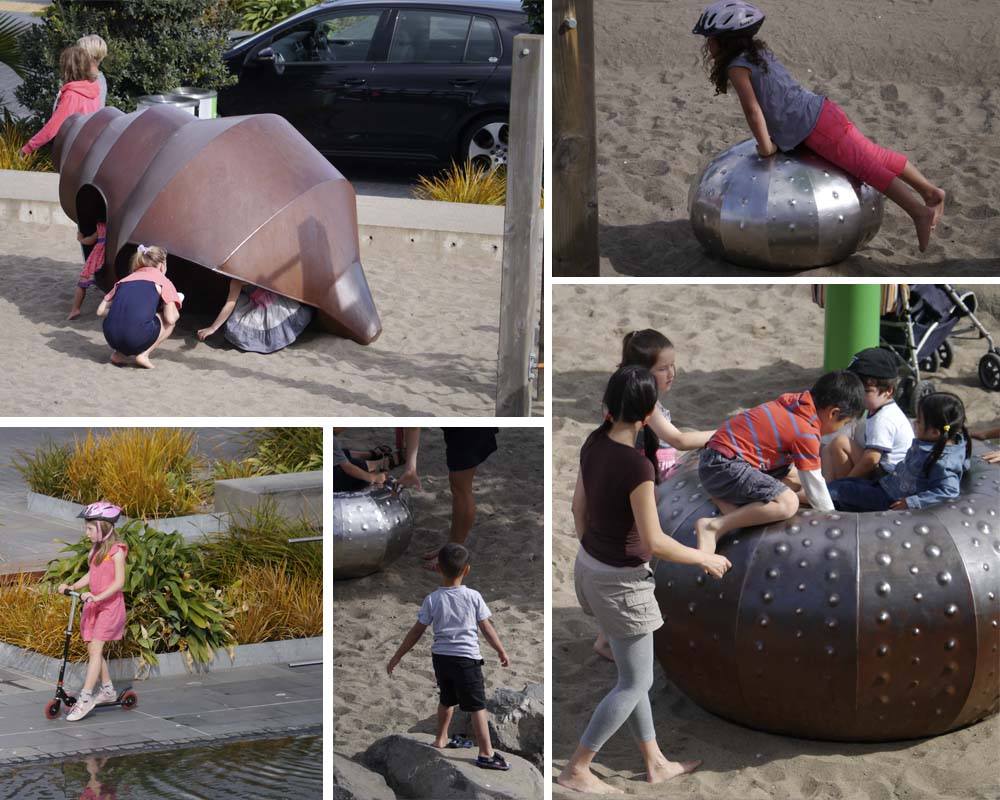
Pros: This massive wonderland of play imagines what this part of the sea was once like. Giant shells, barnacles and other creatures can be climbed over, sat on or spun around and around. There’s also nets and swingy things, a vast bed of sand and a low wall of stones for practicing clambering and balancing. At the end of the play area is the sculpture Wind Tree, relocated from its former city home to a new shallow reflecting pond.  It doesn’t take much grey matter to figure out that this also attracts kids like crazy.

Cons: it’s so big because this is apparently a future development site. Let’s hope some place for play remains and it doesn’t all turn into a dreary, but revenue-generating, 9-5 office building.

7. Sexy Water Management

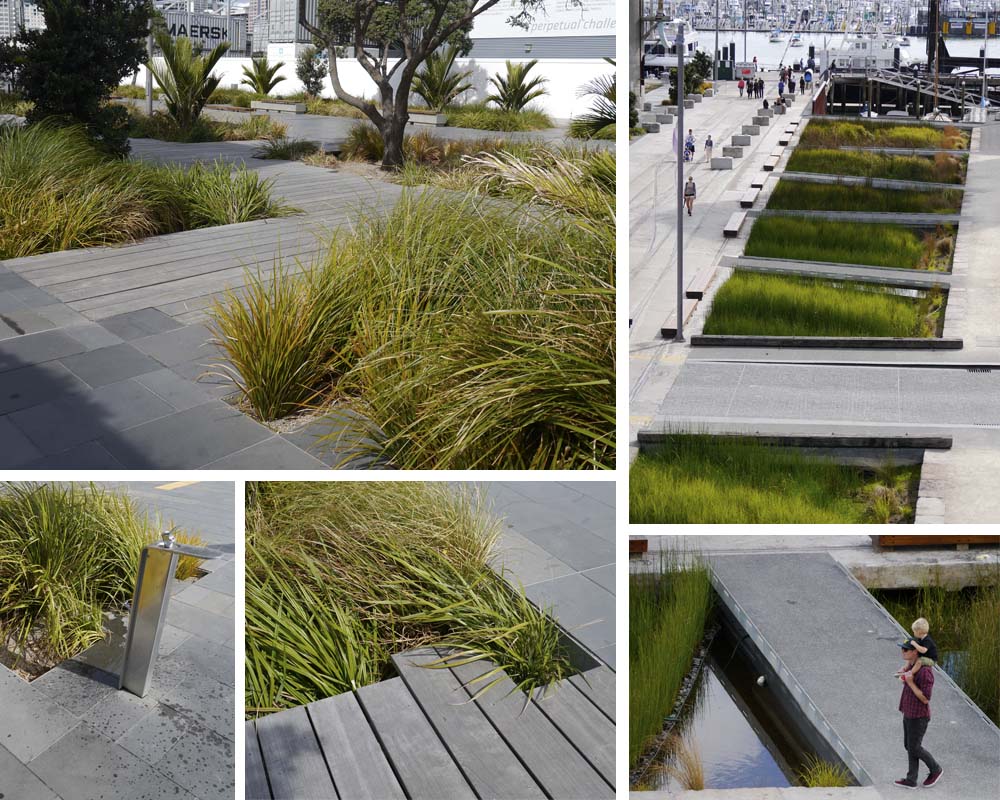
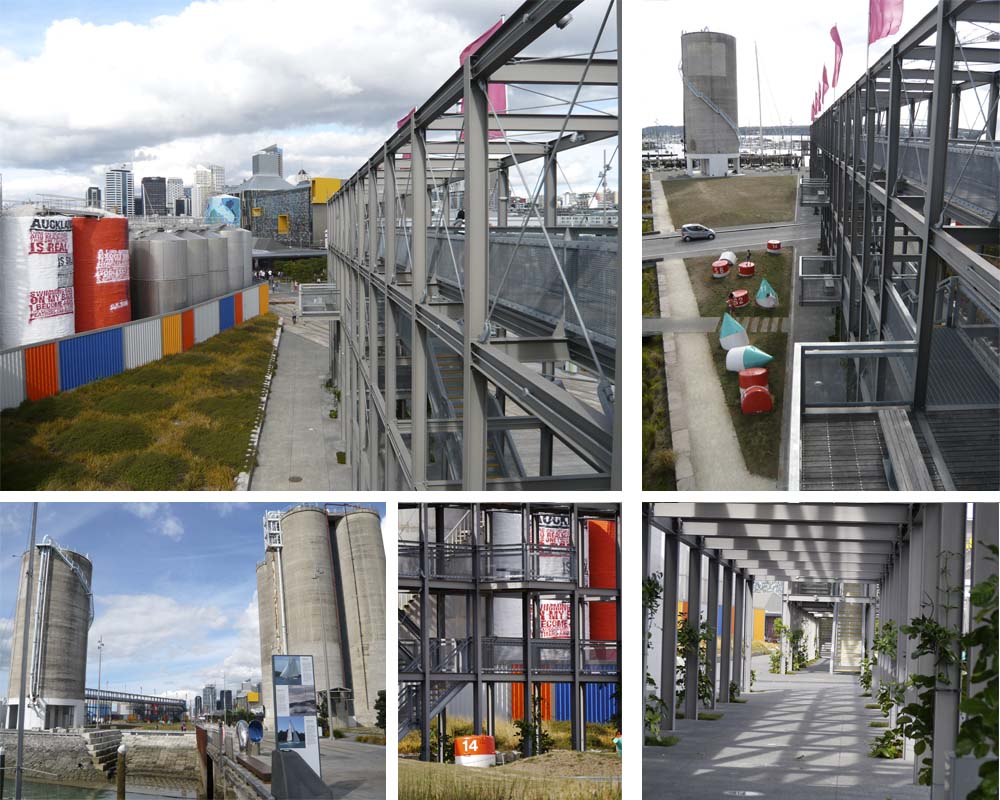
This is not just some pretty planting behind the containers, although it does look great.  Look closely and you can see that the planting beds are set down below the paving.  This allows water to run off into the planting where it’s filtered and cleansed before going back into the harbour.

The same thing happens at Silo Park at a much bigger scale. Stormwater runoff here is directed into a long linear channel, densely planted again, and criss-crossed with paths.

8.  Working

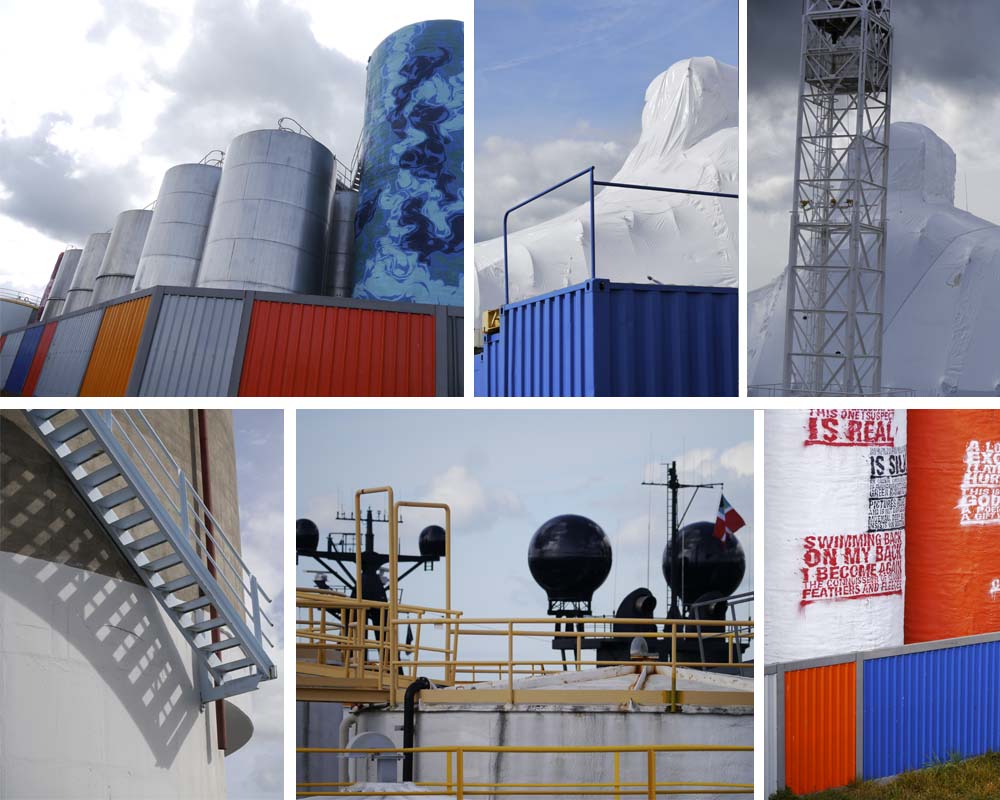
I love most about this part of Auckland’s waterfront is that it’s very much a working harbour.  The navy occupies a vast land holding to the east, and there is an gigantic shrink-wrapped vessel being repaired down near Silo Park. All very cloak-and-dagger.

Whilst disused silos form the backdrop to Silo Park, the silos of the bulk storage facility dominate the scene.  Some are painted and act as huge sculptural installations behind the gantry.

These sites operate around-the-clock, constantly bringing life, activity and people to the waterfront.

It’s a delicate balance, essential to get right, but for me it would be disastrous if all of this stretch of harbourfront was ‘cleaned up’ and industrial activities moved on to somewhere ‘out of sight’.

9.  Gantry

This 12m high, 110m long structure was built to 'screen' the bulk storage tanks behind.  Climb to the top and you'll get a great view into this part of the harbour that I find just as interesting as the parks and promenades, maybe more so.

It also reveals long views back towards the city, and along the entire waterfront public places, and is a perfect spot to watch life unfold.

10.  Weddings, Parties, Anything

The waterfront is a go-to place for quality Auckland people-watching and overheard conversations:

“I never knew this place was ****ing here, bro.”

“I know, bro.”

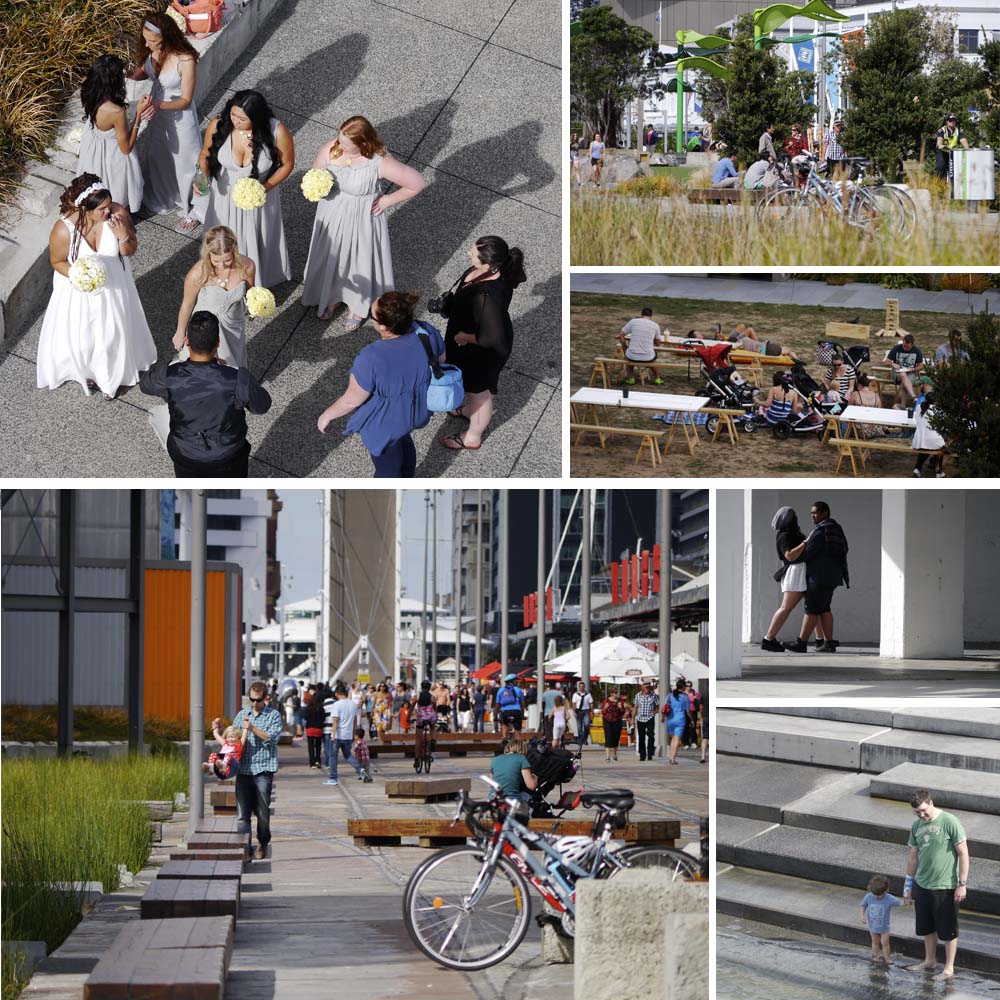
In just a few hours I saw plenty of tourists, but also locals who’d come down for a function, a wedding party having photographs taken, kids riding bikes, people running and exercising, those who’d brought their lunch with them, those who were headed for a restaurant, and those who were lining up for a pie or a coffee or a smoothie to have while sprawling at the picnic tables or on the lawn. Little kids were in the playground, bigger kids were at the basketball court.  The temporary summertime stalls were busy and the summer movie nights were still being advertised. Students lounged, couples canoodled, and the blue sky hung on as long as it could overhead.

And that’s the secret to great public space – enabling all different types of people feel welcome.

What do you think? If you’ve visited the Auckland Waterfront recently how did you find it? Leave a comment below letting me know what you liked best.

If you know someone who’d enjoy reading this article be sure to share it, and check back soon for more from the wonderful world of parks, gardens and landscapes.

Delight: the girl in pink

This week we’re trialling a new addition to the Landscapology blog.

Delight will be an occasional post featuring something curious and delightful that doesn’t really fit within our regular Design 101 sessions or stories about great parks, gardens and landscapes.

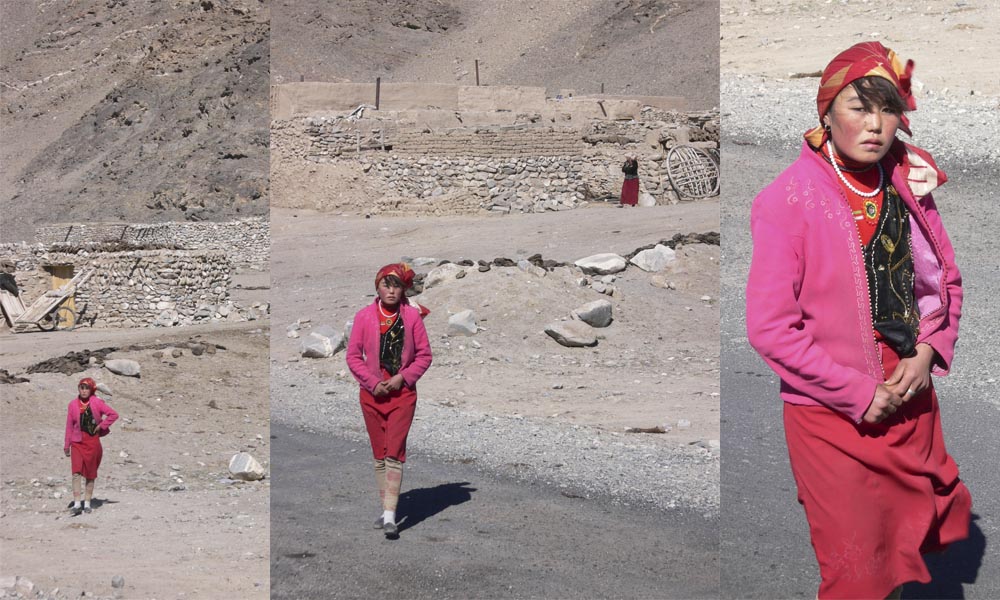
Today is the wonderful girl in pink, who emerged out of a compound of small stone buildings beside the Karakorum Highway, high in the mountains of western China, and quietly walked over to watch our bus roll past, with its cargo of Silk Road tourists.

When it’s been raining for a long time, and the sky is grey, I often think of how strikingly she commanded attention in that clear, cold, breathtaking and harsh landscape.

In

Design Class: elephants never forget...and they can teach you how to read drawings

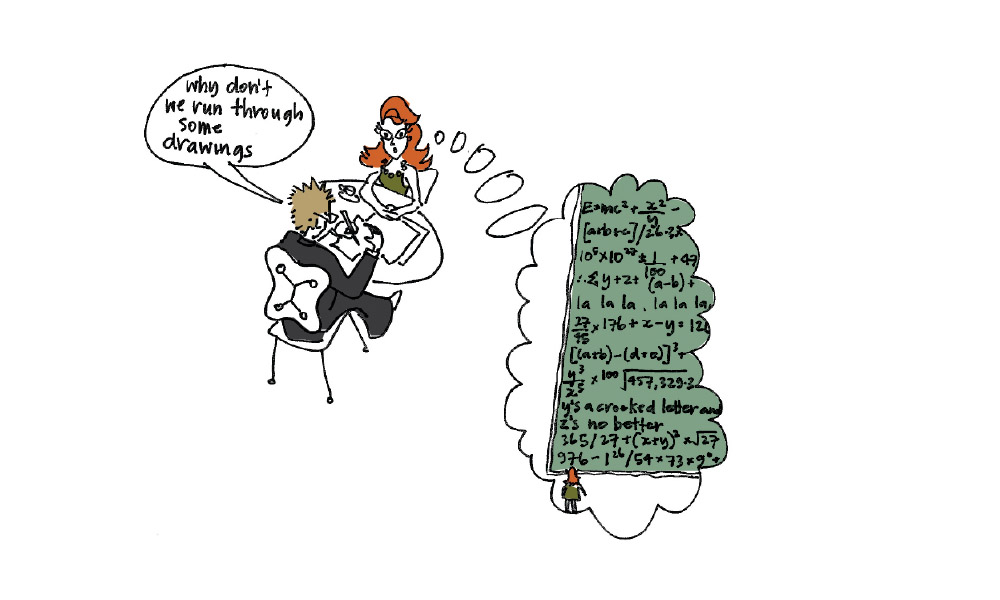
Have you ever had a designer invite you to go through some drawings? Has this given you pause for concern, worried that you’ll be confronted with a pile of papers full of squiggles and lines that make no sense whatsoever? 

Fear not.

This is actually a really common concern.  For some it can be worrying enough that they actually delay a much dreamed-about project.  Of course, your designer should be doing everything possible to guide you through, but it’s still important that you can read drawings with confidence.

Why?

You can make sure that everything you’ve discussed and agreed with your designer is incorporated.

You have a clearer idea of what the finished product will look like and how it will function.

You will feel more empowered and able to participate fully in the design process – after all, having your new house, garden or renovation designed should be an exciting and rewarding experience!

Today we’ll start right at the beginning, and look at the basic principles of reading drawings. And as this fear is often the elephant in the room at design meetings, we’ll use one of those lovely creatures as our life model for this session. 

Most projects will start with planning. Plans are the way designers make sure everything is in the right location and that everything will function properly.

Plans

Plans show what your project looks like from above.  A ground floor plan shows the building level closest to the ground, and it usually shows what’s happening about a metre above the actual ground level.  Our elephant pal Trunky’s ground floor plan would look something like this:

Buildings usually have a roof plan too. Imagine you were in a plane flying overhead. If you looked down, what would you see?  For our obliging friend it would be something like this:

Elevations

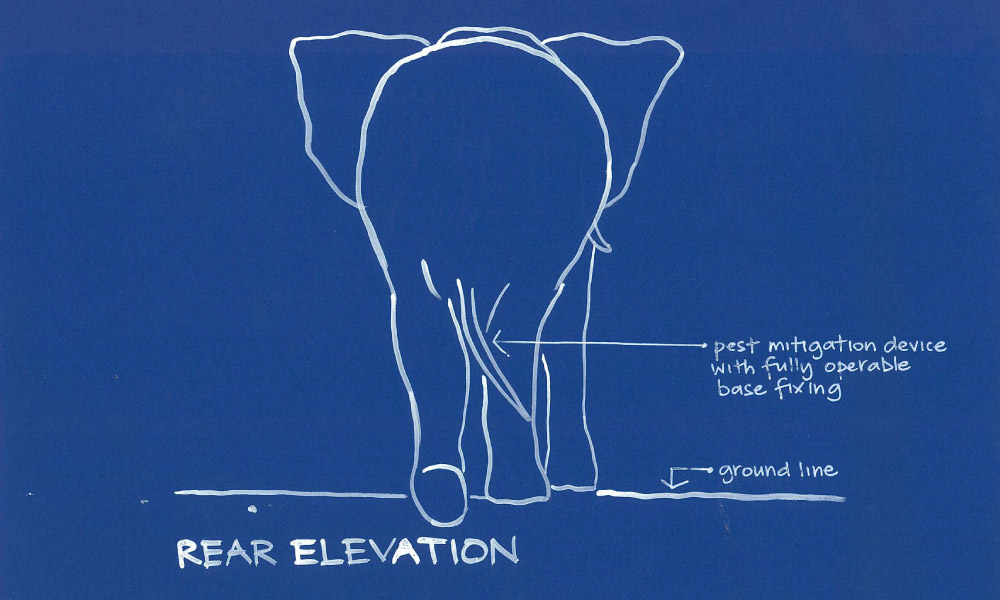
What about how the outside looks?  To describe that we use Elevations. Each elevation shows what the project looks like from a different side.  To describe Trunky we would use a front elevation,

a rear elevation,

and a side elevation:

Sections

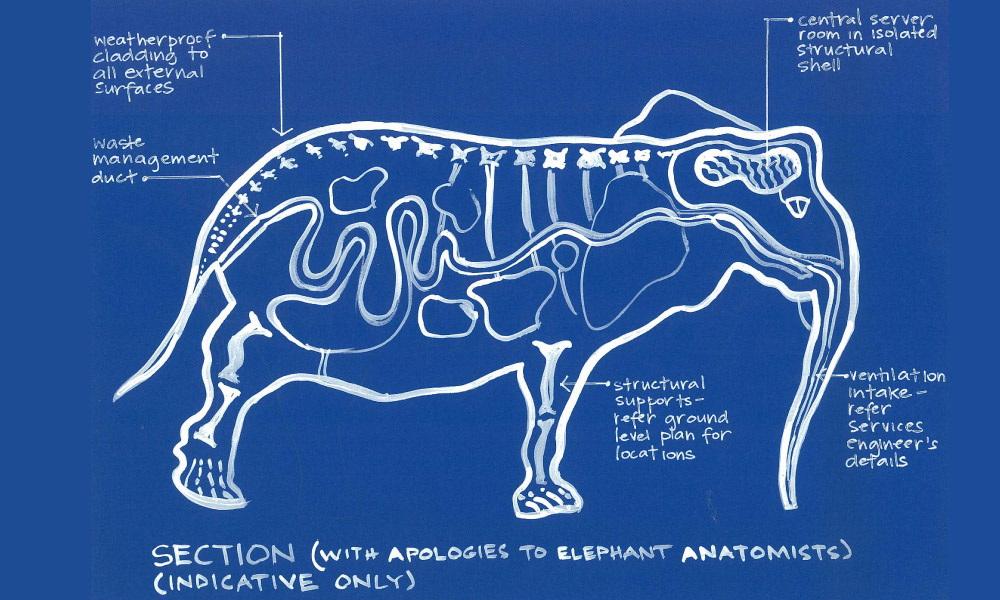
The next thing to describe is how things are made, and how the different spaces work in three dimensions. To do this we use Sections. A section is like a slice through the building or garden.  Sections show things such as how the ground floor and upper floor work together; how stairs work; or how a swimming pool sits in the ground next to a terrace.

Let’s see what’s going on inside Trunky. If you imagined him sliced in half through from trunk to tail, and looked at the cut surface, you’d get a section something like this:

So there you have it.  You can apply this technique to reading any drawings, and it’s easy if you stop and remember that:

Plans show something from above;

Elevations show the surfaces of something from outside;

And Sections are slices through something to see how they fit together on the inside.

Of course, things can get more detailed (and potentially more confusing!) than this, and there are different types of drawings for different stages of a project, but these basic principles remain the same.

Now it’s over to you.  Have you ever been surprised with the way something has turned out on a project, because you weren’t 100% certain from the drawings how it was going to work?  What else would you like to know that would help you read drawings more confidently?

Let me know in the comments section.

Why Madrid Loves Peter Allen...

Who knew Madrilenos were such Peter Allen fans?

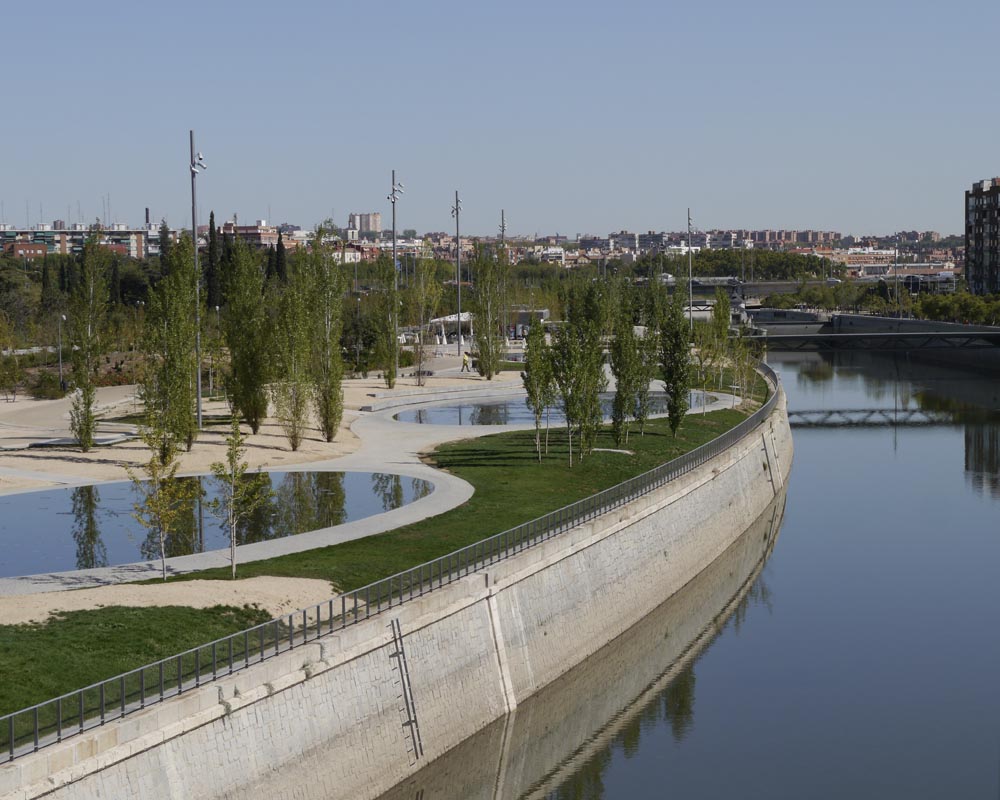
When their baby smiles at them they go to Rio…Madrid Rio that is…a 10-kilometre long park that stretches along the Manzanares River (or rio) from just behind the Royal Palace.

Image: bgaa via Wikimedia Commons. http://commons.wikimedia.org/wiki/File:Mrio_rio.jpg

Image: bgaa via Wikimedia Commons. http://commons.wikimedia.org/wiki/File:Mrio_rio.jpg

What’s even more amazing is that this brilliant park was created by sending 43 kilometres of motorway underground.

Yep, like so many cities Madrid built its freeway system up to and along its river. However, unlike so many cities, it eventually decided that wasn’t such a great idea after all. So underground they went, freeing up literally hectares of land to be converted back to publicly accessible riverfront parkland. Go Madrid!

Naturally this undertaking wasn’t cheap, and Spain’s not exactly flush with cash at the mo, but that hasn't stopped a gazillion Madrilenos (and a equally enthusiastic tourist contingent) from strutting their stuff along their fabulous new promenade. A year or so ago I was lucky enough to join them.

Not many parks can offer 'something for everyone' and actually deliver. Madrid Rio is so huge that it probably can. Here are a few of the highlights: 

It’s Sunny

0
false


18 pt
18 pt
0
0

false
false
false


 /* Style Definitions */
table.MsoNormalTable
	{mso-style-name:"Table Normal";
	mso-tstyle-rowband-size:0;
	mso-tstyle-colband-size:0;
	mso-style-noshow:yes;
	mso-style-parent:…

Apple sauce with your crackling?

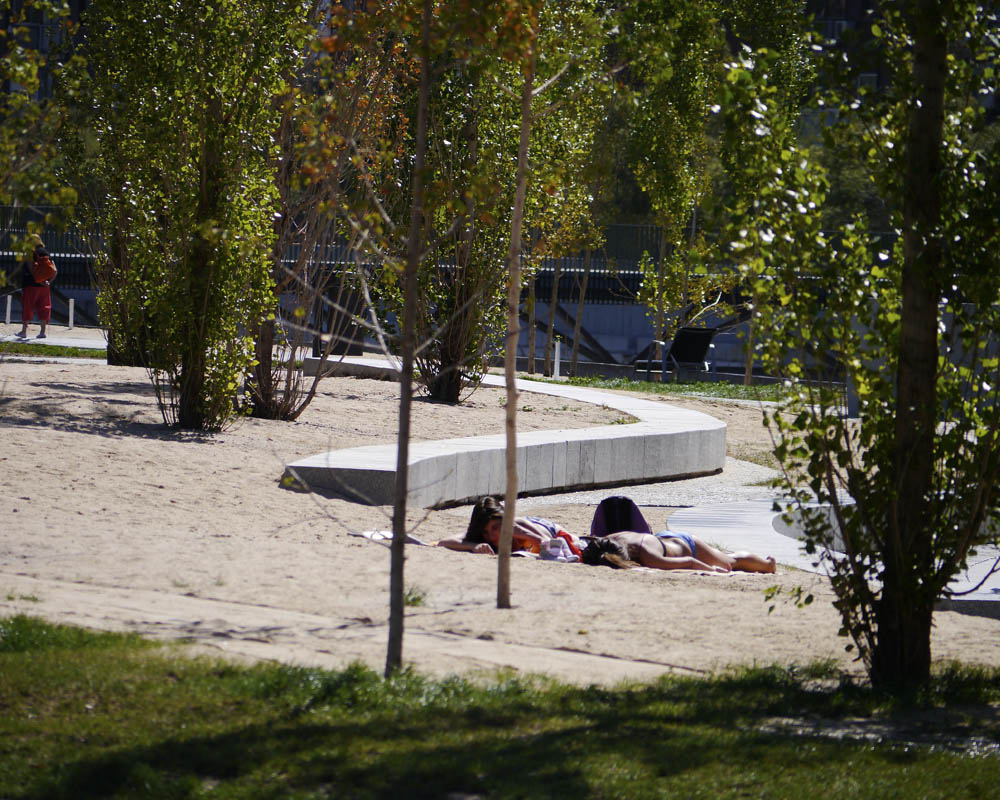
As the northern hemisphere moves into summer, sun worshipping Madrilenos can take full advantage of the opportunities for outdoor basking.  These ladies were taking it so seriously I felt like offering a little apple sauce as an accompaniment.

It’s Shady

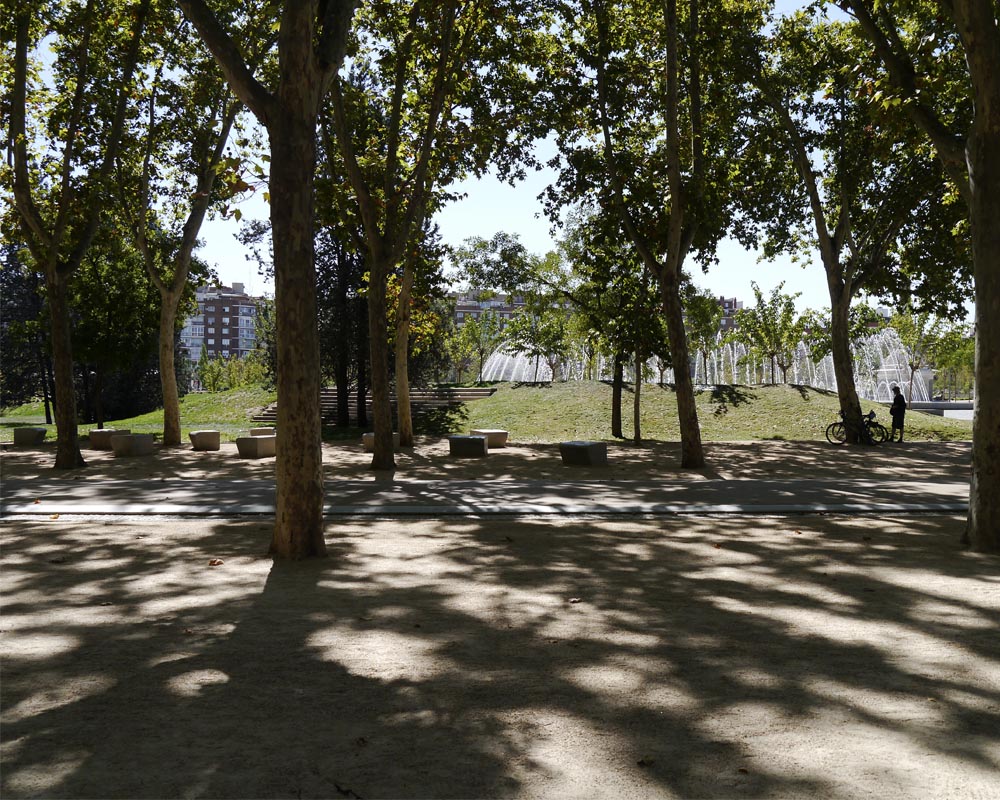
For those who believe the best place to be at midday is out of the sun, Madrid Rio offers deep shady groves and long avenues of mature trees.  As someone who can burn just looking at a picture of the s-u-n, those deep pools of dark shadow were calling my name, let me tell you.

0
false


18 pt
18 pt
0
0

false
false
false


 /* Style Definitions */
table.MsoNormalTable
	{mso-style-name:"Table Normal";
	mso-tstyle-rowband-size:0;
	mso-tstyle-colband-size:0;
	mso-style-noshow:yes;
	mso-style-parent:…

Landscape with SPF15 rating.

It’s Playful

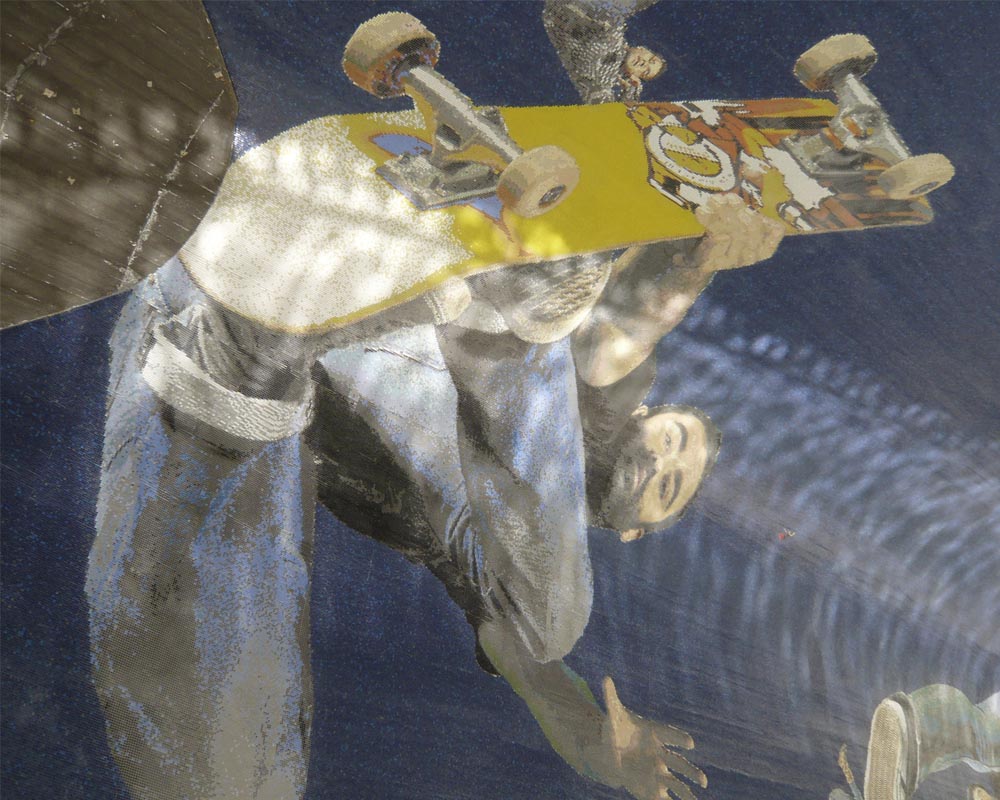
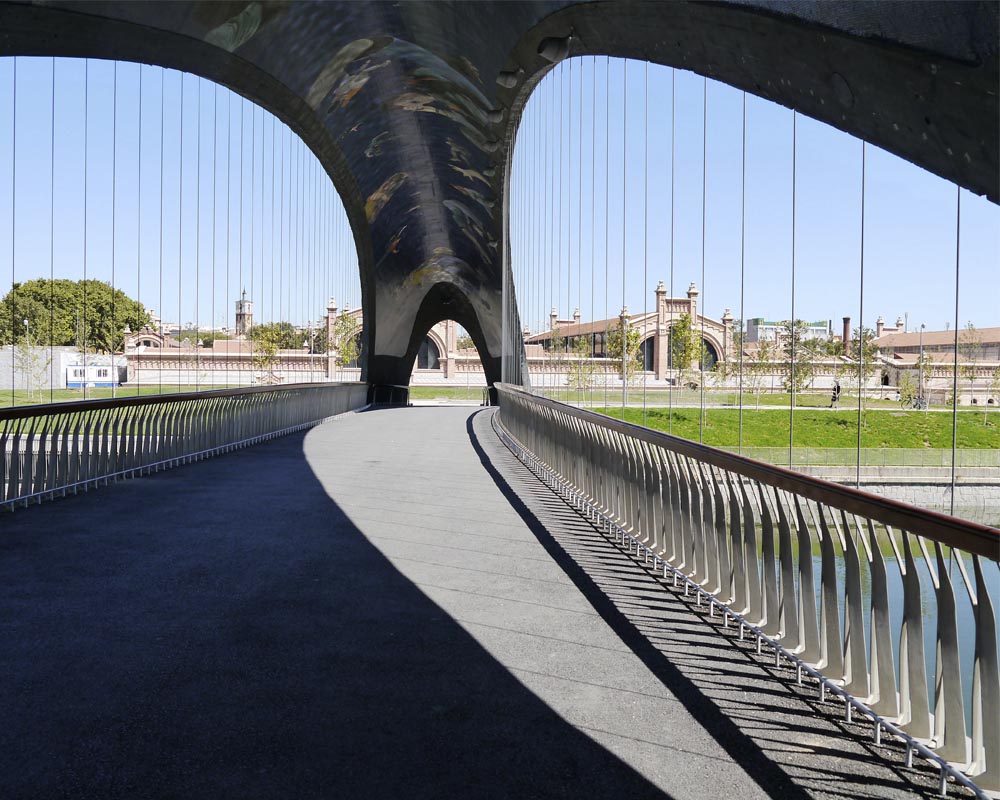
Two of the new bridges connecting the riverbanks hide a glorious secret. Hidden inside their rough concrete shell, and visible only to those crossing the river, are amazing mosaic tile artworks depicting skateboarders. Leaping, grinding, ollying – they’re all there – larger than life, embraced and celebrated.

0
false


18 pt
18 pt
0
0

false
false
false


 /* Style Definitions */
table.MsoNormalTable
	{mso-style-name:"Table Normal";
	mso-tstyle-rowband-size:0;
	mso-tstyle-colband-size:0;
	mso-style-noshow:yes;
	mso-style-parent:…

So how do you say 'olly' in Spanish?

The real-life models for the mosaic can be found further along, at the skatepark and basketball hoops.

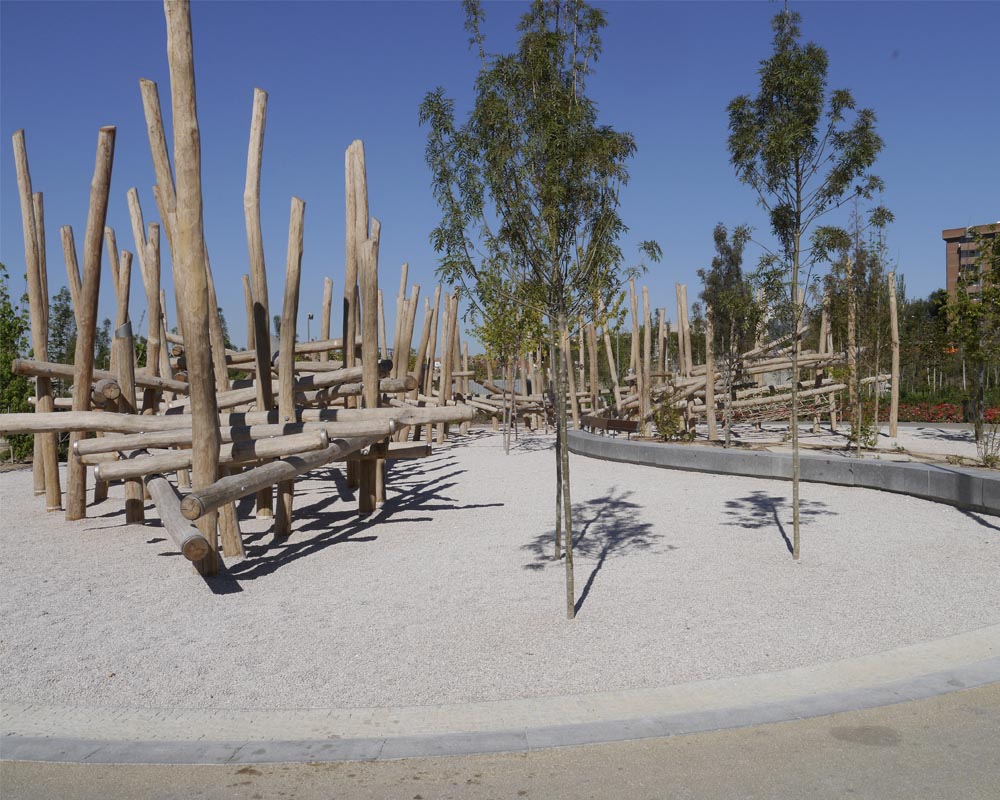
For those not yet aspiring to the life of the grind there’s a very big playground, and a brilliant climbing structure made of lashed-together logs and poles.

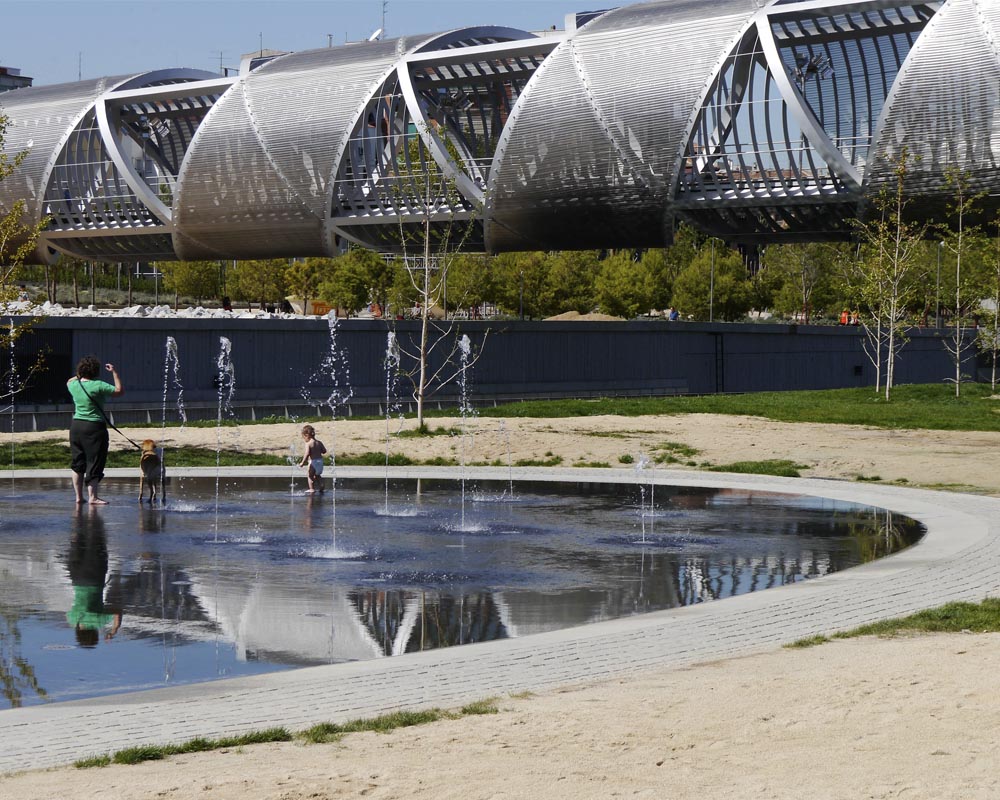
And for those even younger, there’s the universal allure of the pop-jet fountain.

There’s Water

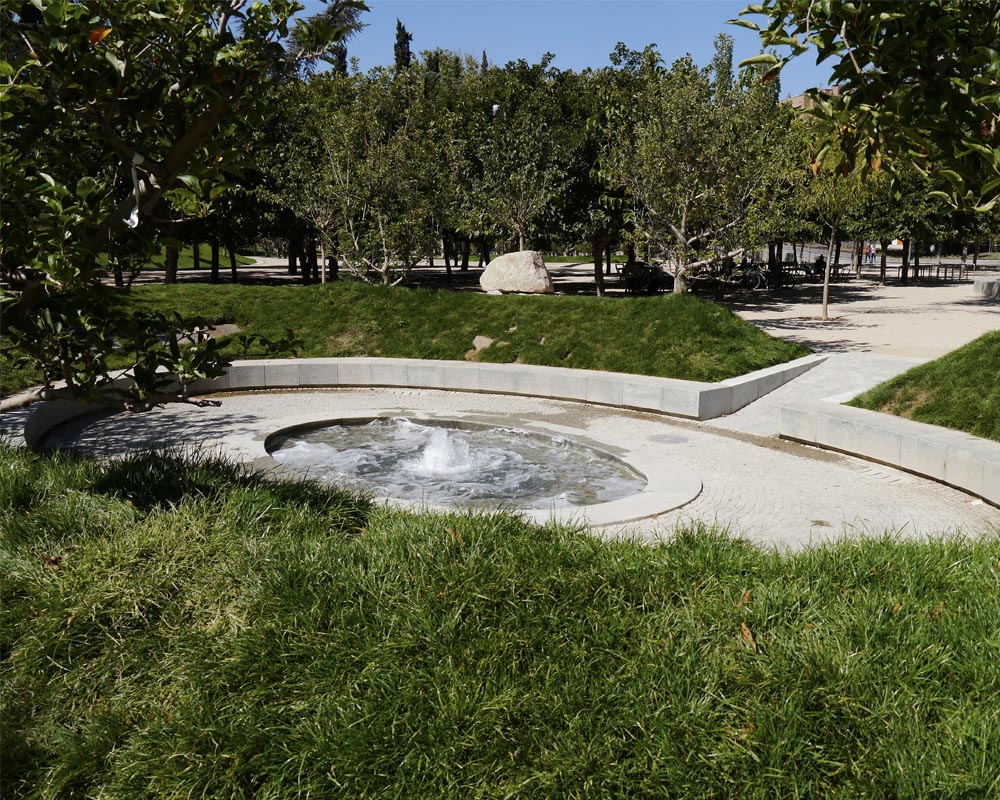
The pop-jets sit in a sheer disk of water, reflecting the implacable blue sky. Emboldened toddlers totter around. Then the jets start popping and it’s chaos all round.

0
false


18 pt
18 pt
0
0

false
false
false


 /* Style Definitions */
table.MsoNormalTable
	{mso-style-name:"Table Normal";
	mso-tstyle-rowband-size:0;
	mso-tstyle-colband-size:0;
	mso-style-noshow:yes;
	mso-style-parent:…

'Pop jet': kid-speak for 'I'm going to get my kit off and go completely beserk'.

'Pop jet': kid-speak for 'I'm going to get my kit off and go completely beserk'.

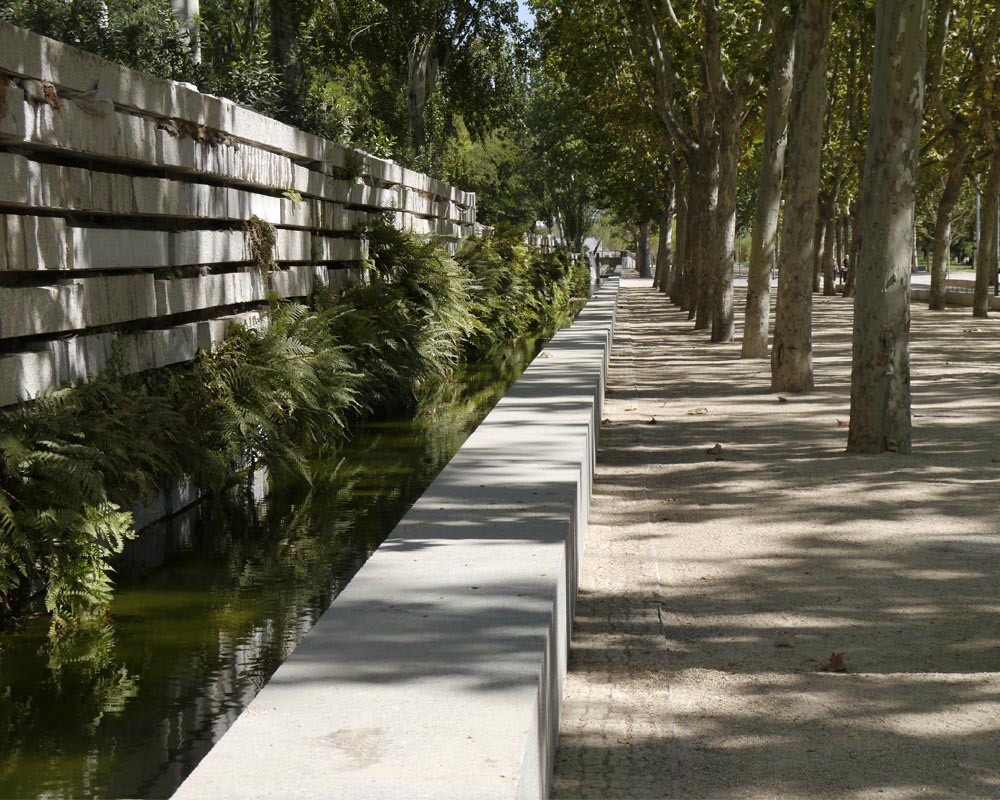
Elsewhere the water runs in a cool, dark, fern-lined rill, beside the shady avenue of trees.

0
false


18 pt
18 pt
0
0

false
false
false


 /* Style Definitions */
table.MsoNormalTable
	{mso-style-name:"Table Normal";
	mso-tstyle-rowband-size:0;
	mso-tstyle-colband-size:0;
	mso-style-noshow:yes;
	mso-style-parent:…

Ripples and reflections.

It’s About Madrid

Seems kinda obvious, but not every park says something about its location. Madrid Rio tells you stories, if you listen carefully. Amongst them:

It tells you this is a place dry enough for a public park to to be clothed in large expanses of decomposed gravel, and it's not a complete disaster if the lawn isn't doing too well.

It tells you about its temperate location, with swathes of lavender and groves of pines.

0
false


18 pt
18 pt
0
0

false
false
false


 /* Style Definitions */
table.MsoNormalTable
	{mso-style-name:"Table Normal";
	mso-tstyle-rowband-size:0;
	mso-tstyle-colband-size:0;
	mso-style-noshow:yes;
	mso-style-parent:…

Uh oh. Is that some temperate climate lavender envy? I think it might be.

It tells you that the Avenida de Portugal used to be the ceremonial route to the Palace from the west, or the way to Lisbon from Madrid. That’s why it’s been given special treatment. In West 8’s design, the pattern of paving and even seating references the cherry blossom-filled valley that provided respite on the long journey.

0
false


18 pt
18 pt
0
0

false
false
false


 /* Style Definitions */
table.MsoNormalTable
	{mso-style-name:"Table Normal";
	mso-tstyle-rowband-size:0;
	mso-tstyle-colband-size:0;
	mso-style-noshow:yes;
	mso-style-parent:…

Blossoms cover the ground, even when there are no flowers.

It’s Connected

Most wonderfully, Madrid Rio connects people with a part of the city that for so many years was lost to them. Now, they can once again get to the river, cross it, journey along it, and enjoy it at all different times of the year.

0
false


18 pt
18 pt
0
0

false
false
false


 /* Style Definitions */
table.MsoNormalTable
	{mso-style-name:"Table Normal";
	mso-tstyle-rowband-size:0;
	mso-tstyle-colband-size:0;
	mso-style-noshow:yes;
	mso-style-parent:…

The fabulous Puente Arganzuela

For me, that’s perhaps the most significant thing that this park has achieved. Not only does Madrid Rio create lots of wonderful individual moments, it achieves linkages and connections on a citywide scale.

Madrid is one of many cities around the world that have unlocked the potential of their riverfronts. Other cities and countries are creating new linkages by unlocking road and rail corridors, or political and military boundaries.

If you’d like to read more about Madrid Rio, check out the chapter on Linkage Park projects in my book Future Park: imagining tomorrow’s urban parks.

What did you think of Madrid Rio. If you’ve visited recently, what did you think? I’d love to hear if you know of a place where riverfront parkland could replace freeways. Let me know in the comments.

See some more images of Madrid Rio in the gallery below and check back soon for another Great Park.

Design Class: but how does it make you feel?

Have you ever heard designers speak about the way something feels?

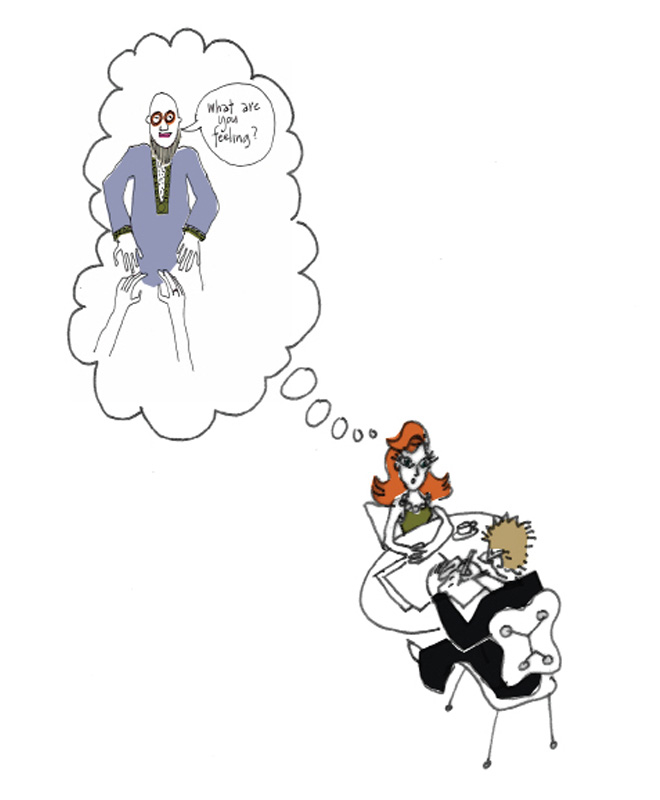
Has it given you pause for concern, worried that any moment now someone's going to grab your hands, look deep into your eyes and ask you to share your feelings? 

Fear not.

What we're talking about here are the qualities that affect how you feel when you’re in a particular room, garden, house, building, park, or city - any place really. 

How does this place make you feel?

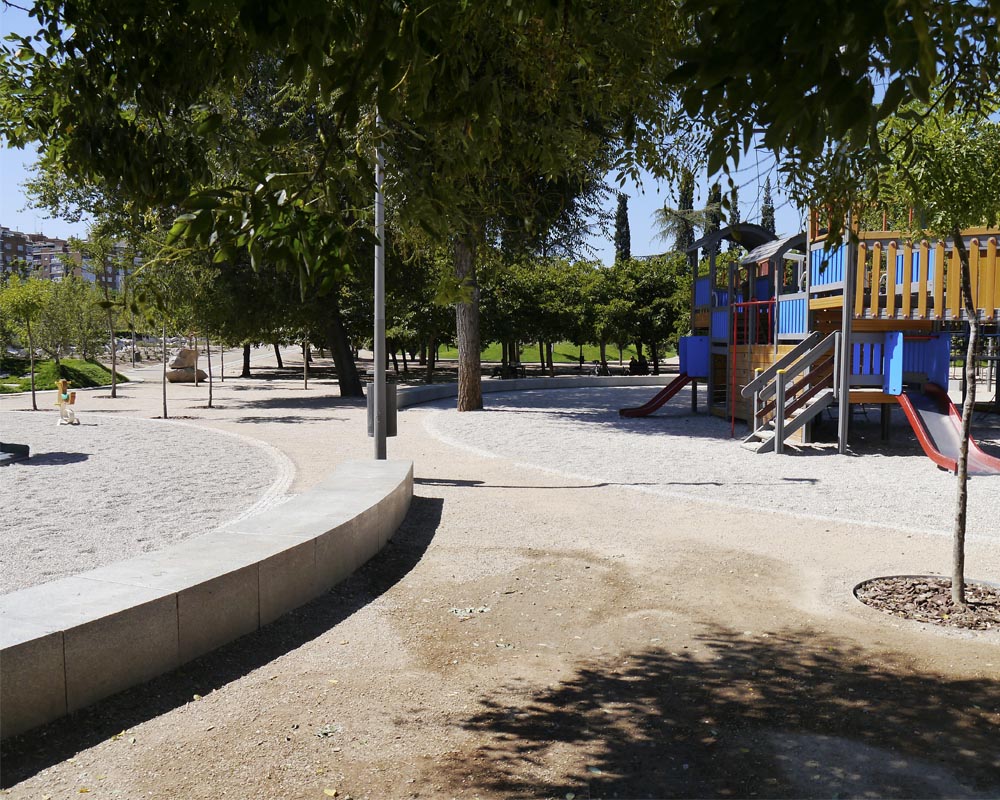
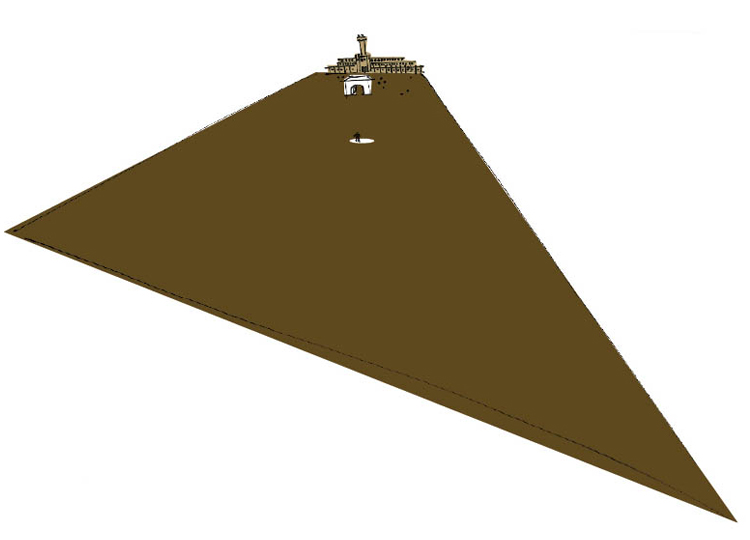
A bit freaked out, maybe? Is it overwhelming?  The edges are a long way away if you're standing there in the middle. There’s nowhere to find shelter or privacy.  Everything you did would be on full display.  Unless you're a despotic dictator with need to frequently remind your peoples of your terrific might and power, you'd be unlikely to feel especially relaxed in such a place.

How about this place?

It’s different, isn’t it? It’s a lot more enclosing and protective for one.  Perhaps you find it more welcoming.

This one?

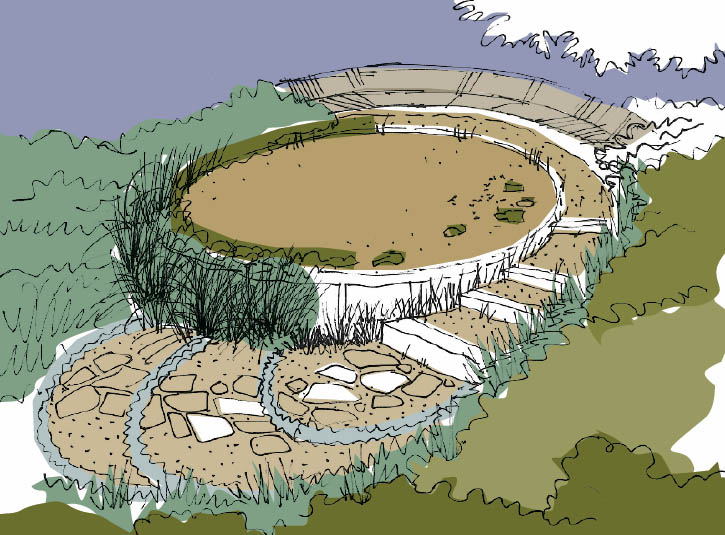
Some people might find this place private, secure and serene. Others might find it a bit isolating.

Why is this important?

If you start to notice and understand how different places make you feel, it’s much easier to describe how you want places in your home or garden to feel. And once you know, it’s much, much easier to work towards achieving that feeling, or quality.

There’s lots of ways to achieve the quality you’re after, and we’ll talk about some of them in future Design 101 topics.

Now it’s over to you.

Think about your favourite place, either at home or somewhere you’ve visited.  Now tell me what qualities it has – how does it make you feel when you’re there?

Let me know in the comments section.

If you found this useful and interesting, consider sharing it with a friend, and I’ll see you soon for more Design 101.