Free at Last: Martin Luther King's Atlanta Resting Place

This week marks the 50th anniversary of I Have A Dream.

The epoch-defining speech was given by Dr Martin Luther King, Jr, on the 28th of August 1963. It came at the end of the ‘March on Washington’, a monumental civil rights demonstration attended by a quarter of a million people, and widely acknowledged as a tipping point in the US civil rights movement, being followed in 1964 by the passing of the Civil Rights Act, and in 1965 by the Voting Rights Act.

Tragically, only five years later the dream was over. King, the youngest person to receive the Nobel Peace Prize, and champion of non-violent resistance was shot and killed outside the Lorraine Motel, in Memphis.

Dr King’s funeral was held in Atlanta, at the Ebenezer Baptist Church where his father had been preacher. 

The Church still exists on Auburn Avenue, a block from the house where King was born and grew up.

The house and church both form part of the Martin Luther King, Jr National Historic Site.

Also forming part of the site is The King Center, containing a remarkable archive of King’s writing, speeches and papers, and a visitor centre, where it is impossible to remain unmoved upon confronting the battered timber wagon on which King’s body was transferred to Southview Cemetery.

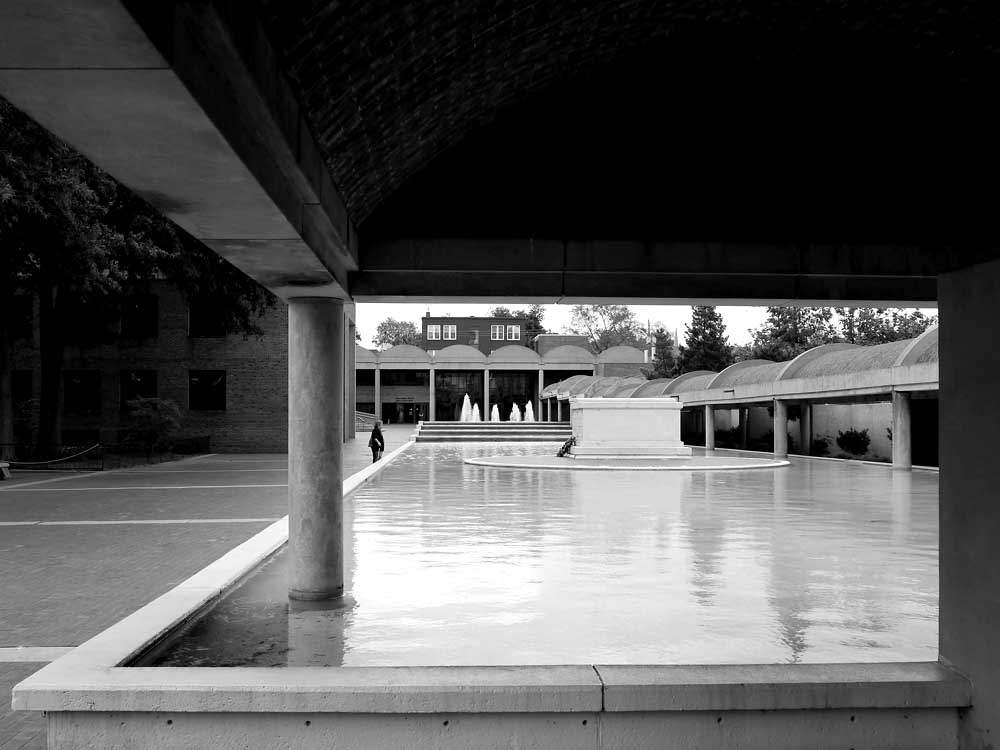
Across the road is the crypt where his remains were reinterred in 1970, and where, in 2006, his widow Coretta was finally reunited with her husband. 

I imagine the crypt of Georgia marble shines hopefully in the sun, but it stands with muted despair on less temperate days.

Few others were in attendance when I visited, which allowed lengthy and quiet contemplation, but also admitted a pinprick of fear that maybe the efforts of King and his contemporaries have been ever-so-slightly forgotten. But no, surely it's just the lateness of the hour and the threatening skies keeping them away.

The King Center has organised a programme of rolling events to celebrate the anniversary. Thousands of people have already made or started the journey to be in Washington this week. At the Lincoln Memorial, the place from where King delivered his address is marked with an inscription. The path to the front door of his childhood home is similarly identified. 

As we celebrate his remarkable oratory this week, the somber white crypt in a quiet Atlanta street, reminds us all how that The Dream was cut short, and how half a century later, for many it remains unrealised.

The Martin Luther King, Jr National Historic Site is located at 449 Auburn Avenue, NE
 Atlanta, Georgia. More information, including the excellent online archive, is available at the King Center website.

Listen to the speech here.

Design Class: the deceptive simplicity of just one tree

Sometimes it’s easy to think of designers as a weird, black-clad species that flounces around shouting “Just make it pink! I vant everythink to be pink!” 

And admittedly, I’m sure there are some like that out there.

And…ahem…some of us do like black.

However for most designers, what they do is bloody hard work. Fun, and the only thing they could possibly imagine doing, but hard work nonetheless.

The sheer quantity and complexity of everything that must be considered can be enormous, even on the most seemingly simple of projects.

Today I’d like to share a landscape design exercise that I find very humbling. On the one hand, it lets complex tasks be broken down into smaller chunks. On the other, it reinforces the importance and impact of every decision we make when designing.

You start by imagining your favourite garden, park or street. I’m going to use the one we analysed recently.

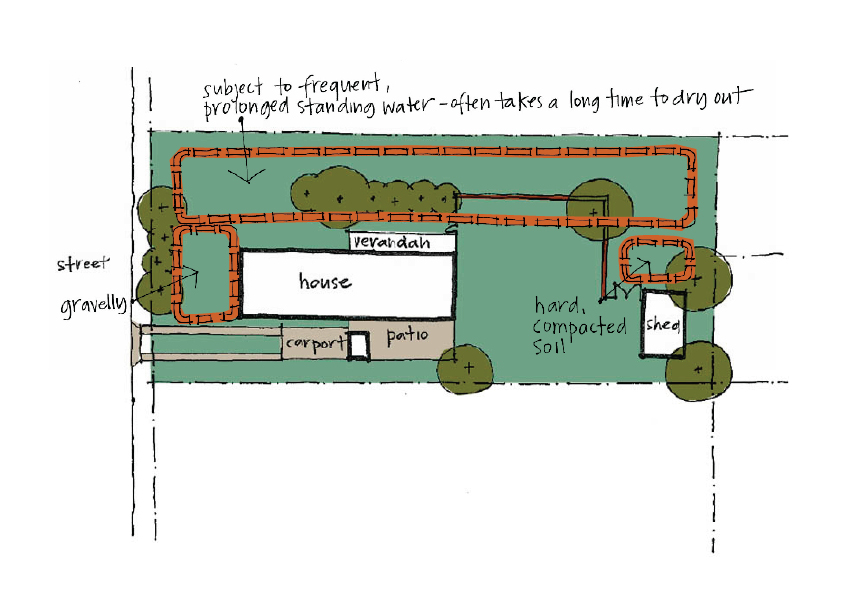
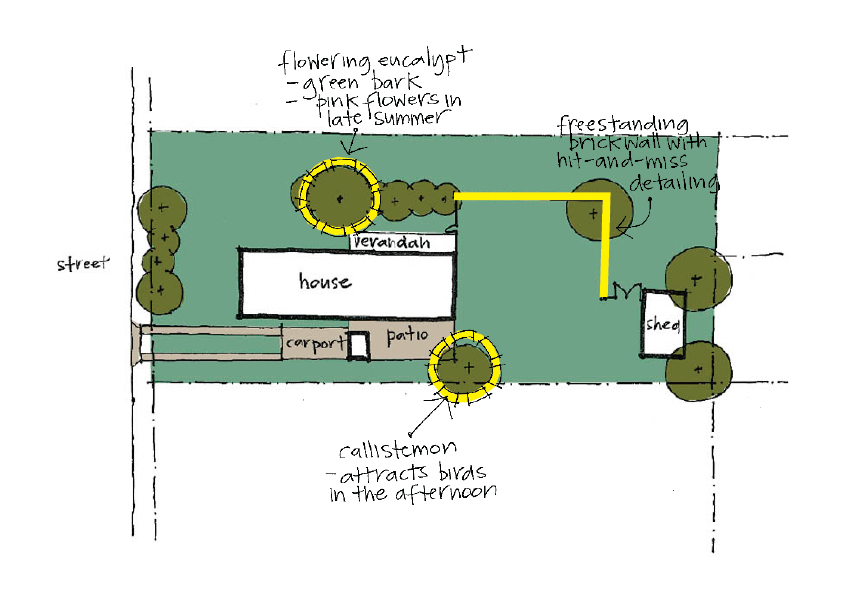
That's the house in the middle. The shed is on the far right, and the street is to the left.

Now for the fun (and tricky) part.

You’re in charge, but you’re only allowed one tree. Just one tree. (You don’t need to consider what species at this point.)

Where are you going to plant it, and why?

For me, answering these seemingly simple questions requires me to think very strategically about how the different spaces in the garden already work, and how this new tree will alter things.

Here are a few of the options I considered:

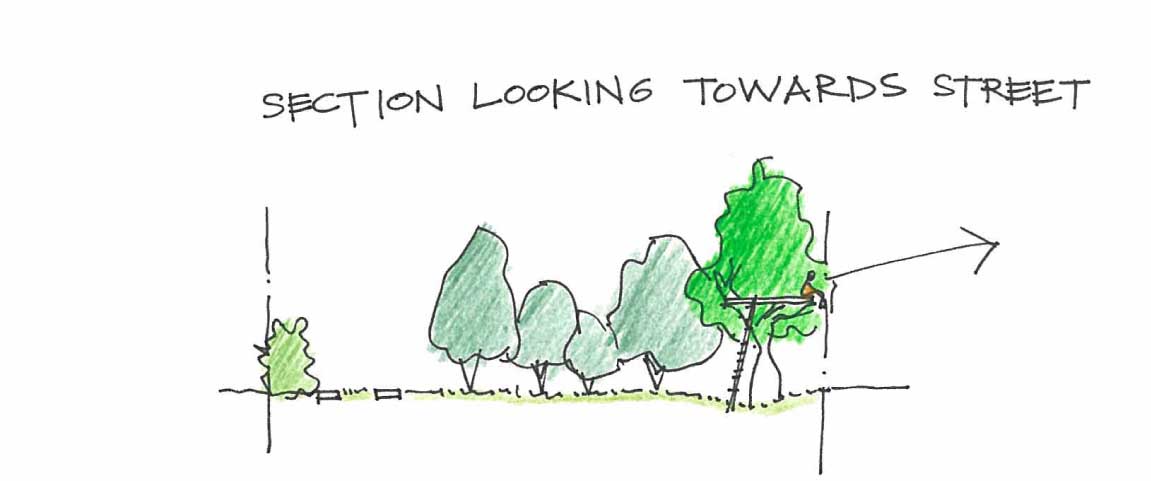
Option 1

Placing the tree in the top left (north) corner. A tree here would provide additional privacy from the street.

Placing the tree in the top left (north) corner. A tree here would provide additional privacy from the street.

As the tree grows in this location I could build a platform in the branches and see across to the lake over the road.

As the tree grows in this location I could build a platform in the branches and see across to the lake over the road.

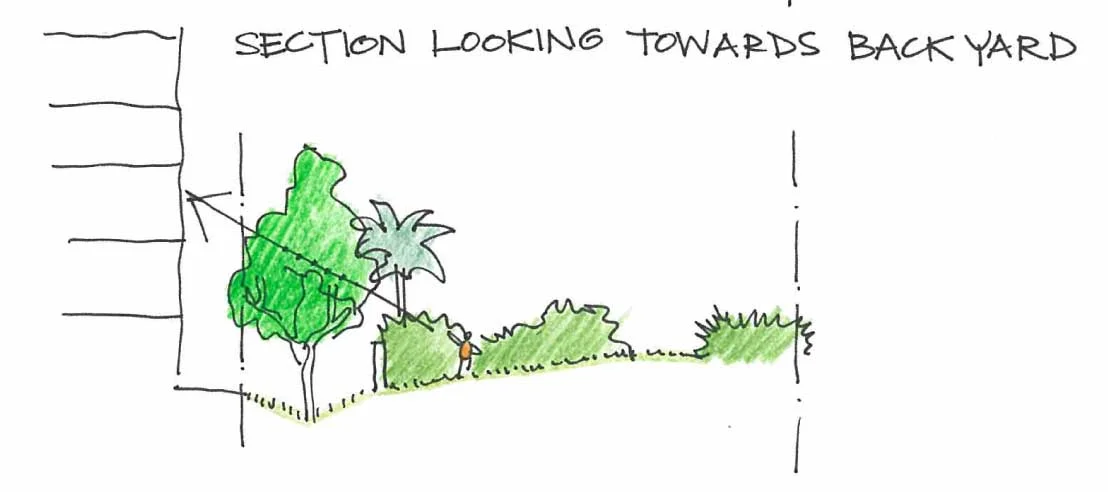
Option 2 

Placing the tree between the internal screen wall and the boundary.

Placing the tree between the internal screen wall and the boundary.

A tree here would help screen the back of the development proposed for next door, and would provide an element that’s closer in scale as the new multistory building.

A tree here would help screen the back of the development proposed for next door, and would provide an element that’s closer in scale as the new multistory building.

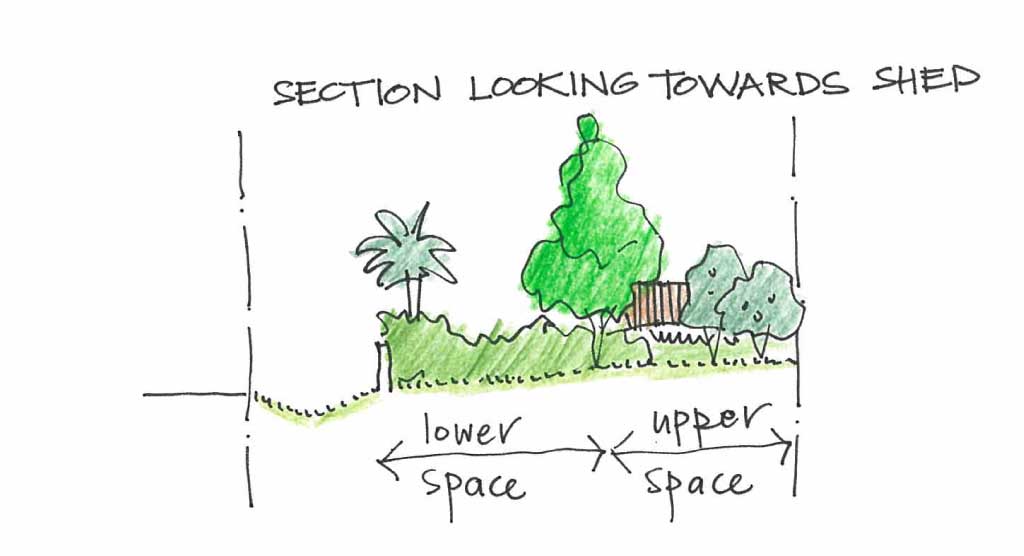
Option 3

Placing the tree at the end of the existing planting, inside the screen wall. A tree here would shade the flat section of yard directly outside the house, enabling it to be used for more hours of the day.

Placing the tree at the end of the existing planting, inside the screen wall. A tree here would shade the flat section of yard directly outside the house, enabling it to be used for more hours of the day.

The tree would act as turning point or fulcrum between these two sections of the garden, allowing them to read as their own particular places. This tree would also start to screen the shed, so it would be less visible from inside the house.

The tree would act as turning point or fulcrum between these two sections of the garden, allowing them to read as their own particular places. This tree would also start to screen the shed, so it would be less visible from inside the house.

Each of these options creates different spaces and function in different ways. Which would you choose?

Where have you placed your tree? Why?

To really see the power of this exercise, ask someone else to imagine the same space you chose. Then, without giving away your answer, ask them where they would place just one tree, and why.

I love the one tree exercise because on the surface it seems so simple. But it’s valuable for three reasons.

Firstly, it shows that every complex design problem can be broken down into smaller parts.

Secondly, it shows that there are lots of possible solutions to even the simplest design challenge.

Following on, thirdly, it shows that every decision we make is a design decision, and the choices we make about all decisions have a direct impact on the spaces and functions of our landscapes. We do well to proceed thoughtfully.

So tell me…where did you plant your tree, and why?

ps: Let me know if you liked the coloured pencil versions of the sketches this week. (I do) Leave a comment below, or drop me a line. Thanks!

Zollverein: the World's Most Beautiful Colliery

Last week the 2013 Think Brick awards were announced.

Brick has been undergoing somewhat of a renaissance here amongst designers. Perhaps it’s a simple case of today’s generation of architects discovering and appreciating the many super stylin’ brick houses created by great Australian architects at the peak of their game in the 1960s and 70s. (Treat yourself to a flick through Living and Partly Living if you need refreshing or convincing).

Whatever the reason, brick is suddenly ‘in’ again.

All this thinking about brick got me musing about the astonishing collection of buildings that make up the Zollverein World Heritage Site in Essen, Germany.

Essen is in the country’s central far west, part of the Emscher and Ruhr valleys that were the epicenter of Germany industrialisation.

Fuelled by extensive coal deposits, the collieries and steelworks of the region were critical to wartime armament production, and then to the post-war economic boom of the 1950s and 60s.  As settlements and people followed industry and employment, this became the most densely populated area in the Ruhr valley.

Zollverein was established in 1847, when Franz Haniel bought and amalgamated 14 coalfields north of Essen. By the late 1920s the Haniel family company had been through several mergers, eventually becoming part of the largest steel group in Europe.

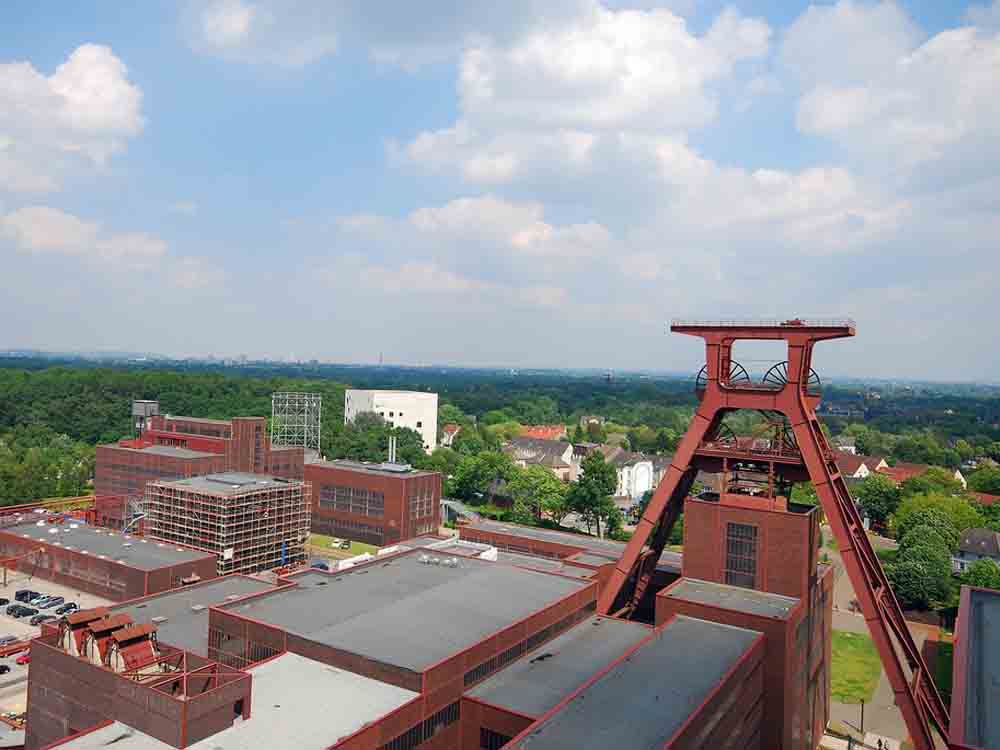
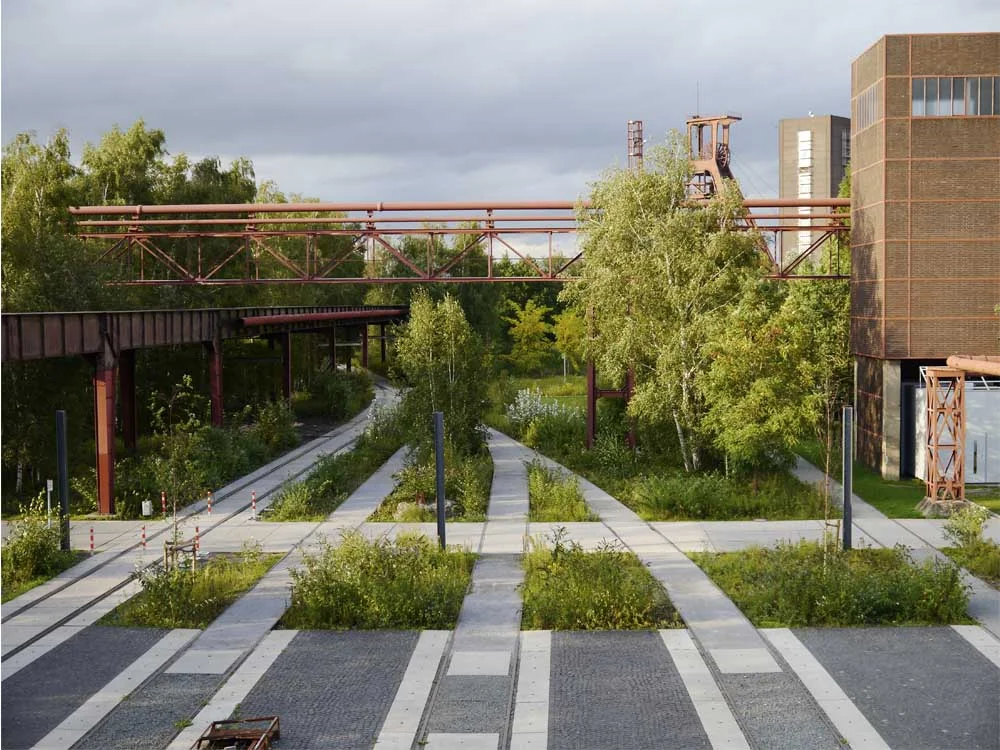
Looking across part of the complex at Zollverein.

As tends to happen in these situations, hugely ambitious production and cost saving goals were set for Zollverein, and the plant underwent a major redevelopment.

Here’s where it starts to get interesting

Architects Fritz Schupp and Martin Kremmer were engaged to design all the above-ground structures.  Yes, even though the company was pursuing cost savings. Brilliant!

Working closely with the mine’s engineers, Schupp and Kremmer replanned the site, with a ‘production axis’ and an ‘energy axis’ intersecting at a large court in front of the main shaft building and pithead. 

The functions of the site also influenced the architectural design. A system of steel framed structures, with brick and glass weather screens, was developed for the pit buildings, which, despite their different functions, all had to provide long clear spans and bear heavy vertical loads. 

A refined and austere collection of steel framed and brick clad buildings was the result. 

Adapting this system to each building gave a strong sense of order to to the site.

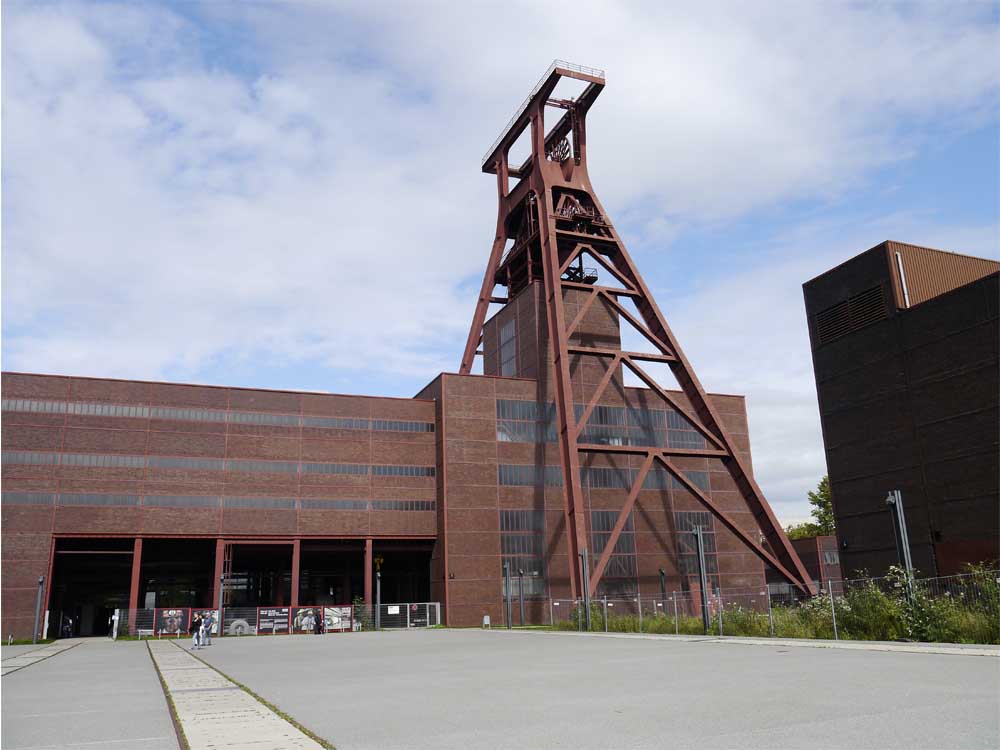
Contrasting the simple cubic forms was the mighty pit head itself, expressed in an open steel structure of great elegance. 

When the new Zollverein opened in 1932 it quickly earned the title of ‘The Most Beautiful Colliery in The World’. I think that was a pretty fair call.

In the 1970s Germany started to become less competitive in the global coal market.  By the late-1980s it was all over: mines, smelters, refineries, coking plants and blast furnaces all closed their doors and were silent. The last shift went down the Zollverein pit shaft in 1986. The coking plant closed in 1993.

The owners planned to clear the site. Many others fought to save it, and at the end of 1986 the entire shaft site was heritage listed. The state of Rhine-Westphalia bought the site from the city of Essen and from 1989 to 1999 it was rehabilitated and redeveloped.

Today Zollverein is the cultural and artistic centerpiece of the Ruhr region, with the 55 metre high former pit head standing sentinel over the place.

Rem Koolhaas’s office, OMA, completed a master plan for the site in 2002.  The landscape master plan was the work of Agence Ter.

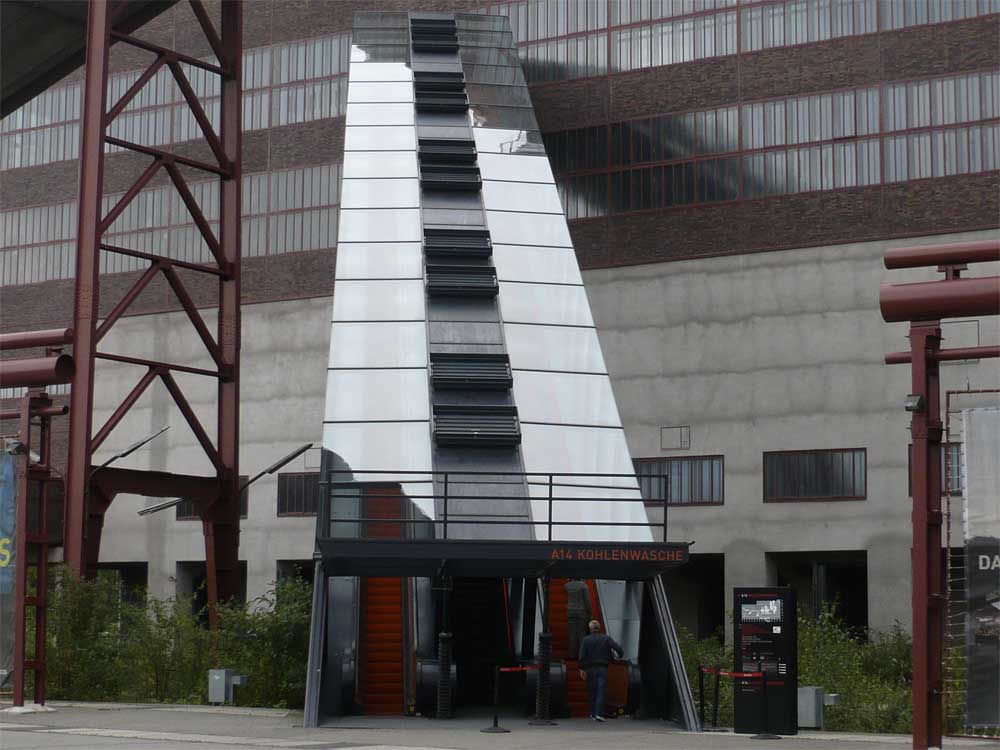
The coal washing plant, the largest building on the site, was converted into a Visitor Centre and houses the Ruhr Museum. Details in the loooong stair and escalator are inspired by flowing molten steel.

The Zollverein School of Design and Management occupies a building designed by Saanaa. Its pristine sugarcube form is inspired by the existing cubic structures.

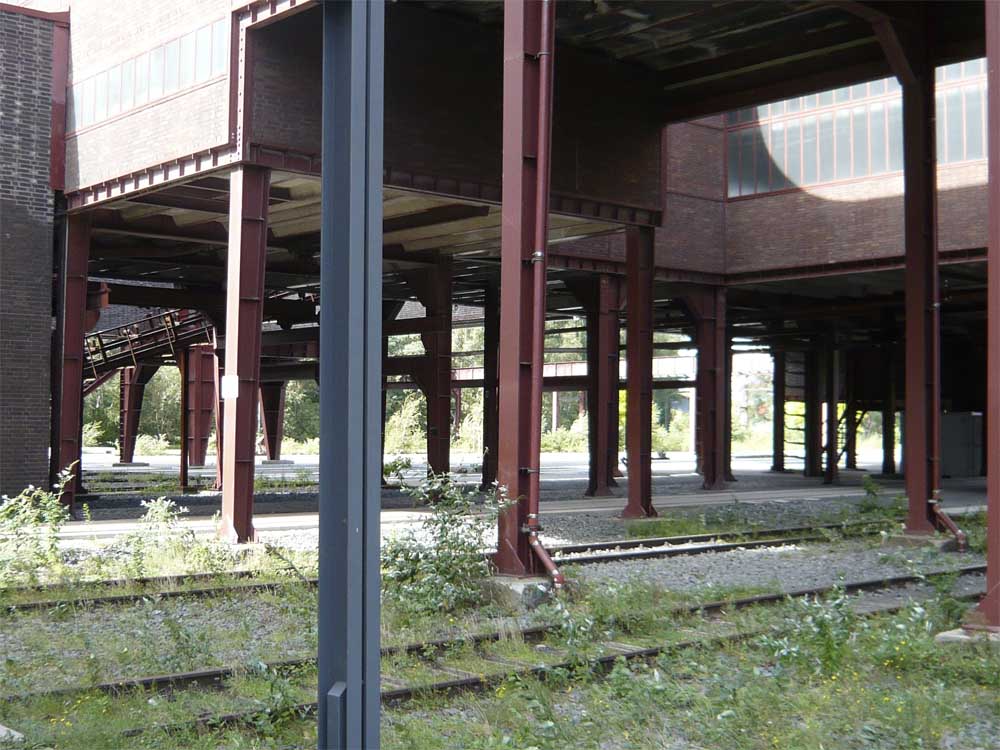
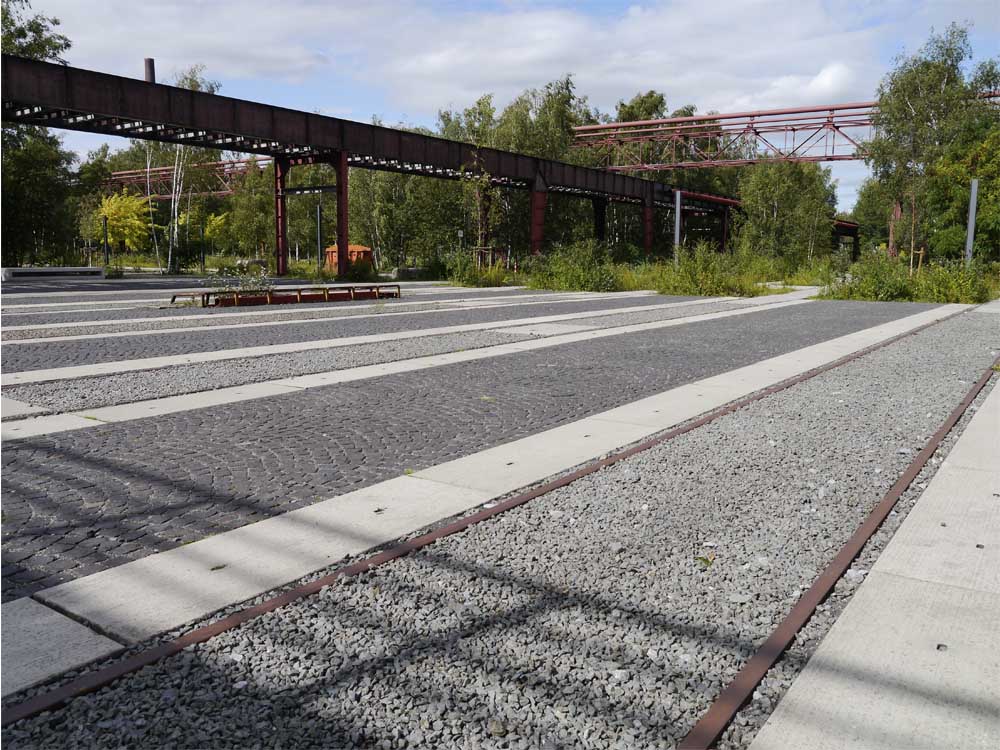
Nearby parts of the site look to have run wild.

Many of the older buildings are still off limits, awaiting their appointment with the makeover squad. 

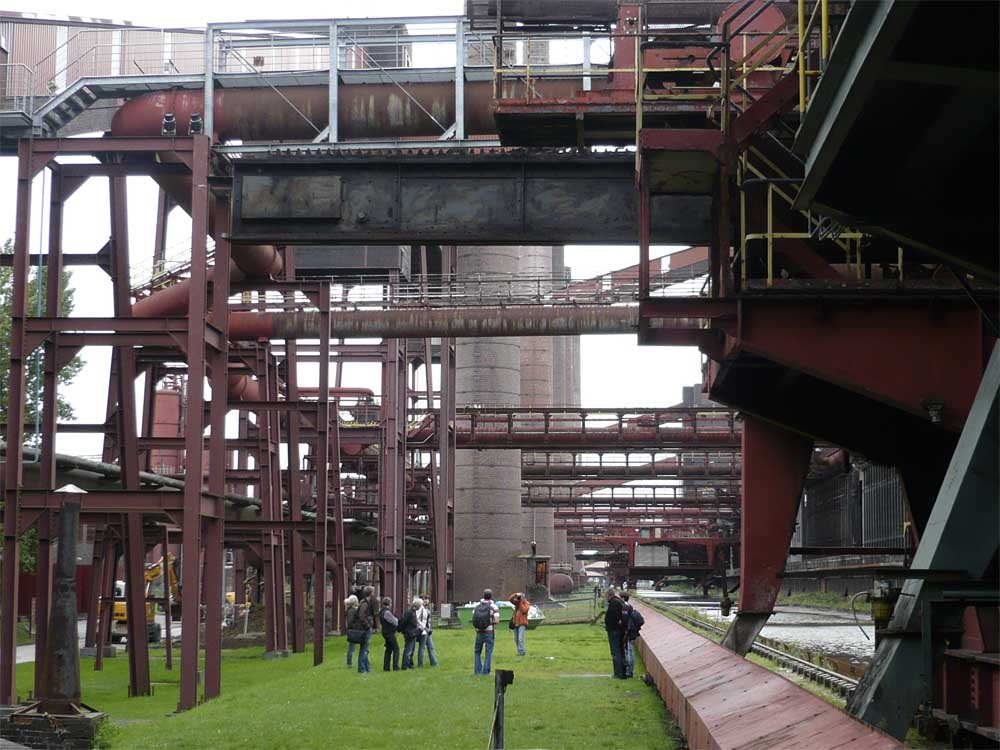
Just across the road (ie: take a packed lunch for your walk) is the former coking plant, a stupendous, 400 metre long affair trailing tentacles of pipes and gangways. 

Visitors are dwarfed by the [insert superlative of choice here] structure. 
At ground level, old machinery and equipment has been replaced by a Versaille-scale water body. 

In winter there is skating! 

In summer you can take a dip in the pool... 

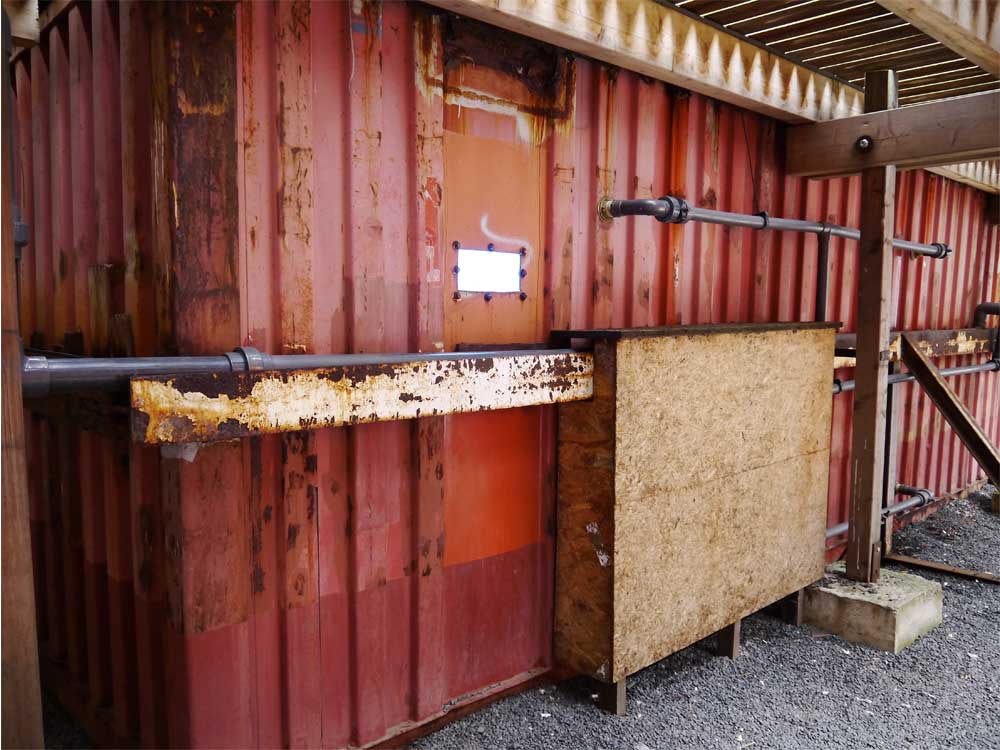
...or peek into the shipping containers holding the water below. 

The rebirth of Zollverein coincided with the International Building Exhibition Emscher Park (the IBA), a ten year state government initiative tasked with achieving the ecological, economic, and urban revitalization of the Emscher River and Ruhr Valley.

One of the IBA’s radical development philosophy was the proposal that everything from the predominantly industrial past was worth preserving.

Visiting Zollverein today doesn't just bring you face-to-face with beautiful architecture, fine landscape architecture, and evocative ruins. It reveals a hugely important site of economic production that was previously off-limits except to its workers. It shows the power of vision and commitment to work with existing redundant infrastructure, and create viable new uses. And it works not just as a stand-along monument, but as a vital, and extraordinary link in a vast regional industrial landscape.

Now it’s over to you.

What do you think of the steel, brick and glass building treatment at Zollverein? Do you think Zollverein provides any clues for how we might think about mining and industrial sites here in Australia? Are there any that have been designed as proud civic buildings, or as part of a deliberate assemblage? What are our plans for our extractive industry sites once mining finishes?

I’d love to know your thoughts – join the conversation in the comments section below.

If you know someone who’d enjoy reading this article be sure to share it, and check back soon for more from the wonderful world of landscape, architecture and design.


Image credits:

Aerial view showing pit head and Saanaa building beyond

Image by Victor Bayon

File licensed under Creative Commons Attribution-NonCommercial-ShareAlike 2.0 Generic (CC BY-NC-SA 2.0)

Image retrieved from http://www.flickr.com/photos/formalfallacy/3641897195/sizes/l/in/photolist-6xPF9X-6xPfHt-6xPg5x-6xTPCN-6xT5nq-6xTPaL-6xT4JQ-6xPdAx-8yeLeV-8yeLJR-8yhNNy-8yhQ19-8yhQKN-8yhQpN-8yhN25-cqAaWm-9BbSDL-9BbR9u-9B8Yht-9B8YD2-5hDy4q-6y3o58-7HxSB2-5hzbNx-eAUc6r-eAUcEv-eAXky7-arKUrd-arKUEU-bkvTiK-4bumjE-7MYTn1-9saLzd-9s7MMR-9saLAG-aCaTKJ-7VKS4w-4bpqCi-8Gzqvy-8Gsvng-8GvG5Y-8GvBr5-a7krWL-5hzaXe-8rSi74-dkhf64-8rSebH-3uMKpW-3uMKNN-8EyfWg-4bq2fV/ on 10.08.13

Night skating

Image by Felix Montino

File licensed under Creative Commons Attribution 2.0 Generic (CC BY 2.0)

Image retrieved from http://www.flickr.com/photos/felixmontino/5305887665/sizes/l/in/photolist-95S4xP-gmH1L-5tKoXS-8seasf-apzPuZ-3uHgZH-9nw1ka-dRE3ZR-dKryhL-dJgCxw-6xPF9X-6xPfHt-6xPgpR-6xPg5x-6xTPCN-6xT5nq-6xTPaL-6xT4JQ-6xPdAx-8yeLeV-8yeLJR-8yhNNy-8yhQ19-8yhQKN-8yhQpN-8yhN25-cqAaWm-9BbSDL-9BbR9u-9B8Yht-9B8YD2-5hDy4q-6y3o58-6h6Q1U-7HxSB2-5hzbNx-eAUc6r-eAUcEv-eAXky7-arKUrd-arKUEU-bkvTiK-7zY15z-7zY15V-rAm9x-8MaSHK-8Gzqvy-8Gsvng-8GvG5Y-8GvBr5-a7krWL/ on 10.08.13

All other images by A. J. Wright and R. A. Buchanan.

Find out more about Zollverein:

Zollverein is located at Gelsenkirchener Straße 181, 45309 Essen, Germany. Its English-version website is currently being updated, but there is still some good basic info available. The German site is available at the same link.

I Don't Like Flowers. Can I Still Have a Garden?

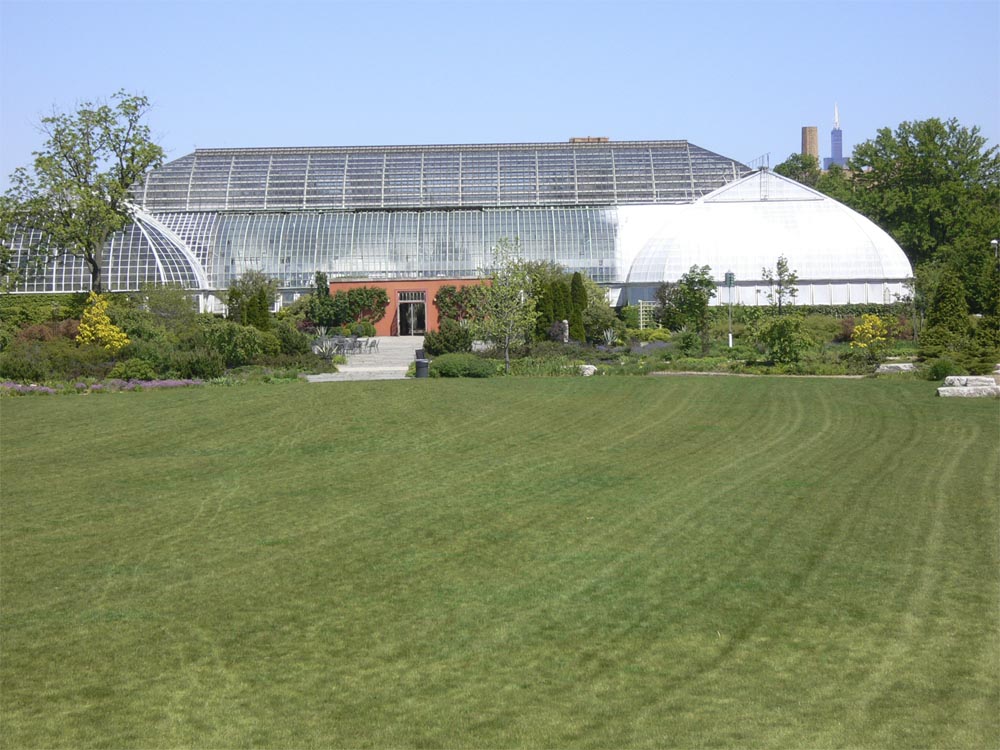
If you saw the story on the Garfield Park Conservatory City Garden in Chicago, you couldn’t have failed to notice the riot of spring flowers erupting at every turn. 

Flowers are all around us; helping plants (and people!) get their groove on.

I remember being sent two dozen new season peonies once, by a lovely man who looked exactly like Daniel Craig in Casino Royale.  Actually, no, that never happened. Focus, Landscapology.

But what happens if you’re not that keen on flowers?

I don’t mean if you have sinus-shattering allergies, or you break out in hives if you come within cooee of a chrysanthemum. I mean what if you just plain don’t like ‘em, can’t stand ‘em, and don’t want them in your park or garden?

Does it mean you’re a bad person, willfully denying yourself and others oceans of horticultural pleasure? 

No, of course not!

What is does mean though, is that you’ll have to be a whole lot more selective when choosing plants.

There are two types of plants available to you.

The first are the true non-flowering ones. Whilst nearly all plants use flowers to help them beget more plants, some ancient plant families do not use flower power at all.

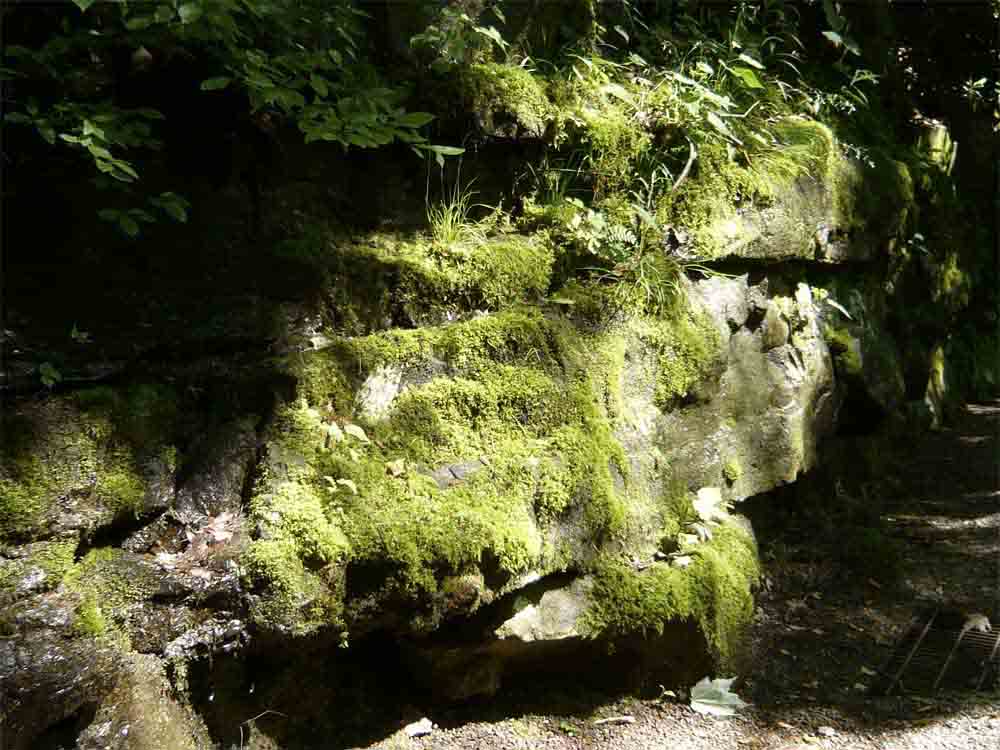
Mosses are flowerless plants that are incredibly beautiful, but often overlooked. Worse, they are sometimes dismissed as undesirable, and blasted out of their quiet lives in wall and paving joints, or under trees. I have quite a thing for moss, and can't resist patting its velvety verdure whenever given the chance. If mosses thrive where you are, why not embrace their delicate beauty.

The original 'green wall': moss cascades down a rock face at Fallingwater in Pennsylvania.

The original 'green wall': moss cascades down a rock face at Fallingwater in Pennsylvania.

Delicate filaments catch the light on top of this wall at the Medellin Botanic Gardens.

Delicate filaments catch the light on top of this wall at the Medellin Botanic Gardens.

Like mosses, ferns do not have flowers, but reproduce using spores.

From the delicate fronds of this hanging fern...

From the delicate fronds of this hanging fern...

...to the tough leaves of the birds nest.

...to the tough leaves of the birds nest.

Conifers are also plants that do not have flowers. In Australia, the kauri, huon, hoop and bunya pines are just a few of the conifers that reproduce using seeds rather than flowers.

The unmistakable form of the mighty Bunya Pine.

The unmistakable form of the mighty Bunya Pine.

The second type of plants increases the options considerably, but may not be strictly by-the-book for the botanical and horticultural purists amongst us. Just so you know.

Included here are those that produce very insignificant flowers, flowers that ‘don’t look like flowers’, or those that flower incredibly infrequently.

The following represents just a tiny selection of plants in this category.

Palms are grown for their foliage rather than their tiny flowers. When they do get around to it, some palms also bloom only once, at the end of their lives. 

Grasses have fine foliage in a range of colours and textures, and many have feathery flowers that ‘don’t look like flowers’, helping you get around your self-imposed flower ban.

Many succulents have tiny flowers, or a very short bloom time. (Some are totally OTT though, so choose carefully). 

Agaves are succulents that grow for years and flower but once, in a spectacular vertical eruption that is not for the faint-hearted. Following this the plant dies. Until then they are sculptural, hardy, and flower-free. 

Culinary herbs all produce flowers. During the growing season we usually want to encourage the production of more aromatic foliage by pinching out any flower buds as they emerge. At the end of the season you can avert your eyes, let the plants flower, then look back in time for them to go to seed and pop off the twig. 

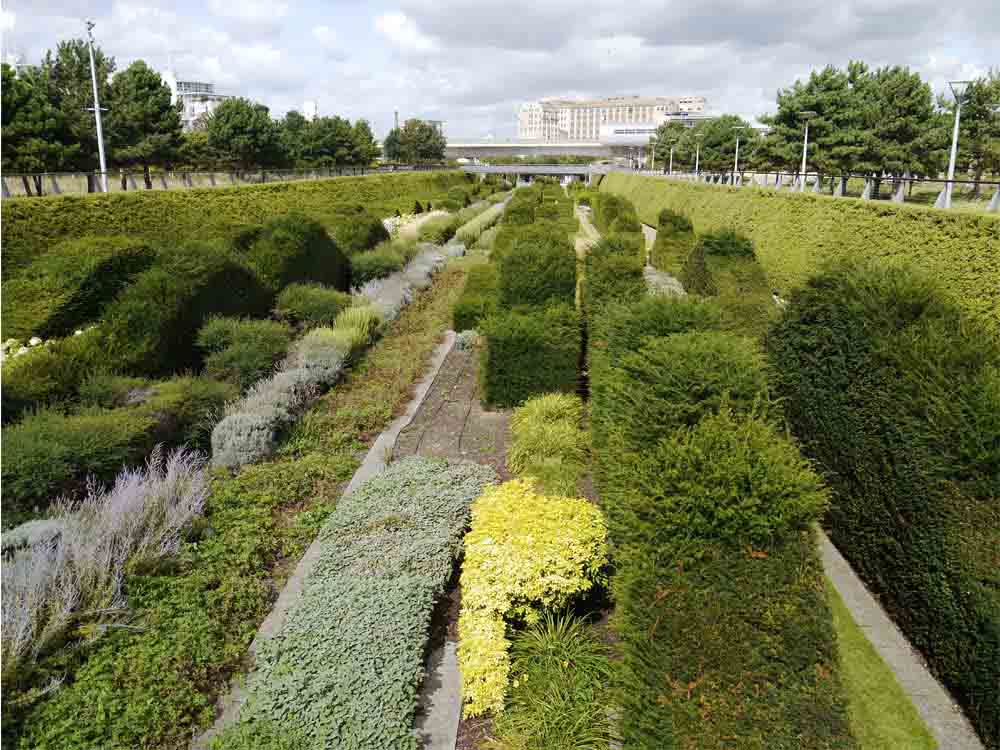
Finally, the composition of different types of foliage plants can produce incredible results. Tightly clipped hedges form the structure of the Green Dock at Thames Barrier Park. Whilst some flowering plants do make an appearance, it is the grasses and foliage plants of many forms and colours that are the main attraction. 

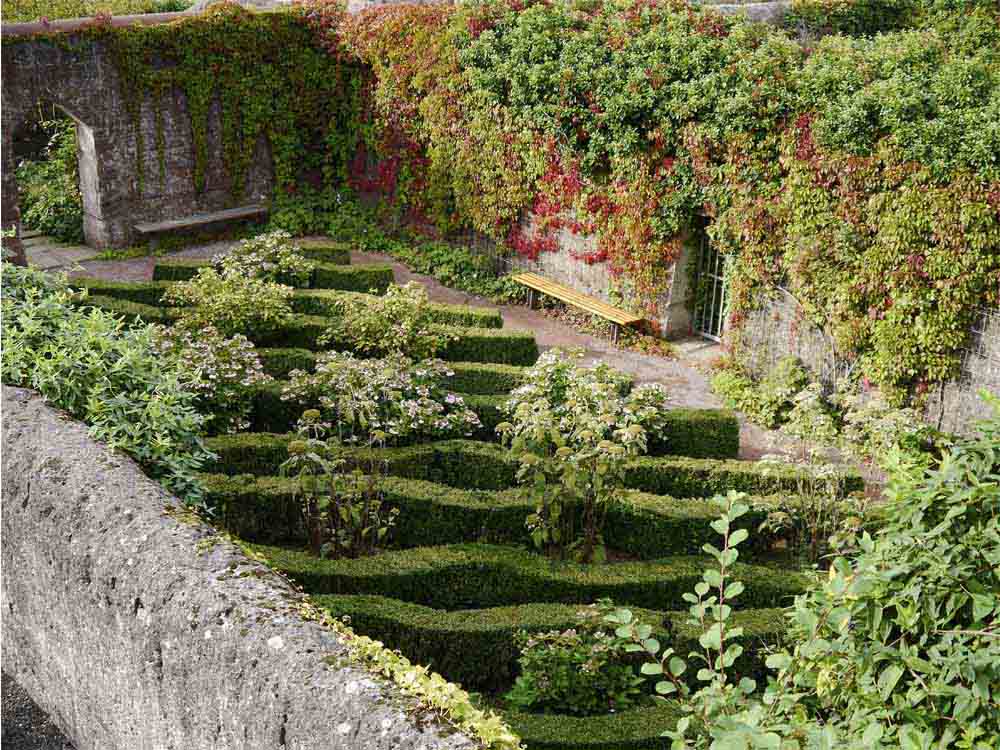
Similarly at Landschaftspark Duisburg Nord, hedges form an important part of this garden, but so do the rampant climbers displaying their look-at-me seasonal colour change. 

But you know better than me!

Wherever you are in Australia or around the world, what plants would you suggest for our anti-flower friends out there? If you're a flower-averse reader we'd love to hear from you too!

Share the love in the comments section. Of course if you know someone else who’d enjoy this story, be sure to pass it along, and to check back soon for more landscape inspiration.

A Park with Great Ideas for Home Gardens

Most designers, art lovers and recent visitors to Chicago will be familiar with Millennium Park.

A special project of former mayor Richard M. Daley, Millennium Park converted a vast lakefront railyard into a spectacular public parkland. Leading architects, artists and landscape architects including Frank Gehry, Anish Kapoor and Kathryn Gustafson were amongst those involved in bringing Daley’s Millennium Park vision to reality.

Less well known today is Garfield Park. Located in Chicago’s west side, it was opened in 1874, one of three great western parks and pleasure grounds built for this part of the city.

Jens Jensen, acknowledged as the pioneer of prairie-style landscape architecture, (yep, landscape's Frank Lloyd Wright) was superintendent of the western parks system, implementing many significant architectural and landscape projects at Garfield Park.

The focal point of the park is the Conservatory, particularly the ornate and popular Palm Room. One of the largest in the United States, the conservatory encloses over 18,200m2. It's a lovely place to take a turn around, and I can imagine it being quite the destination in its day.

Sadly, a 2011 hailstorm damaged large sections of glass in the display and production greenhouses, and repairs to some parts of the buildings are still underway. 

Behind the conservatory lies a new park.

The City Garden aims to provide additional parkland and green linkages in this park of the city.

The central organizing element is a large lawn. Its elliptical shape is a tip of the hat to a shape that Jens Jensen once used to define spaces within Garfield Park.

Beginning the journey around the great lawn.

A large landform wraps around one edge of the lawn. From its summit, the dramatic Chicago skyline is visible in the distance.

The lawn tilts up into an encircling landform.

The lawn tilts up into an encircling landform.

The 442 metre, 108 storey Willis Tower, (the artist formerly known as the Sears Tower) can be seen above the Palm House.

The 442 metre, 108 storey Willis Tower, (the artist formerly known as the Sears Tower) can be seen above the Palm House.

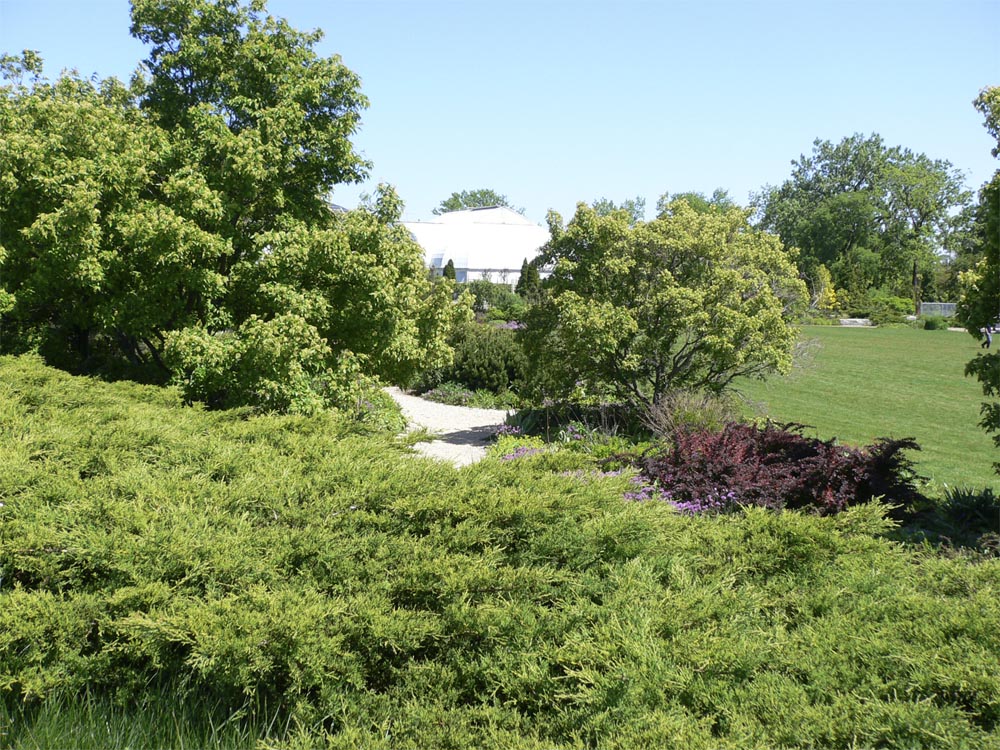
Different plant communities thrive in the varying conditions – shady and protected, sunny and exposed, flat or sloping. They enclose the lawn, frame the Palm House and shield the working conservatories. 

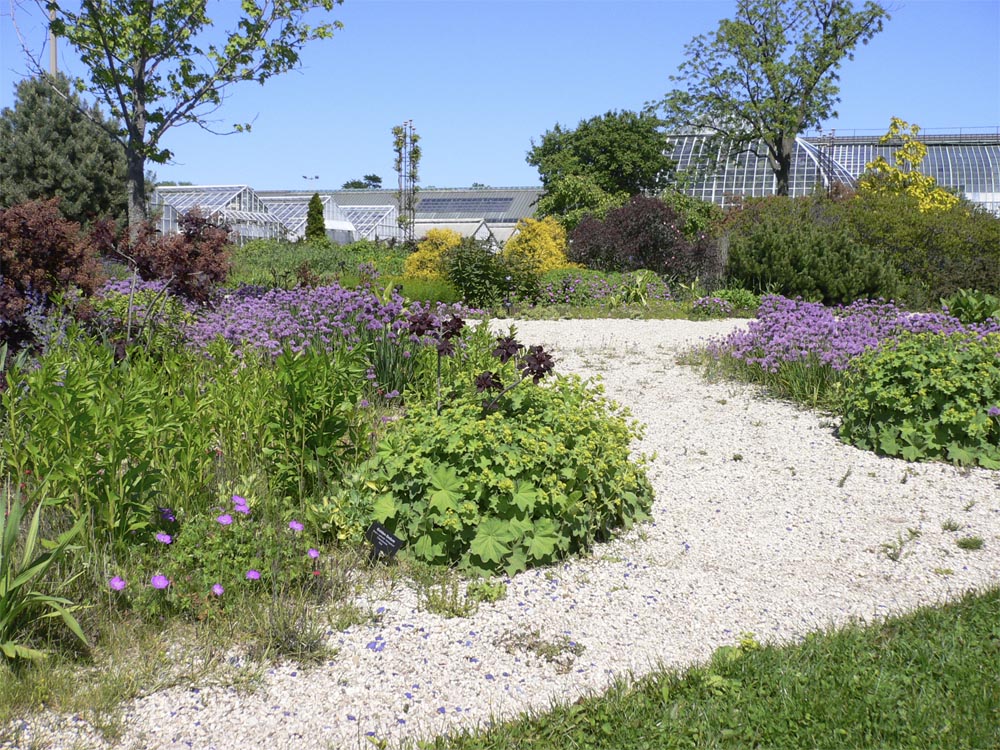
Small paths weave their way through the planting, like streams braiding their way to the lake.

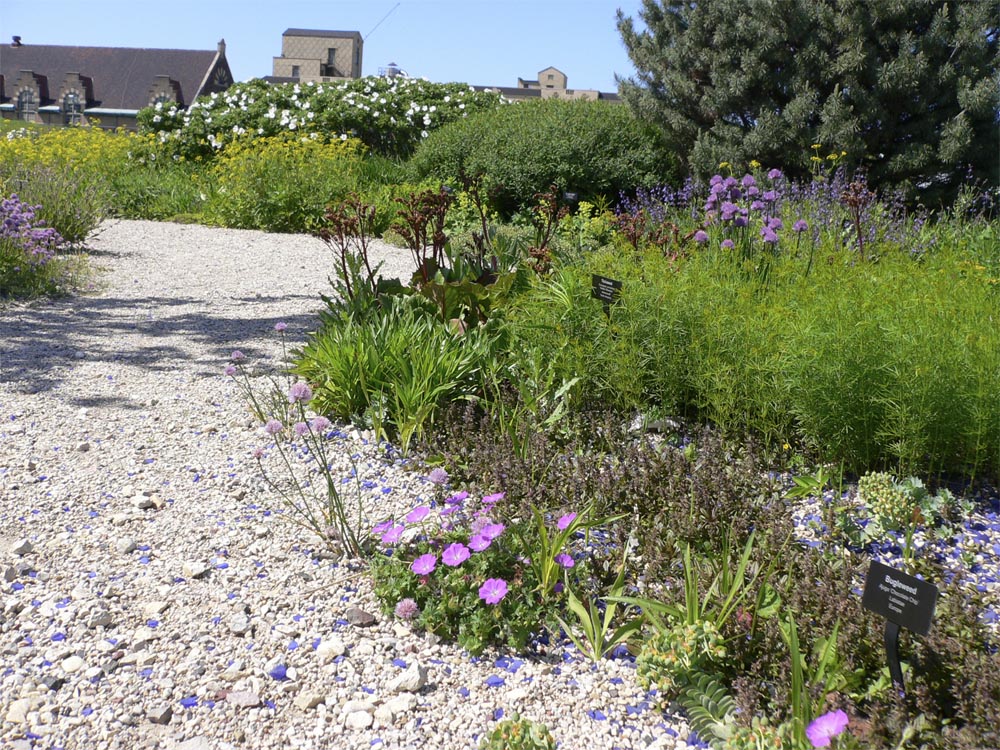
A gravel garden allows you to steps off the paths altogether. Here, the entire ground surface is gravel, interspersed with flecks of blue glass. Plants that tolerate hot, dry environments take centre stage. Oh my hat, don't they look spectacular in the summer sun.

A lily pond, empty for cleaning and maintenance when I visited, is off to the side, and traversed by a bridge.

The bridge continues the curve of the great lawn.

The bridge continues the curve of the great lawn.

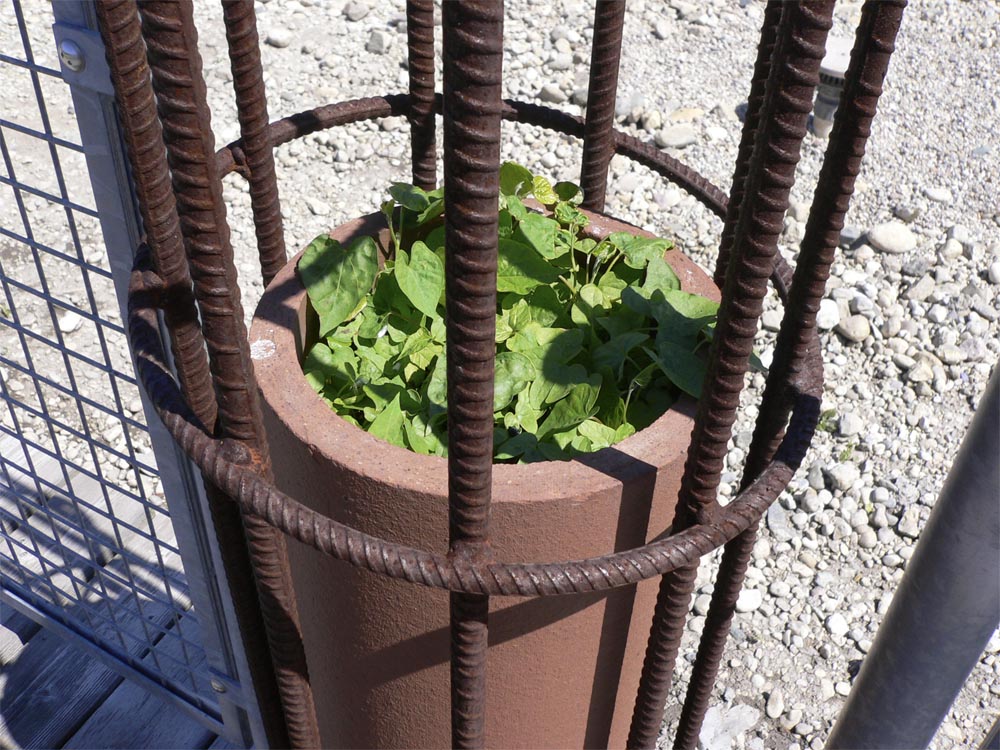
Details on the bridge are repeated elsewhere, particularly those using reinforcing steel as columns to support plants and climbers. I love the way the endcaps on the reo towers almost seem to reference details from Frank Lloyd Wright Midway Gardens, another great Chicago landscape, now sadly lost.

Heading back to the great glass conservatory you pass by a childrens’ garden, rows of tiny plastic shovels at the ready. 

Finally, there is a great bluestone terrace, looking out over the entire landscape.

The big Chicago sky sits above the big green lawn. Yet strolling the City Garden allows the beauty of every individual plant to be experienced up close.

What do you think?

What aspects of the City Garden would you consider using in other parks and gardens? Could the gravel garden be created using crushed recycled concrete instead? Would you consider using the reinforcing cages as sculptural plant supports? And what about the idea of using different types of pathways to encourage different ways of moving through the garden?

I’d love you to leave a comment below letting me know.

If you know someone who’d enjoy reading this article be sure to share it, and check back soon to visit another Great Park.


Garfield Park Conservatory and City Garden is located at 300 North Central Park Avenue,
Chicago. Read more about the park’s history, activities, events, how to get there, and ways to be involved in the conservancy at the Garfield Park Conservatory website.

The City Garden was designed by Hoerr Schaudt.


Design Class: 5 more site conditions to look for before designing

In our last Design Class we introduced  5 things to be on the lookout for in your garden or landscape: Orientation, Noise, Privacy, Drainage, and Access and Movement.  Observing how these things work gives a solid foundation to begin design work. This week we're going to add 5 additional things that are helpful to understand.

6.  Gradients and slopes

You’ll know if your block or your garden is sloping.  It’s also useful to know which direction it slopes, where the high points are, and if the slope is even or varied.  

7.  Existing vegetation

What is already there, where is it, and what condition is it in?  You can do this exercise for all vegetation, including trees, shrubs, groundcovers and climbers. Are there plants that change with the seasons, or have distinctive form, foliage, colour, scent, texture or flowers? 

8. Soil conditions

Even without carrying out a pH test you’ll have some idea about the condition of your site soil based on what’s growing successfully in your garden and nearby.  Similarly, looking at building sites or excavations in the area, and chatting to neighbours, is a good way of understanding the basic local geology before your engineer orders a geotechnical investigation. 

9. Services and utilities

Apart from overhead power lines, you mightn’t know exactly where service lines occur, but there are often tell-tale clues to their existence.  Manhole covers in the street or footpath outside your property are a clue to the presence of underground services.  Drains and pits often signify underground stormwater or sewer services.

10.  Special highlights

Are there any treasured parts of the garden that either work really well now, or have great personal value, such as a plant grown from one in your mother’s garden, a beautiful architectural element, or a favourite piece of sculpture?  

In future posts we will start looking at different ways you could respond to the findings of your site analysis. This is where it gets interesting, as two people might agree that a site has the same characteristics, but feel that different responses are required. That's where design comes in!

Now it’s over to you.

Has this exercise encouraged you to look at familiar scenes in a new way? It's only natural that if you find delight in chasing sunny spots in your garden, you may not have even noticed that some of the access points are a bit awkward, or that some garden areas don't drain very well.

Let me know in the comments section.

Of course, if you found this interesting and useful, why not double the fun and share it with a friend.