Welcome to 2014: New Year, New Look

Hello and Happy New Year!

I hope you’ve had the most wonderful Christmas break, with lots of quality chill-out time.

As you can see, the Landscapology elves have been hard at work creating our fabulous new website.

So what’s the re-design all about?

Well, over the last six months or so we’ve come to realise that our wonderful readers – you – fall into three distinct categories:

1.    We have many home owners who are looking for inspiration and guidance for their own home and garden projects;

2.   We have readers from the design industry – engineers, architects, graphic designers – who are looking for examples of great public and larger scale projects;

3.   We also have book lovers and curious souls looking for more information about the book Future Park: imagining tomorrow’s urban parks.

This redesign aims to provide the information that each of you is looking for, in a logical and useful way.

Do you like it? Please let us know your thoughts in the comments below, or give us your Number 1 suggestion for making it even better.

Finally, we’d love it if you’d consider signing up to receive our weekly inspirational stories and tips. Sound good? Scroll to the bottom of this (or any) page to add your name and join. 

Your Favourite Stories of 2013

It’s hard to believe the Landscapology blog has been up and running for six months now. In that time the number of people receiving weekly updates has more than doubled - thank-you for your interest and support! So as the year draws to a close, let’s take a look back at the stories that resonated most with our regular readers.

Here’s the Top 10:

10.  A Celebration of Texture: sometimes the bumpy bits are the most interesting - our small selection of beautifully textured pavements, walls, walls, artworks and plants.

9.  Design Class: make analysis your friend - the first of two simple guides to basics to looks out for and understand before you start designing.

8.  Elephants never forget...and they can teach you how to read drawings - Trunky the Elephant's Design 101 guide to understanding plans, elevations and sections.

7.  How I visited a park in Colombia and ended up with a book deal - as Future Park went to print I explained how the whole project came to be.

6.  Visit Landscapology at Brisbane Open House - a sneak peek inviting people to visit the new studio. The follow up story of the day was also popular.

5.  Back of House - celebrating the delights of the tangled, messy, not-for-public-view backs of our city buildings.

4.  Is the frangipani Brisbane’s favourite summer tree? - the answer was a resounding yes! And this story was a tie for fourth place, with...

4.  Landscapology’s 2013 Christmas Book Guide - last week's list of the books that have brought faraway landscapes closer to me this year.

3.  Serenity...in the least likely location - our tour through delightful Newtown Creek Nature Walk, next door to New York's biggest sewage treatment plant.

2. Big Prawn...yawn: THIS sculpture park features the biggest from the world's best - our visit to the amazing Gibbs Farm Sculpture Park outside Auckland.

1.  Confessions of a sell-out: Future Park is launched! - my opportunity to thank everyone who has supported me along the long and sometimes rocky road to bring my book from dream to reality.


But now it’s over to you.

What’s been your favourite story this year and why? What would you like to see more of in 2014?

I’d love to know – please drop me a line in the comments below, or send me an email.


Of course if you know anyone who’d enjoy this article, please feel free to share. And if you've been sent this by a friend, consider signing up to receive a new design tip, feature project or Landscapology update in your inbox each week.

Stop by again next week when there will be more from the wonderful world of landscape, architecture and design.


All images © Amalie Wright, except Future Park launch photo, by Nicole Phillips.

Landscapology’s 2013 Christmas Book Guide

Well, it’s official.

We have breached the physical and psychological barrier keeping December at bay, and are now undeniably hurtling towards Christmas.

This means it’s the perfect time to indulge in the sport of summer book buying. Whether for your beloveds, your must-be-endureds, or for yourself, books are the perfect gift.

And so, after a year of shamelessly and relentlessly pressing my own book on you, (there, I’ve done it again!) it is with much pleasure that I present the 2013 Landscapology Christmas Book Guide. Unashamedly idiosyncratic, the list covers fiction and non-fiction, books released this year and others I’ve only just discovered.

The one thing they have in common: all have inspired and fed my abiding love for the many and marvelous landscapes of this amazing planet we call home.

 Creating Landscapes

 Landprints: the Landscape Designs of Bernard Trainor, Susan Heeger

Australian-born Trainor long ago decamped to California, and has spent the past decades building a successful practice inspired by, and giving back to the native west coast landscape. This gorgeous book includes beautiful hand-drawn landscape plans and evocative photography of the firm’s projects. One by one they demonstrate a restrained use of materials, a deep horticultural knowledge displayed in richly coloured and textured plant tapestries, and some of the most spectacular settings imaginable.

Nelson Byrd Woltz: Garden Park Community Farm, Warren T. Byrd Jr, Thomas L. Woltz, Stephen Orr (Ed.)

Thomas Woltz’s keynote presentation was one of my highlights from this year’s International Federation of Landscape Architects congress in Auckland. Earlier in the week he had collected a major prize from the New Zealand Institute of Landscape Architects for the firm’s work at Nicks Head Station. Recently, he was named by the Wall Street Journal as one of its ‘Innovators of the Year’, and practice founder Warren T. Byrd was awarded the American Society of Landscape Architects highest honour, the ASLA Medal.

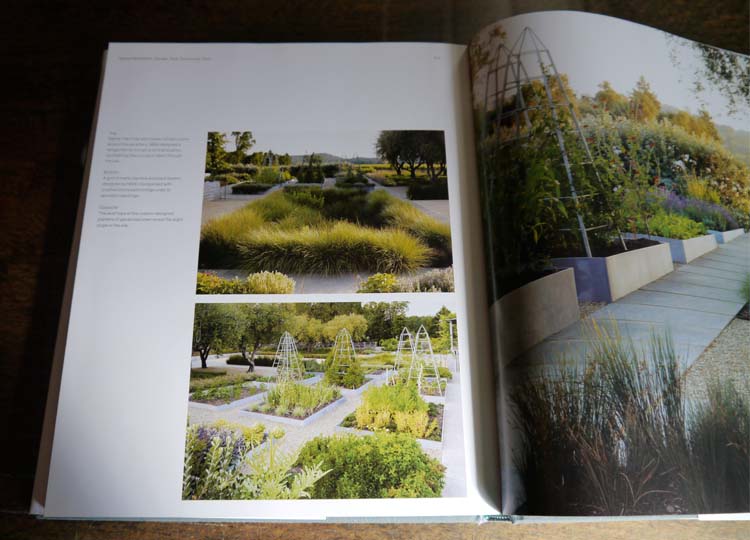
Underpinning this international recognition: nearly three decades of project work that utilises manifestly beautiful design in the service of environmental resilience. Divided into four sections, representing the range of project scales and types undertaken by the firm, this book is a galvanizing touchstone, making me want to do better work every time I open the cover. Be inspired…

Evoking Landscapes

The Victorian City: Everyday Life in Dickens’ London, Judith Flanders

Think the Victorians were a boring, crusty lot only interested in covering the legs of pianos to avoid unnecessary excitement on the part of weak-willed gentlemen? Think again. London comes rushing off the page in all its sweaty, stinky, heaving glory in this marvelous, chewy smorgasbord of a book. Stroll familiar streets in your mind, as Judith Flanders conjures up the sights, sounds and aromas of hooves on cobbles, fires burning out of control, merchants selling door-to-door, people eating bread and jam on the street, carts lined up at turnstiles, overcrowded rooms and much, much more. A door-stopper of a book that still ends far too soon.

The Old Ways: A Journey on Foot, Robert Macfarlane

From the master of the silken phrase comes The Old Ways, Robert Macfarlane’s quest to explore the old journeys through Britain, the ones that connect people today, step-by-step, to centuries of forebears, traditions and intimate connection with the land. Macfarlane could write about taking out the rubbish in such a way as to make it feel part of a weekly ritual linking humanity across time and borders, so when he has a seriously good subject in his grasp the results are sublime. The Old Ways is such a subject. Very few things could persuade me that spending a night lying on damp rocky ground in a howling gale is a good idea, but this book goes a long way towards making it seem worthwhile.

Holloway, Robert Macfarlane, Stanley Donwood and Dan Richards

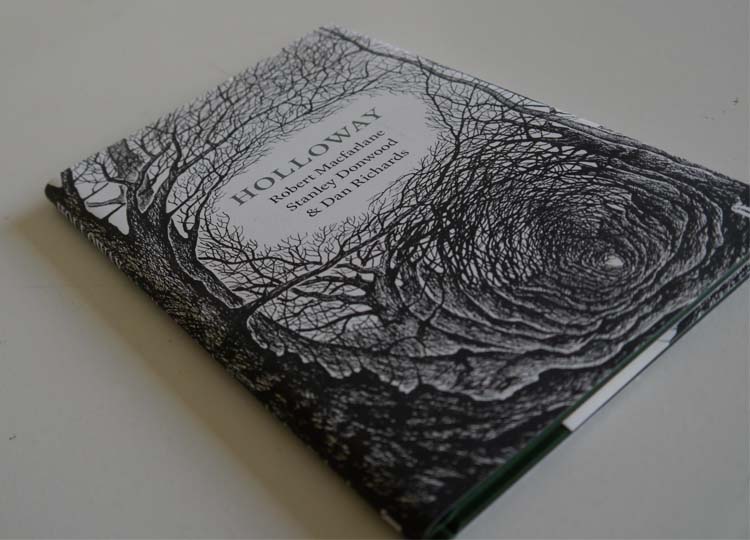
Robert Macafarlane first introduced non-British readers to the mysteries and wonders of the holloways in his previous book, Wild Places. Ancient sunken paths, holloways place the traveler half inside the earth and half in another world altogether, partly hidden from view, partly  trapped between our time and one of long ago.  Stanley Donwood has produced cover artworks for Radiohead; here his beautiful woodcuts introduce his work to a new audience. A tiny book, with magic in every page.

Landscape Reflections

Mindfulness and the Art of Urban Living: Discovering the Good Life in the City, Adam Ford

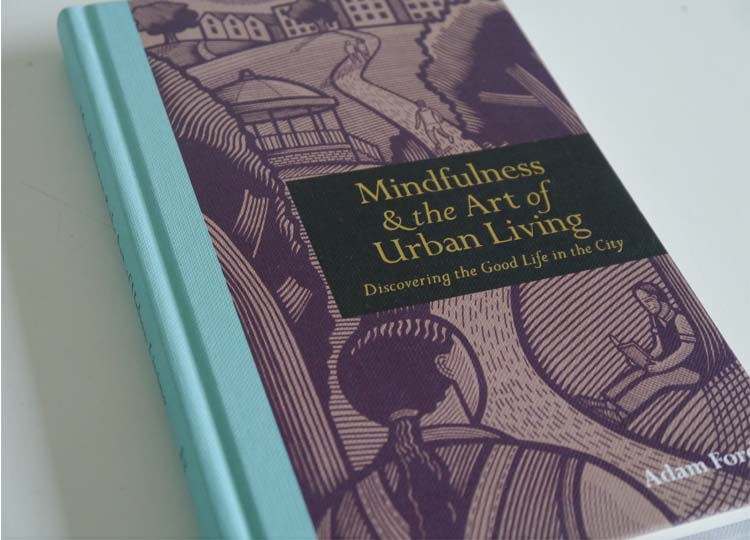
A recent discovery, this wonderful book, by a former Priest-in-ordinary (I'm not 100% certain what that actually entails) to the Queen at the Chapel Royal, is a truly delightful call to pause and reflect on the many wonders available to city dwellers, if only we stop to notice. Australian readers will enjoy Ford's reflections on familiar places, and I was intrigued to see he too had discovered the delights of London's Abney Park Cemetery, a place I spent many hours visiting whilst researching Future Park.

More Scenes from the Rural Life, Verlyn Klinkenborg

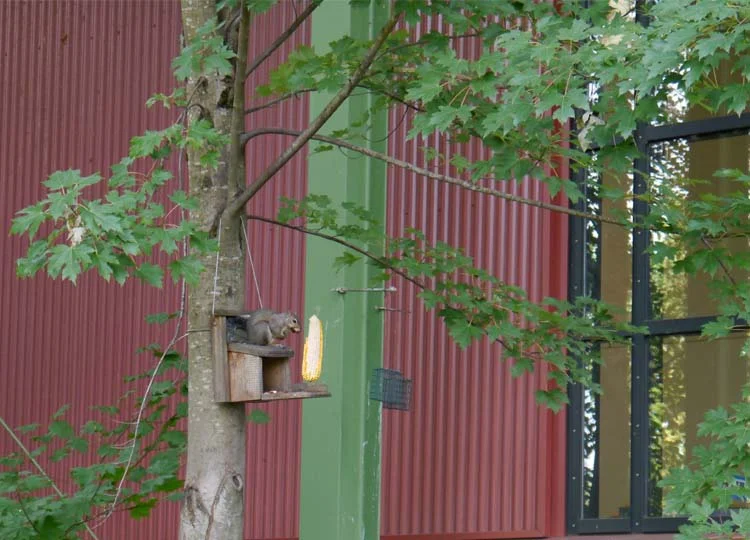
Verlyn Klinkenborg writes a much-loved column in the New York Times, and this is his second collection of writings inspired by daily life on his small farm outside the city. I can only read a few pages at a time of this book: the writing is so wonderful it makes me shake in frustration at the man’s facility with language. Luckily I soon recover, drawn back to discover what the horses, and squirrels, and chickens are up to today. Delight in the illustrations by Nigel Peake. Read it and slip under the spell of the daily, weekly and yearly miracles of nature.

The Lost Carving: a journey to the heart of making, David Esterly

David Esterly is an American artisan, a specialist in a rarified technique of wood carving that reached its zenith in the 1600s. After the devastating 1986 fire at Hampton Court Palace, Esterly was one of a small group of artists invited to repair, research, reimagine and recreate damaged panels created by master carver Grinling Gibbons. As his family adjust to their new life in London, descriptions of the landscape of Esterly’s creekside studio intertwine with his new workspace at the palace. Hours of concentrated work are interrupted by flurries of unknowing tourists hurrying past outside. Grinling Gibbons’ London contrasts with the contemporary city. The Lost Carving is a gentle and deeply moving meditation on a life dedicated to the mastery of a physical, yet elusive artform.

Landscapology_Books10.jpg

Landscape as Character

Burial Rites, Hannah Kent

Regular readers will be well aware of my love of Burial Rites, the story of Agnes Magnusdottir, the last woman executed in Iceland. The harsh and complex landscape of Iceland is an undisputed major character in the book, tenderly, powerfully evoked. The weakest glow of sunshine raises hopes of redemption, but it is the cold, the cold, that binds us to Agnes as the days close in.

Flight Behaviour, Barbara Kingsolver

As a huge fan of The Poisonwood Bible and The Lacuna I awaited the release of Flight Behaviour with much wriggling restlessness. A suitably hefty tome duly arrived and I sped through early chapters, quickly throwing on the brakes to slow things down in the vain hope that an ending might be indefinitely delayed. Dellarobia Turnbow’s life is lived in Appalachian Tennessee, with a loving but constraining husband and two small children in a tiny house on her in-laws' property. An early morning encounter in the mountains behind her house changes Dellarobia’s life forever. What she originally perceives as the mountain on fire is instead a lost population of migrating monarch butterflies. What happens when the wordly concerns of research, science, and global warming intersect with the uncomfortable intimacies of a rural town? Flight Behaviour is a heart-breaking, redemptive, and enthralling year-long journey of a woman discovering life beyond any she had imagined could possibly exist.

Local is Lovely

There are many more other terrific books I’ve enjoyed: they've contributed to my knowledge and filled me with warmth, inspiration and wonder, but limited space prevents me from mentioning them all individually. The following two Australian titles are still on the night table, either in early progress, or about to be tackled.

The Biggest Estate on Earth: How Aborigines Made Australia, Bill Gammage

Published last year, it immediately started attracting awards like prickles to wooly socks. I saw Bill speak at the State Library earlier in the year, and have been saving up his book as a special treat. I've only just started it and already the depth of research is evident and compelling. His thesis: that the land Europeans perceived as 'untouched wilderness' in 1788 was in fact the result of deliberate, long-term, and continent-wide management by aborigines, who particularly used fire to manage reliable plant and animal cropping.

Let the Land Speak A History of Australia: How the land created our nation, Jackie French

Himself is nearly finished this one, which is going to be a fascinating read, if the numerous quotable facts and curiosities shared to date is anything to go by.

The last two books are also by Australian authors I've spent time with this year, whose work I'm delighted to share with you.

A Singular Vision: Harry Seidler, Helen O'Neill

I had the singular pleasure of hosting a conversation with Helen O’Neill at the Brisbane launch of her biography of Harry Seidler, the Austrian-born, Canadian-interned, Harvard-educated architect, who became one of the most divisive figures in Sydney during his four-plus decade career in that city. This beautifully produced book tells the story of the man behind the headlines. It’s a must-read for anyone interested in the development of modernist architecture in Australia, and in the stories of the many migrants who have contributed to our growth and success.

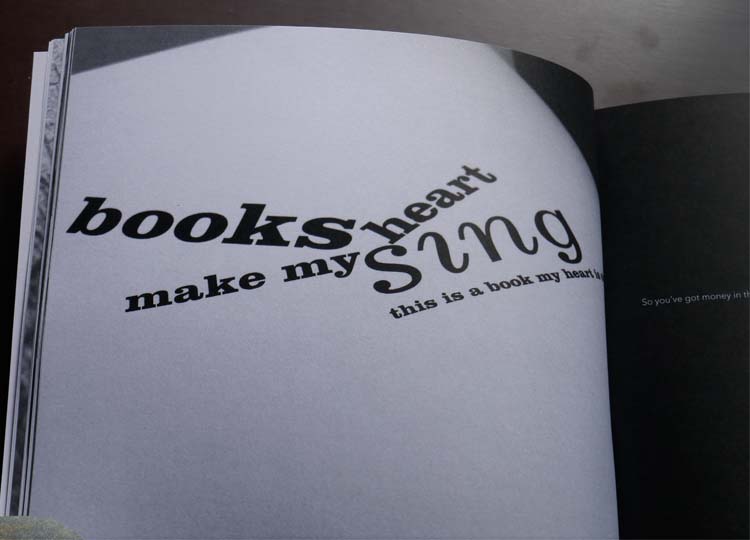
Know the Rules, Nicole Arnett Phillips

Nicole contributed so much to the success of Future Park that it gives me enormous pleasure to end my list with this limited edition book exploring her “passion for print, love for letterforms and design research and creative exploration.” Nicole has produced Know the Rules through her own private press, Glyphs and Graphemes. The success of this edition in finding an appreciative audience gives me enormous personal pleasure, and confirms my belief that I'm not alone in loving bespoke design, personal artistry and craftsmanship, and the tactile delights of books.

Pages from  Know the Rules , by Nicole Arnett Phillips.
Pages from Know the Rules, by Nicole Arnett Phillips.
But now it’s over to you.

What has most inspired your connection with landscape this year? Has it been anything on the list? Perhaps something else has inspired you to think differently about your garden or park, your project, city or country.

I’d love to know, so please drop a line in the comments below.

Of course if you know anyone who’d enjoy this article, please feel free to share. There will be more from the wonderful world of landscape, architecture and design next week.


All images Amalie Wright.

In

Is the Frangipani Brisbane’s Favourite Summer Tree?

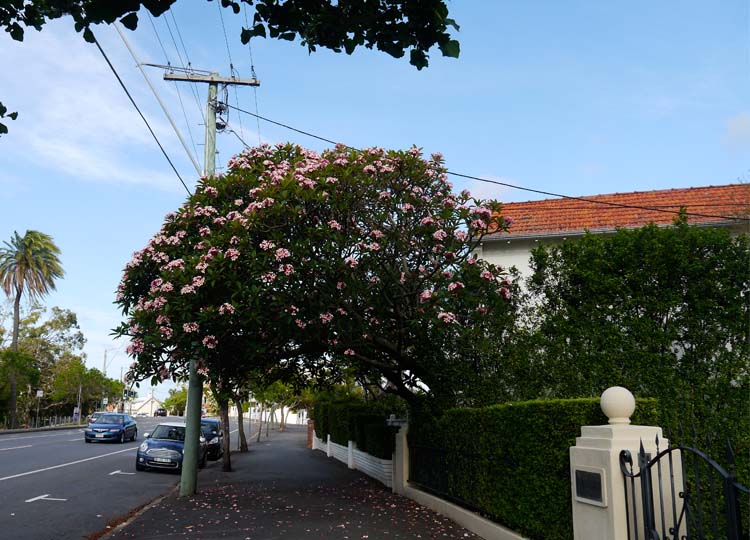
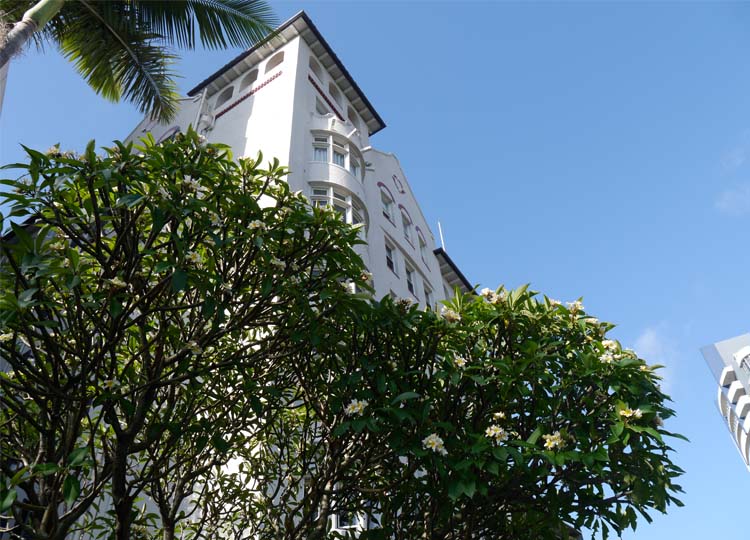
In the interests of providing you with the most accurate information possible, I have conducted an exhaustive survey of the city, and it seems that you can’t walk 20 metres at the moment without stumbling across some sort of frangipani.

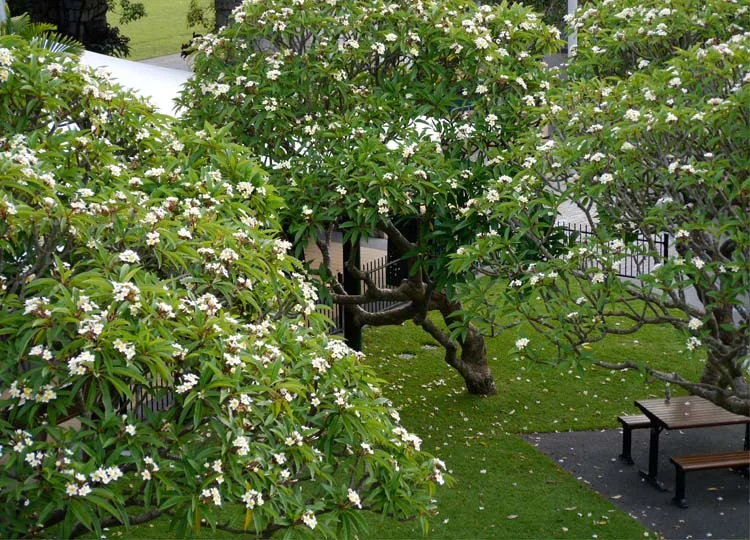
Within an easy half-hour stroll of Landscapology HQ I encounted all the examples shown here.

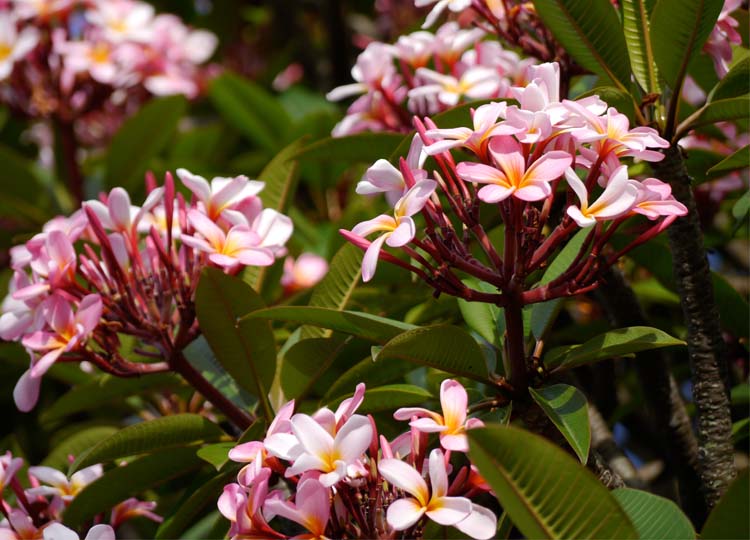
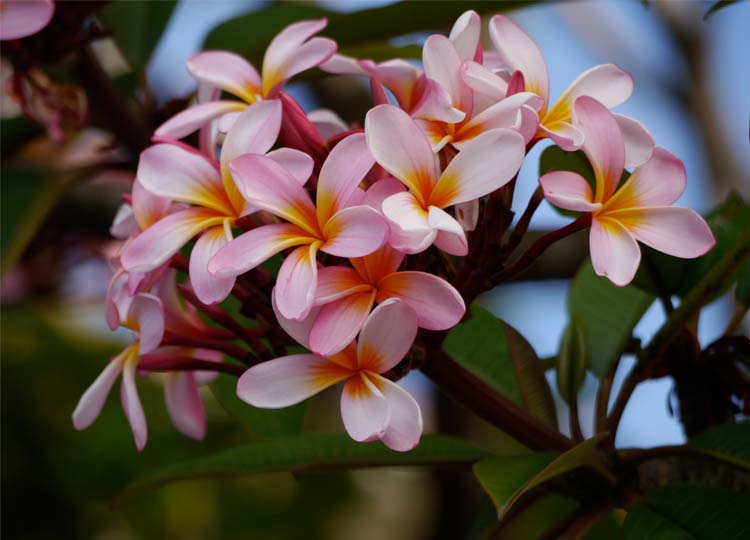
Looking at the images, I think it’s pretty easy to see why the frangipani is such a crowd pleaser.

Firstly there’s the scale:

Sure they start off looking like a stick in the ground (which is pretty much what they are) but given time and half a chance, frangipanis grow into magnificent trees from 5 to 8 metres tall, making them perfect for residential gardens. 

Secondly, there’s the form:

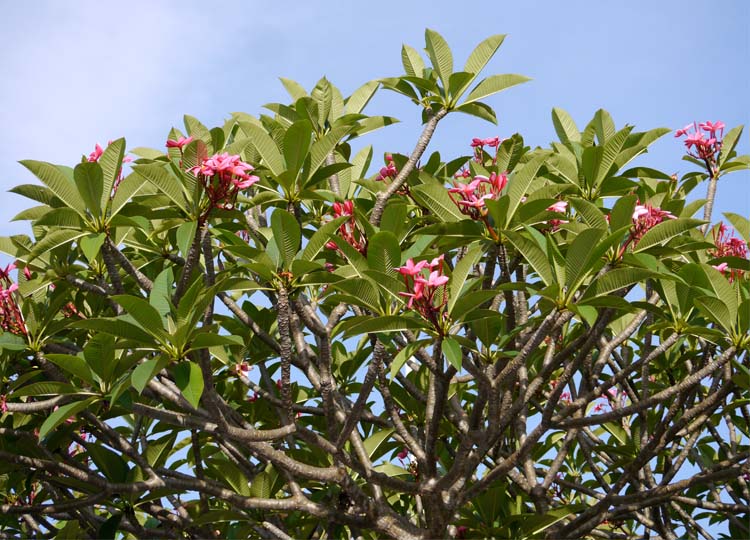
Frangipanis have the triple threat of a wonderfully sculptural trunk and branches, a perfectly rounded canopy, and elegantly pointed leaves.

Thirdly:

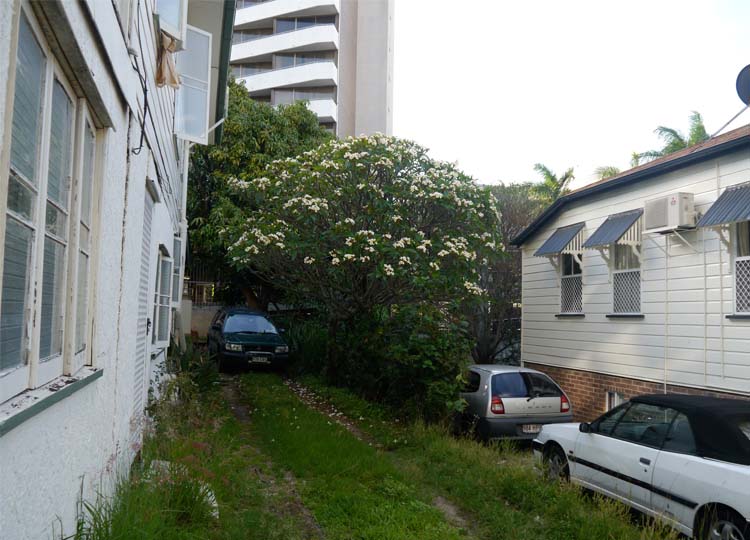
They’re tough critters, often thriving on neglect, and in less than ideal conditions. You often see them happily blooming away in an untended backyard, or, in the case seen below, next to a bunch of air conditioning equipment.  

Fourthly:

They’re versatile. Frangipanis can be grown as a stunning single specimen tree, grouped to create the perfect picnic setting, or even planted close together to create a tall, shady grove. They create a lovely pool of shade in summer, and, if you choose a deciduous specimen, a welcome patch of winter sun. 

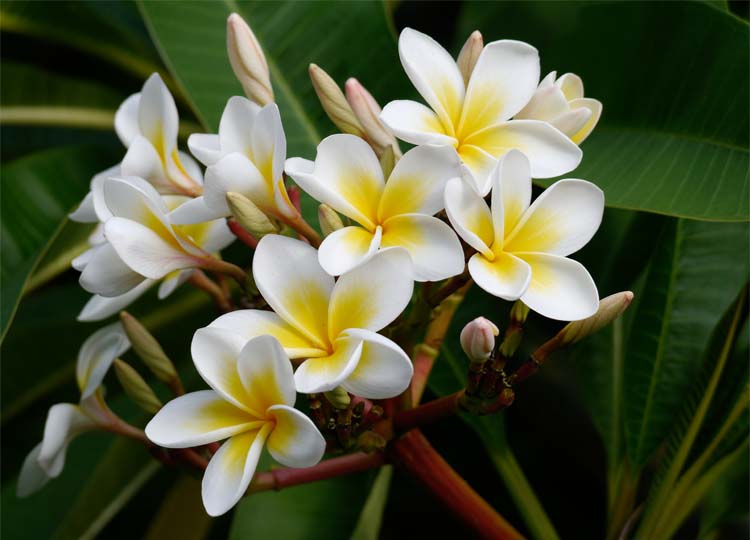
But finally, when it all comes down to it, the flower is the frangipani’s knock-out killer punch. 

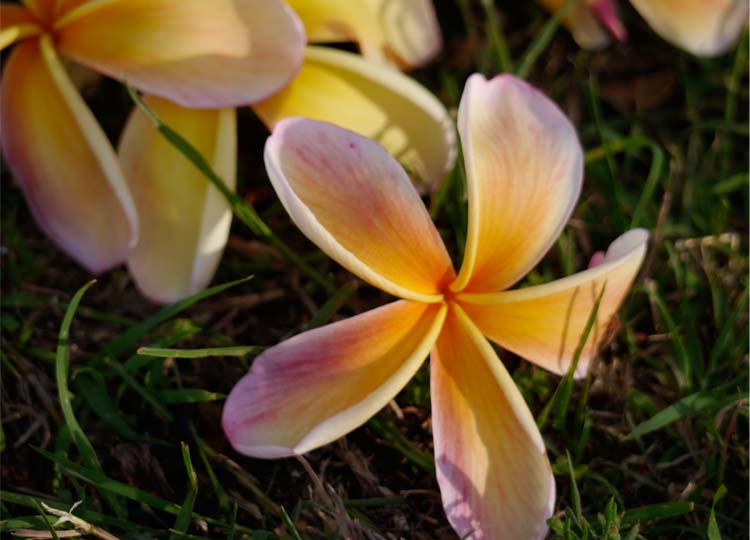
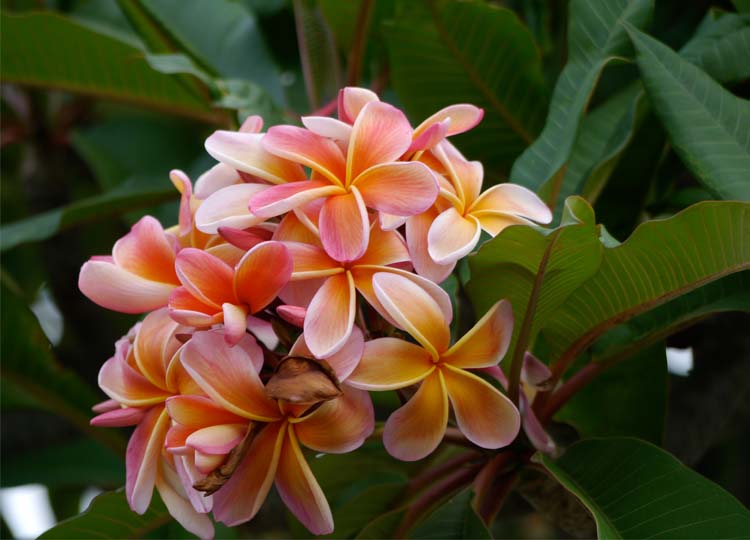
From white to pale pink, yellow, orange and deepest cerise, the frangipani flower is a five-petalled, unfurling and twirling piece of pure delight. 

People young and old will stop to pick up a frangipani flower from the ground like they do with no other tree: the scent of a good ‘un will put an easy smile on the grouchiest face.

Frangipanis (Plumeria) originated in Central and South America, so they generally go gangbusters in Brisbane’s subtropical conditions. To keep your tree healthy, and it set it on track for a long life, try to grow it in well-drained soil in the full sun. Established trees don’t usually need supplemental watering, but give them a drink while they’re establishing. They respond well to fertilizing during the growing season, with something high in nitrogen, potassium and phosphorus – liquid seaweed or fishy solutions for example. They can be pruned, grown in pots, and easily grown from cuttings, a true garden superstar. 

So…is the frangipani Brisbane’s favourite summer tree?

The votes are in, and the answer is a resounding yes!


Now it’s over to you.

Are you a frangipani fan? If so, which camp are you in? White or coloured flowers? Evergreen or deciduous? If you don’t have one at home, what’s your favourite specimen – the one you keep an eye out for every year?

I’d love to know – drop a line in the comments below.

Of course if you know anyone who’d enjoy this article, please feel free to share. There will be more from the wonderful world of landscape, architecture and design next week.


All images © Amalie Wright.