Grounds: Cafe Gardens & Garden Cafes

Wild Canary

There’s something truly magical about seeing a check-trousered chef wander out from his kitchen and come back clutching a few delicate fronds. It’s even better when those same fronds appear only minutes later on the plate that has just been delivered to your table.

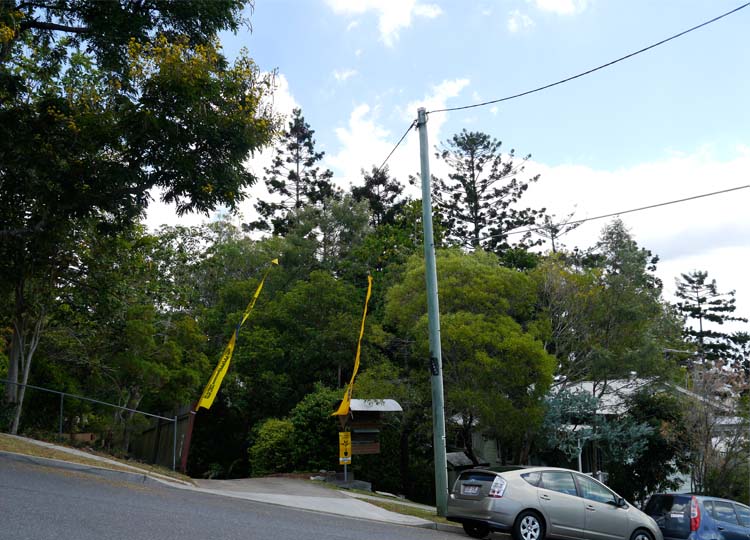
Such was my happy fate upon visiting Wild Canary, the brand new café in the grounds of the Brookfield Garden Centre.
The fronds in question were Lemon Verbena, and they made a graceful garnish for the Strawberry Surprise muffin I’d ordered. (I am ever-skeptical of muffins. They can be tricky, don’t you think? A bad one is like a deadweight of unhappy clagginess. So common is this variety though, that the rare appearance of a good ‘un warms the soul and restores faith in the possibility of successful small baked goods).

The delicate pale purple flowers and fine foliage released a zingy lemon aroma when crushed. Mother-of-Landscapology, visiting from out of town, was so impressed she hot-footed into the nursery and bought up the last plant to take home.

The plants the chef had attacked were not in the nursery, but rather in a fantastic kitchen garden, newly established midway between the garden centre and Wild Canary.
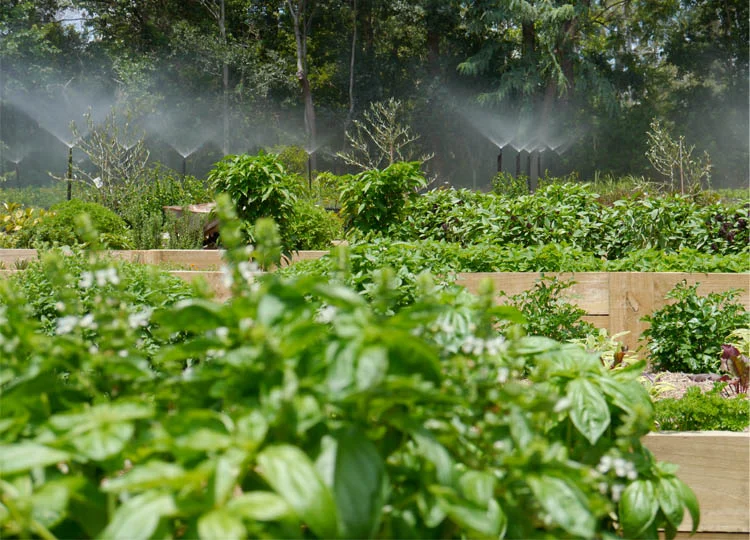
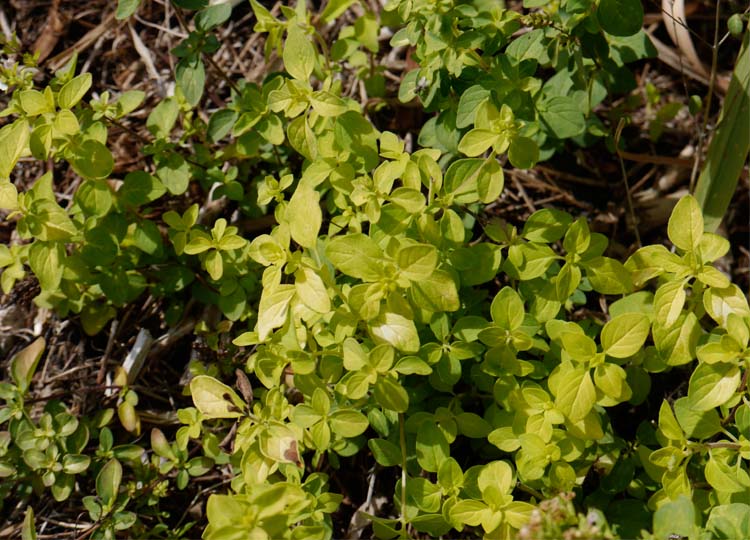
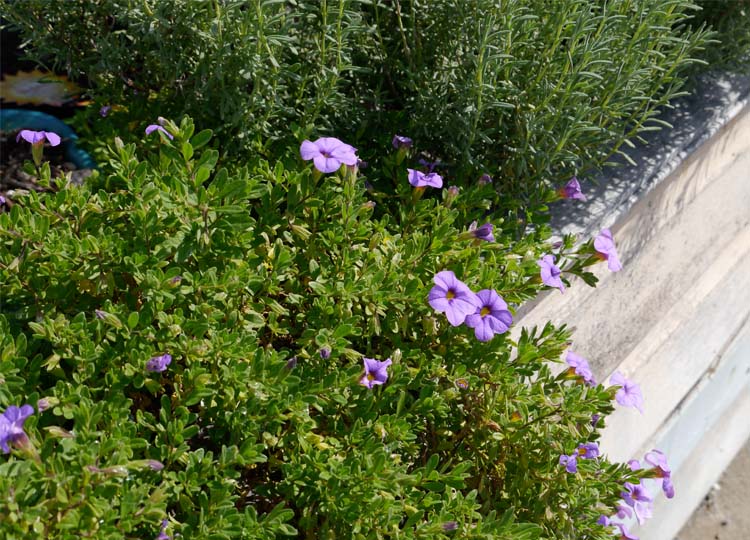
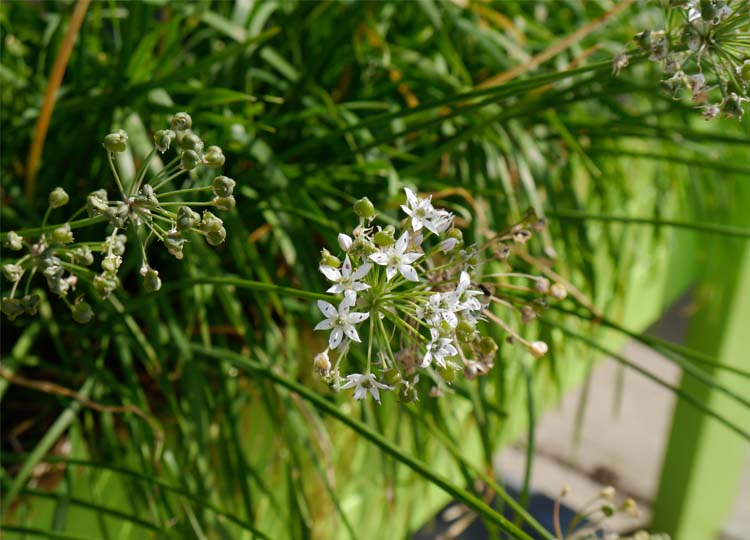
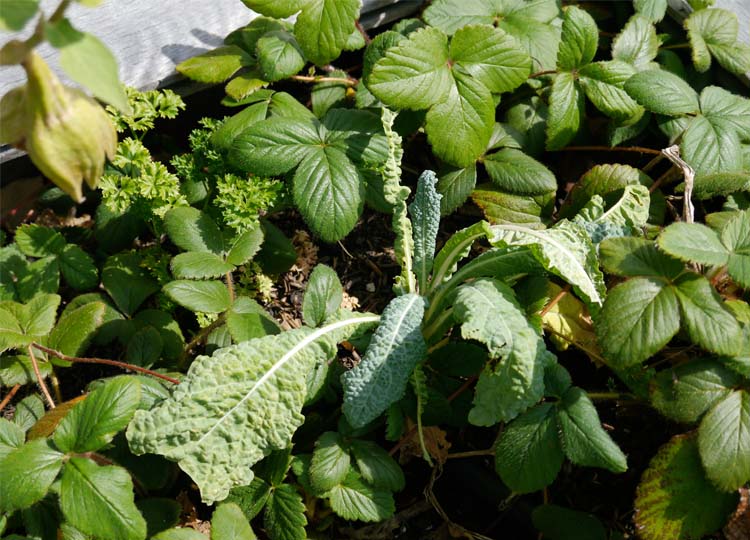
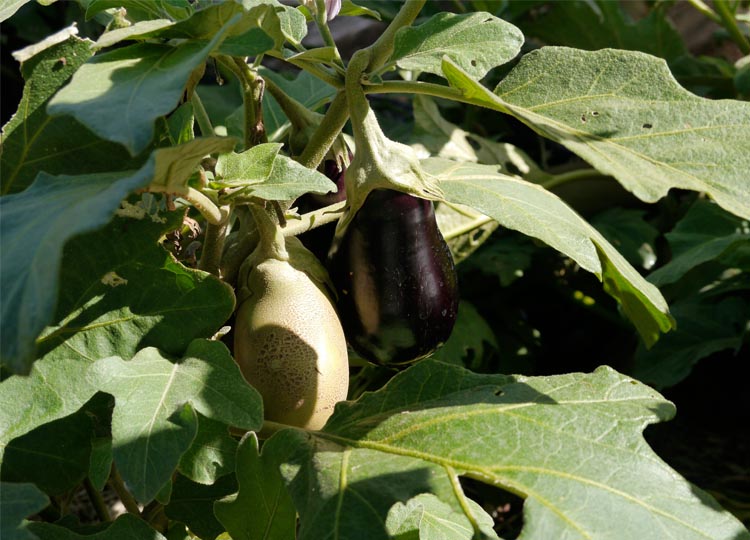
Five raised beds have been installed, and planted out with a variety of citrus and fruiting trees, vegetables, herbs, and edible flowers, including olive, lemon, fennel, sage, basil, thyme, mint, rosemary, and of course, lemon verbena.

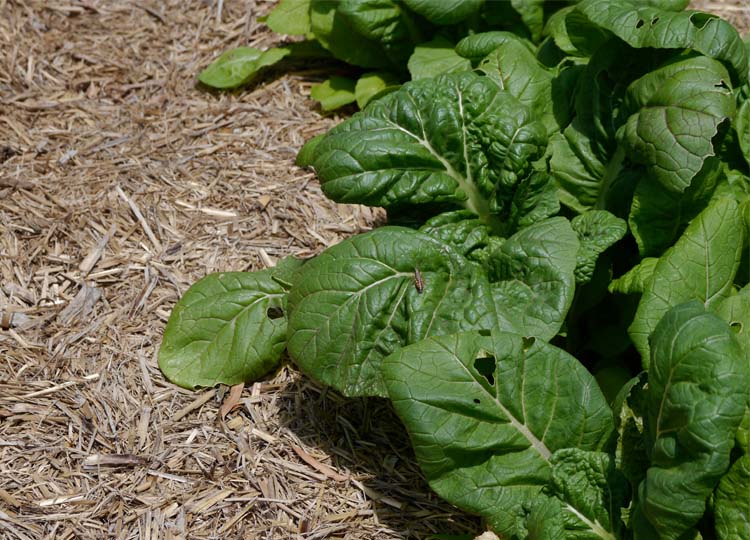
Little critter enjoying his share of the kitchen garden too...

Little critter enjoying his share of the kitchen garden too...

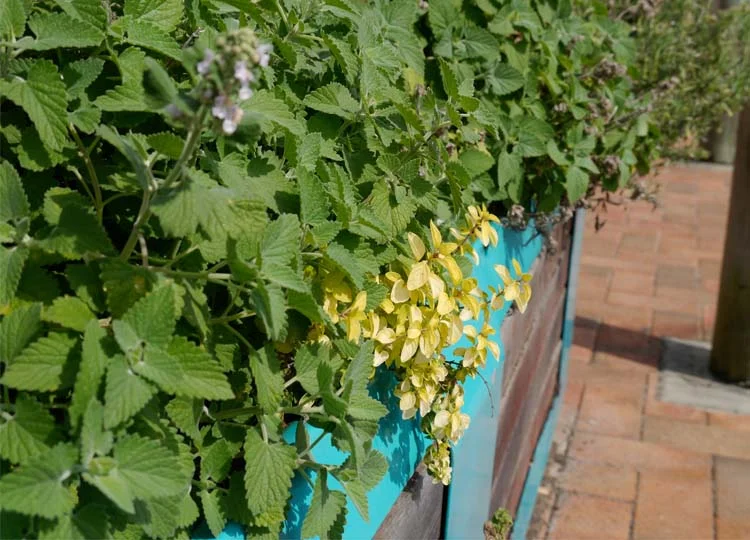
The varied bed plantings.
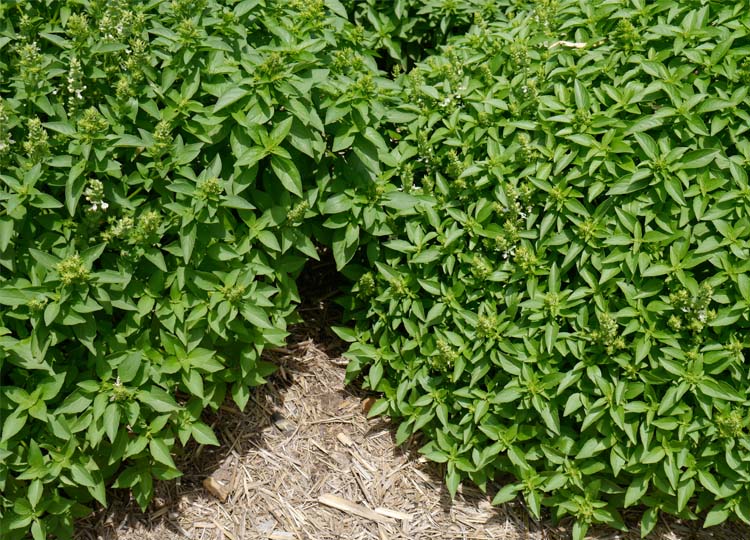
The varied bed plantings.

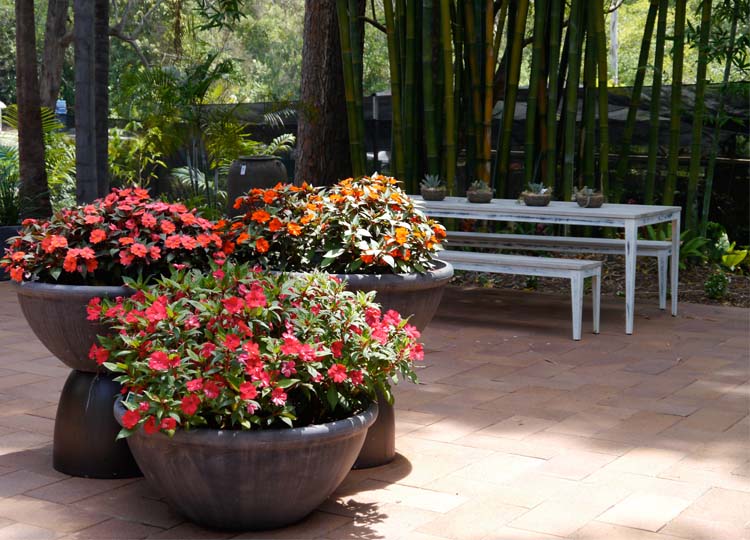
Terrace under the bamboo stand.

Terrace under the bamboo stand.

Brick wall detail at the cafe entry.

Brick wall detail at the cafe entry.

Wild Canary is open for breakfast and lunch, and I suspect that, having enjoyed your meal and wandered back past the kitchen garden, you too will find it difficult to leave without picking something up at the nursery.

Resistance is futile.
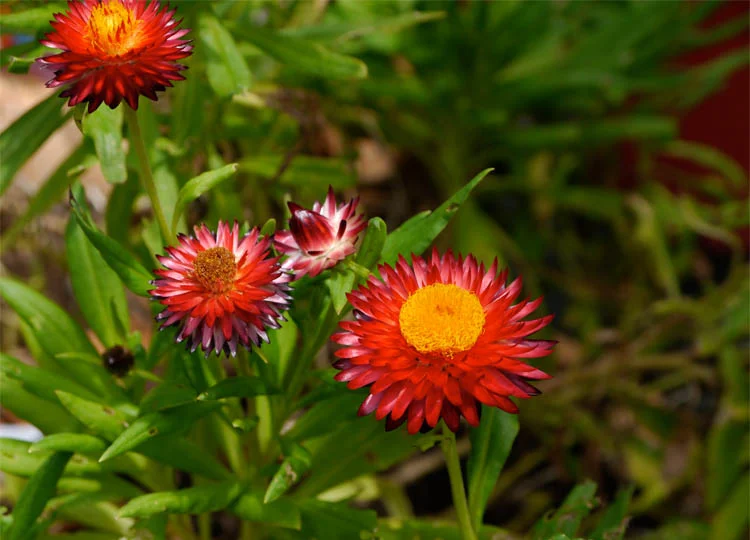
Resistance is futile.

The nursery has an extensive collection of Australian plants for sale.
The nursery has an extensive collection of Australian plants for sale.

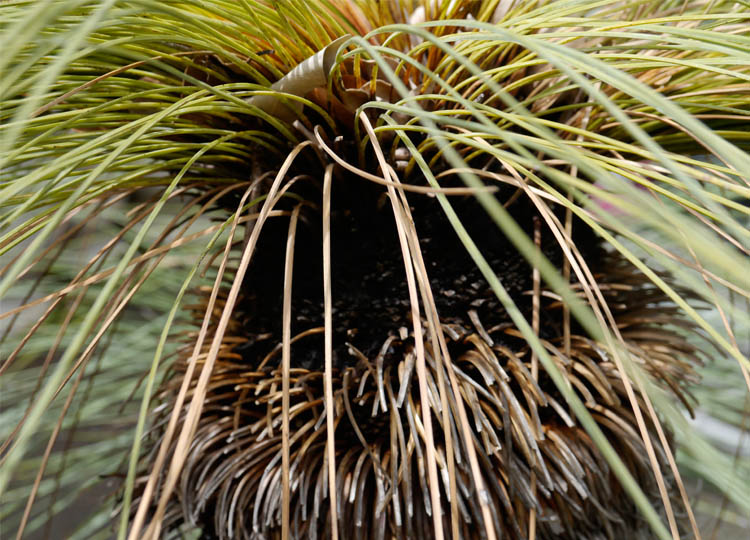
Stunning Xanthorrhoea.
Stunning Xanthorrhoea.

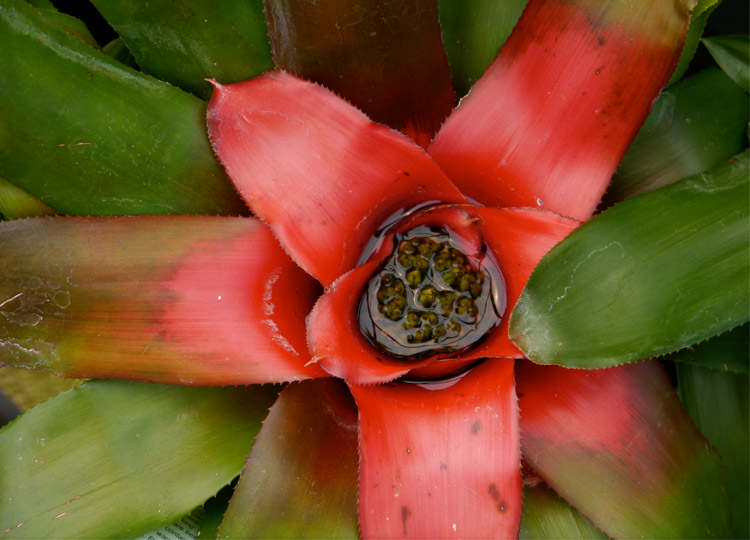
Bromeliads in the shade section.

Bromeliads in the shade section.

The nursery in its eucalypt setting.

The nursery in its eucalypt setting.


Now it’s over to you.

Have you ever eaten something at a cafe or restaurant and then been inspired to grow it at home? Let us know what it was, and how you went in the comments below.

Of course coffee and food are made to be shared, so if you know someone else who might find this interesting, why not pass it on, and if you liked it ‘heart’ us below.


Note: Wild Canary is at the Brookfield Garden Centre, 2371 Moggill Road, Brookfield. Bookings on 3378 2805 (recommended). The are several dining areas available, including a raised internal room and a covered outdoor deck.

Surf & Salad

Herbs and vegies are the street planting of choice  at one of Australia's most beautiful beach towns.

Landscapology decamped to Yamba over Easter, and what a smart decision that was. If you’ve ever been there you’ll know that Yamba is one of the loveliest coastal towns in Australia. You get to look at stuff like this every day:

Not bad huh.

Pandanus unfurl themselves across the headlands, the spinifex glows silver in the breeze, and the water whispers your name. Heaven.

But wait, there’s more!

Yamba is also home to a brilliant edible garden scheme. Supported by the local council, Edible Yamba was launched last Easter.

Garden beds on the main street have been planted with a rich assortment of vegetables and herbs.

Where no footpath space is available, simple, robust timber planters have been installed.

Little signs display information about unusual specimens.

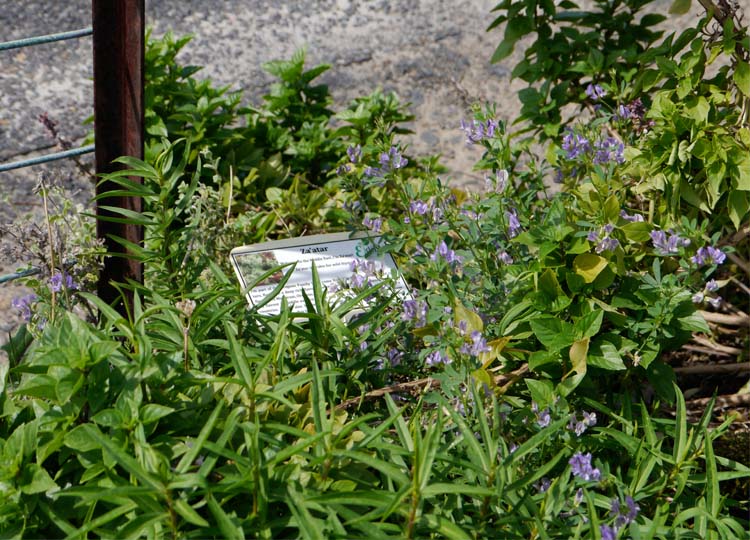
I've never seen za'atar growing: only the traffic and crowds stopped me from getting closer.

I've never seen za'atar growing: only the traffic and crowds stopped me from getting closer.

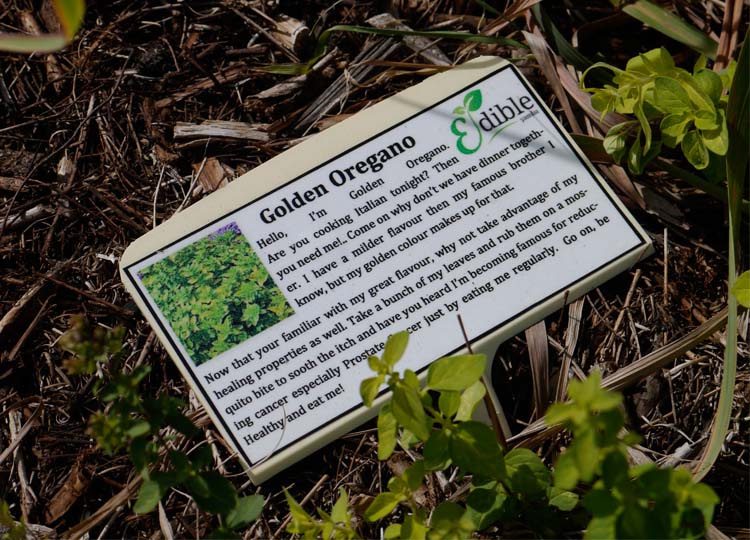
Oregano: good for pizzas and prostates. Apparently...

Oregano: good for pizzas and prostates. Apparently...

...and here it is in the flesh.

...and here it is in the flesh.

Larger signs encourage everyone to participate by using the crops.

Such a generous idea.

Such a generous idea.

Some shop owners have personalized their planters, adding flowers to the bounteous mix of edibles.

Kale. Mealy bug free obviously, as every insect in the country lives in my crop.

Kale. Mealy bug free obviously, as every insect in the country lives in my crop.

Landscapology_Yamba15.jpg

As you'd expect, several of the local cafes have also embraced the concept with enthusiasm.

Caperberry, in its prime corner location, directs its Facebook followers to recipes that can be made using items from the street plantings, such as this lush lemongrass.

Landscapology_Yamba16.jpg

Perennially popular Beachwood Café was ahead of the pack in tending a jam-packed herb garden on the tiny verge outside.

Could this be the hottest street in town?

Could this be the hottest street in town?

Lovely fennel flowers.

Lovely fennel flowers.

At the moment, rosellas are blooming amongst the other plants.

Oh rosella jam...how you make my heart sing.

Oh rosella jam...how you make my heart sing.

Newcomer Irons and Craig is also awash in rosellas. Growing in the garden behind the café, they are harvested and bottled as preserves or jam each Wednesday, when the café is shut for pickling day.

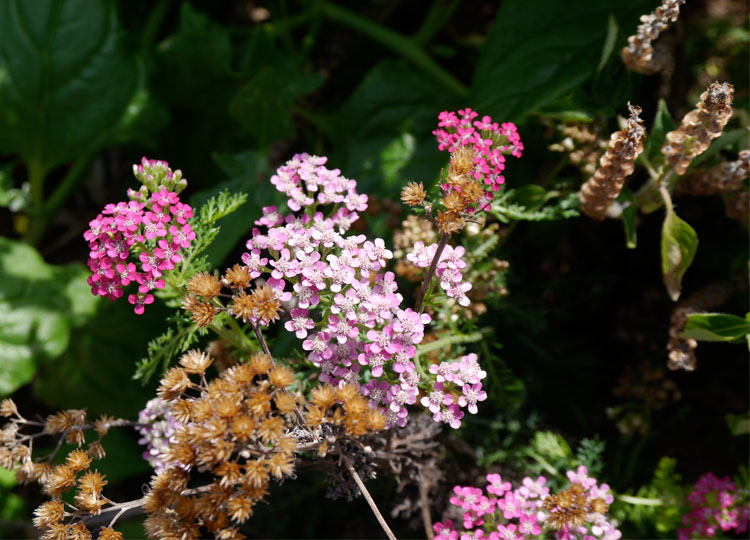
A few stalks of corn from a larger crop still thrive out the front, next to chillis and capsicums.

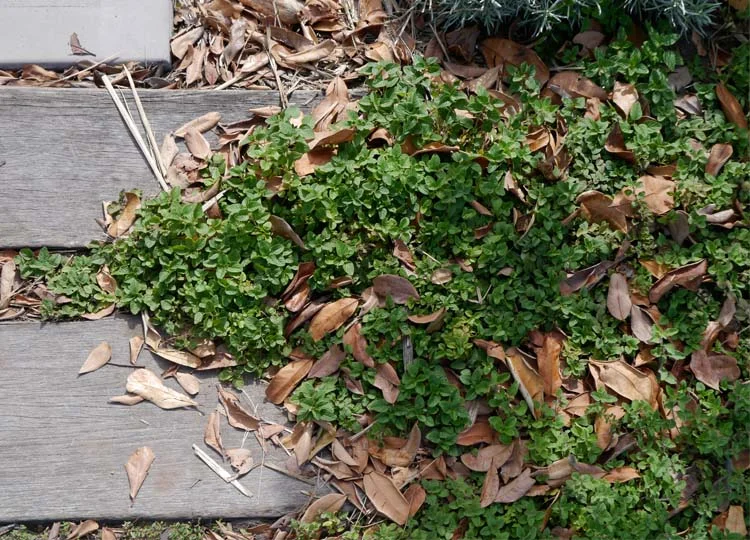
Underneath, oregano makes a soft and fragrant groundcover.

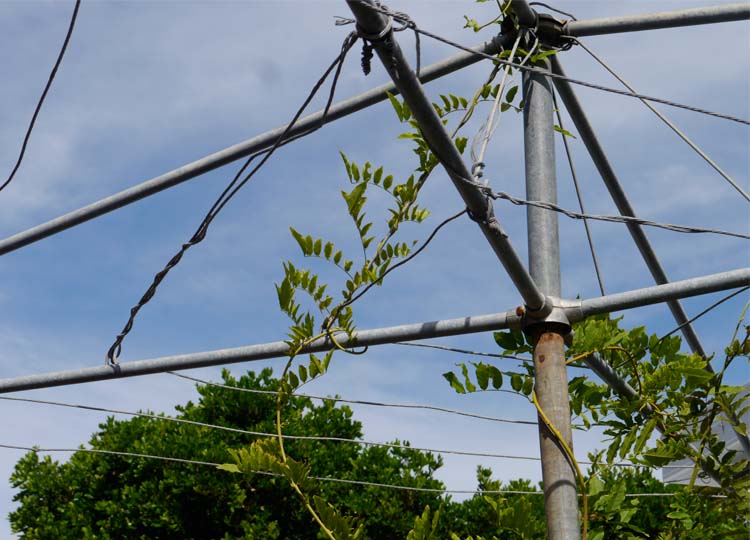
Look up, and vines twine up an old hills hoist.

The edible gardens also pop up behind the signage that marks the arrival into the main shopping area.

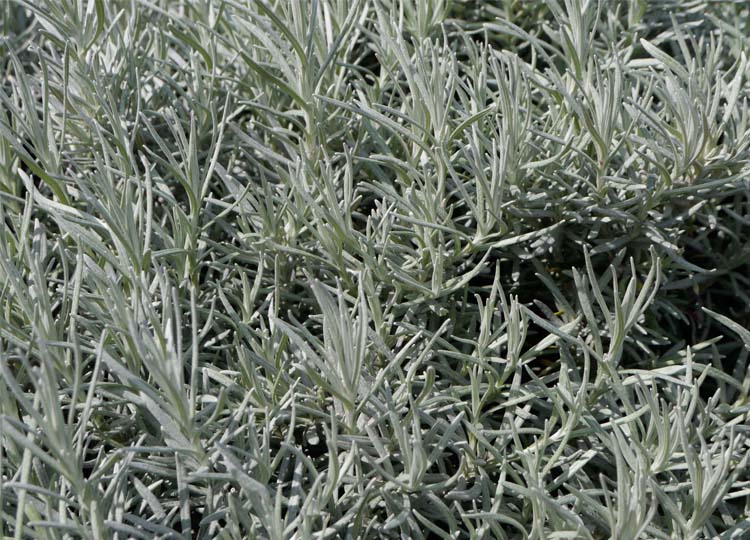
Here, capsicums and curry plants and joined by geraniums and a stand of pawpaw trees.

Part of the decision to instigate Edible Yamba was to show that fresh, organic food could be grown easily and look just as attractive as a purely ornamental garden.

I don’t know about you, but seeing such abundance on every street corner was incredibly satisfying. How brilliant to brush past a thriving rosemary or curry plant on your way to get the paper, and release that wonderful scent into the seaside air.

I think it’s safe to say that Edible Yamba has made me love the place even more.

What do you think?

Do any streets near you contain edibles? What are they? What one herb or edible plant would you like to see used more in your city streets. Let us know in the comments below.

If you think a friend would find this article interesting I’d be honoured if you passed it along.

Thanks for reading, and see you soon for more from the wonderful world of gardens, landscape and design.

Rediscovering Anzac Square

This Friday marks the 99th anniversary of the landing of Australian and New Zealand troops at Gallipoli.

Following the so-called Great War, memorials to the fallen were dedicated in cities and towns all over Australia. So great was the loss in World War 1 and subsequent conflicts that virtually no community in the country remains unmarked.

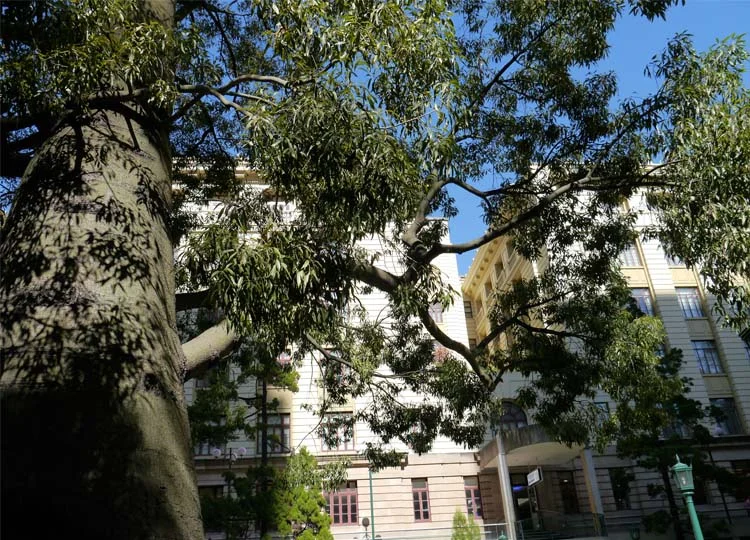
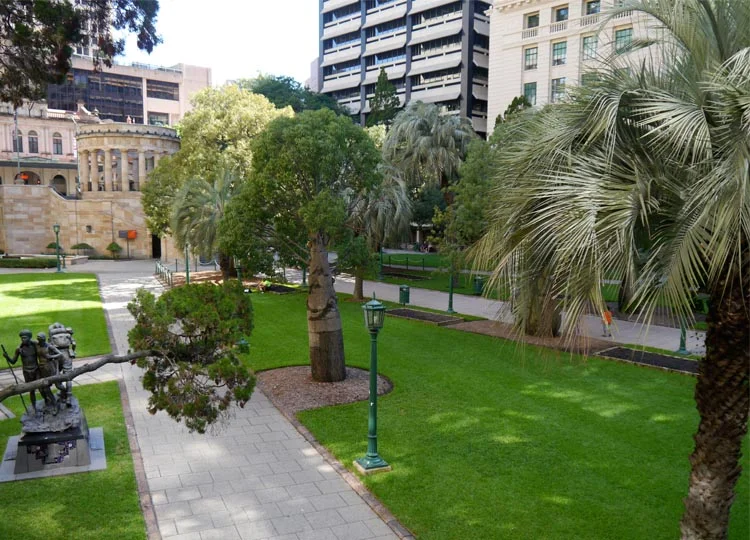
For 364 days of the year the local Anzac Memorial fades into the background of daily life, a familiar part of the urban scenery. Such is the case in the centre of Brisbane, where Anzac Square acts as the quickest route from Central Station to Queen Street, and a shady lunch spot.

It’s well worth slowing down though, and taking a second look at the place that forms the centrepiece of Anzac Day commemorations in Brisbane.

The most striking and easily recognized part of Anzac Square is the Shrine of Remembrance.

Built in 1930 the Shrine takes its design cues from the Greek Temple. It represents Classical Greece, the birthplace of modern democracy, and source of many of our traditions of philosophy, literature and art: at the time an appropriate way to commemorate the fight for ‘civilisation’.

Two curving flights of stairs connect the Shrine with the Square below. Each flight is in two sections, one with 19 steps, and one with 18, symbolic of the year in which World War 1 ended.

Landscapology_Anzac3.jpg

Eighteen is also the number of columns arrayed around the Shrine. The names of battles appear above, and an Eternal Flame burns in the centre.

Below the Shrine of Remembrance is the main part of Anzac Square. Three paths branch out from the base of the Shrine. They represent the Australian armed services: Army, Navy and Air Force.

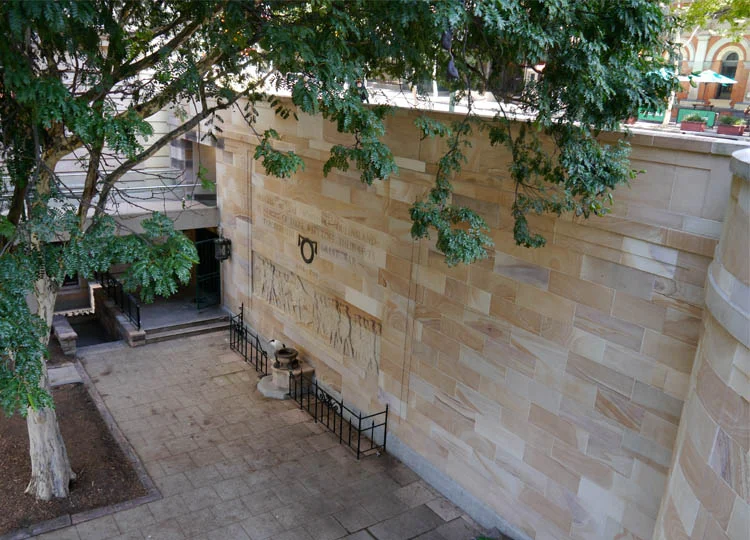
A tall, sandstone clad wall supports the Shrine and its terrace.

Carved into one side is a memorial frieze sponsored by ‘The Women of Queensland’, and carved by renowned local sculptor Dorothy Mayo.

The brave young soldiers are represented as strong, healthy and victorious. By the time World War 2 was commemorated, this depiction started to change.

Anzac Square is home to two World War 2 memorials.

The first represents the war in the South Pacific, and shows a wounded Australian solider making his way down the Kokoda Trail. He can't do it along though, and is being helped by a Papua New Guinea man.

In contrast with the ‘Great War’ frieze, this soldier is weak, his boots are muddy and worn.

The soldier depicted in the other World War 2 sculpture has suffered too. He lies on the ground, eyes bandaged, thin and shoeless. His outstretched hand is supported by a nurse; she is the first, and only woman to appear at Anzac Square. This tiny detail, lost in the daily bustle of the square, is incredibly moving.

The soldiers in the Vietnam Memorial have also suffered. One slumps, injured, his boots sinking into the mud, as his comrade guides down a rescue helicopter. After a shower of rain the water pooling on the bronze seems to transform it back into a sticky, viscous mess.

A tree, and marble plaque donated by the People of East Timor, honours Australia’s United Nations Peacekeepers, and is the most recent memorial in Anzac Square.

The earliest conflict commemorated is the Boer War. The bronze statue was cast in England and erected in Brisbane in 1919, before being relocated to its present location in 1939.

Names of the fallen are inscribed on the plinth below.

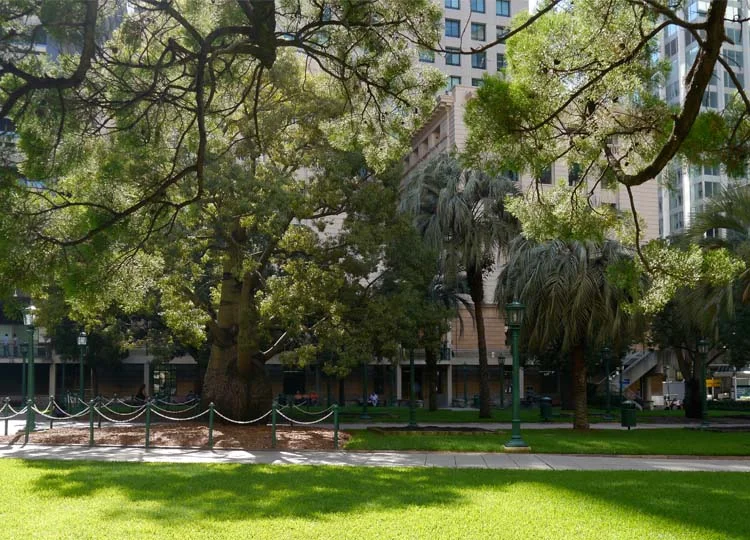
The Boer War is also commemorated by the avenue of Bottle Trees, planted in honour of the Queensland Light Horse Regiments. Adjacent Date Palms symbolise conflicts in the Middle East.

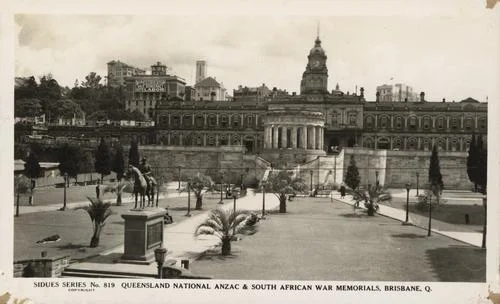
When it was first built Anzac Square was a vast, open expanse in the centre of the city, overlooked by the imposing façade of Central Station.

Anzac Square soon after completion. Image: State Library of Queensland.

Anzac Square soon after completion. Image: State Library of Queensland.

Over time surrounding development has overshadowed it: buildings plunge the space into shadows for much of the day, carpark ramps cut off access along one street, and aerial walkways along two sides have become prime smoking hangouts. 

Yet the trees have grown tall, and the lush lawn is one of the few in the heart of the city, a fact enthusiastically embraced by tourists and lunching workers.

The embedded symbolism may too subtle for the casual visitor to notice, but Anzac Square remains an important part of Brisbane for local workers, visitors, and the hundreds who will cram in this Friday to remember.

Note: Anzac Square is between Ann and Adelaide Streets in Brisbane's city centre. The annual Dawn Service will take place this Friday, 25th April, starting at 04.28am, the time of the original Gallipoli landings. The service will also be live broadcast in King George Square.


Grounds: Café Gardens & Garden Cafes

Paddock Bakery

For many Brisbanites, Easter is their final beach holiday before the weather turns cool. (I would personally chew my own arms off for a touch of cool weather, but that's another story...)

Each year the precious four days are anticipated and longed for, over weeks of perfect sunshine and blue skies. Invariably the result involves torrential rain or <shudder> flooded campsites.

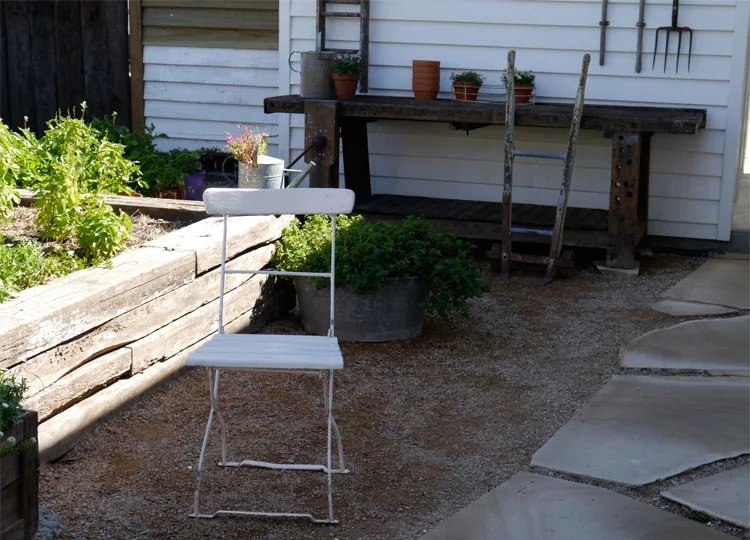
Whatever hand fate deals you, if you’re heading to the Gold Coast, or even just passing through, it’s worth a detour to enjoy the garden at Paddock Bakery.

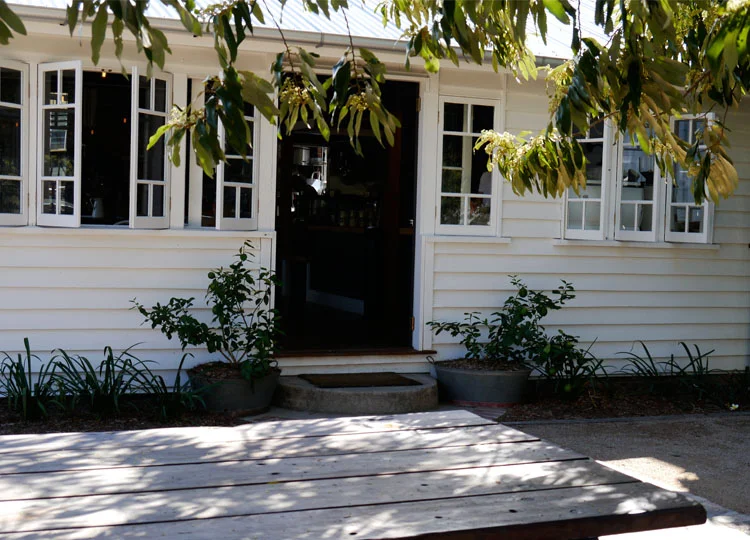
Paddock unfolds itself along a big corner block, one street back from the Gold Coast Highway at Burleigh. A white-painted timber house has been converted to become home to the café.

Glass doors at the rear reveal the bakery engine room and kitchen. Tight t-shirts and singlets reveal the arms of tanned, bemuscled patrons.  

There are inviting seating choices inside, all with good views out.

There are more options out in the garden itself. At the front, picnic tables hunker under big shady trees.

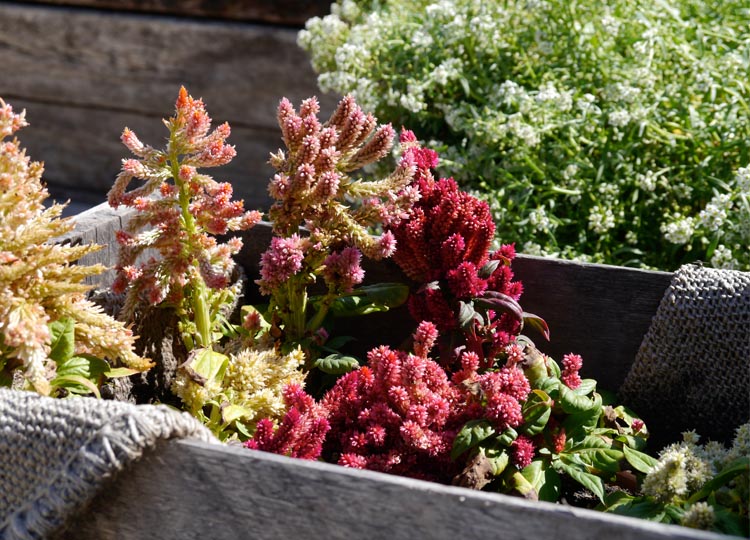
To the side, a new edible garden is taking shape. Chunky timber framed raised beds are home to the usual suspects of culinary herbs, as well as flowers, lush vegetables and citrus.

Passionfruit tendrils have laid siege to the elegant arbour; the whole structure will be invisible this time next year.

Little tables and chairs are dotted around, and the ground surface is relaxed – old bricks, slabs of stone, deco…nice.

Have a coffee and a freshly baked pastry, read the papers, get a loaf of chewy sourdough to take away and you’ll be set for another day of boardgames in the caravan.


Note: Paddock Bakery is at 20 Hibiscus Haven, Burleigh. Open 6:00am – 2:00pm. 

Design Class: Borrowed Landscapes

How your neighbour's trees can help you create a better garden.

One of the biggest challenges when designing your garden can be knowing where to start.

Do you kick off with some paths, or new garden beds? Should you concentrate on an outdoor dining area, or somewhere to grow herbs?  Or do you just start planting things in the hope that something will emerge from the chaos?

Sometimes we’re so busy concentrating on what needs doing within our own backyard that we don’t even notice the really obvious starting point that’s staring us right in the face.

I’m talking about what designers call the ‘borrowed landscape’: things that look great from your place, but are actually in you neighbours’ gardens.

A classic example of a borrowed landscape is an amazing neighbourhood tree. Remember last week’s story about the Brisbane Quaker Arboretum? All the neighbours living around its perimeter are able to ‘borrow’ views, shade, shelter and more from the Arboretum, making their gardens feel somehow connected to this bigger landscape.

If you think that sounds like a good idea, here are four tips for incorporating borrowed landscapes into your garden.

1. Look Beyond Your Fence

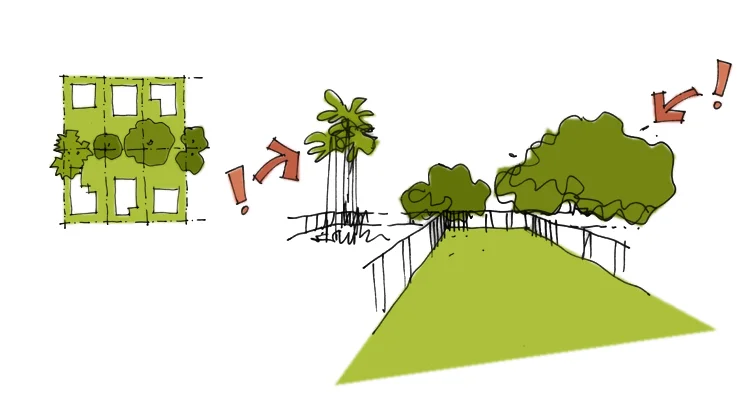
Seems obvious now that we’re talking about it, but sometimes the best part of your garden is in someone else’s back yard!

Nope, nothing here...

Nope, nothing here...

...or is there?

...or is there?

If you can identify what’s around that makes an impact when seen from your garden, then you can make a plan that best incorporates it.

2. Don’t Crowd the Red Carpet

If you’ve identified something that can play a starring role in your garden, then let it be the star. If the most amazing tree you can see is in your neighbour’s garden, and it creates shade right where you need it, and has gorgeous flowers in spring and summer, then it’s OK for your garden to play a supporting role.

Hmmm, where did that amazing tree go?

Hmmm, where did that amazing tree go?

More often than not, if you try and compete, you’ll lose the impact of the thing that was so amazing in the first place.

3. Ah, ah, ah, ah Stayin’ Alive

No point having an amazing borrowed landscape next door if you kill it, is there?

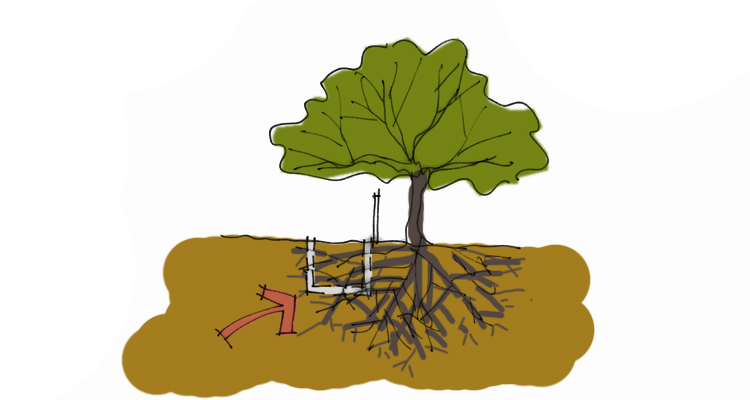
Remember that the things you do on your side of the fence can have an impact on the tree on the other side.

Depending on the species, that fabulous tree next door might have a root system that extends under your property. Be mindful of this if you’re planning work next to the boundary. Excavations for swimming pools or walls can cut into root zones and damage them.

If you’re planning something like this it can be worthwhile having an arborist provide advice on establishing a protection zone around the critical area.

4. Next Generation

Finally, if you really love your borrowed landscape, and it’s a critical part of the success of your garden, what do you do if the tree does become unhealthy and die, or a new owner decides he doesn’t love it quite so much and plans to chop it down?

This is always a risk with borrowed landscapes, but one way of future-proofing your garden is to consider succession planting. If you have the space, you could plant a young specimen of the beautiful tree on your side of the fence. Yours will be growing as the neighbouring one ages.

If the amazing tree is in a park or street verge, you could talk to your local council to see if they have considered a succession planting plan.

At the end of the day, good succession planting will be beneficial not just to you, but to local wildlife, and the rest of the neighbourhood.

Now it’s over to you.

Does ‘borrowed landscape’ play a part in your garden? Tell me one thing that contributes to your garden, but which is actually located on another property.

And in the spirit of borrowing, if you know someone who might find this story interesting, please feel free to share it.

Thanks for reading, and see you soon for more tips and stories.

100 Hidden Hoop Pines

The Brisbane Quaker Arboretum.

In many places the city tree is becoming almost an endangered species. In city streets, trees have to compete for space with power lines, underground water, gas and telecommunications, car parks, building awnings and more. A desire for very large houses on not-so-large blocks of land also restricts the type of trees that can be grown.

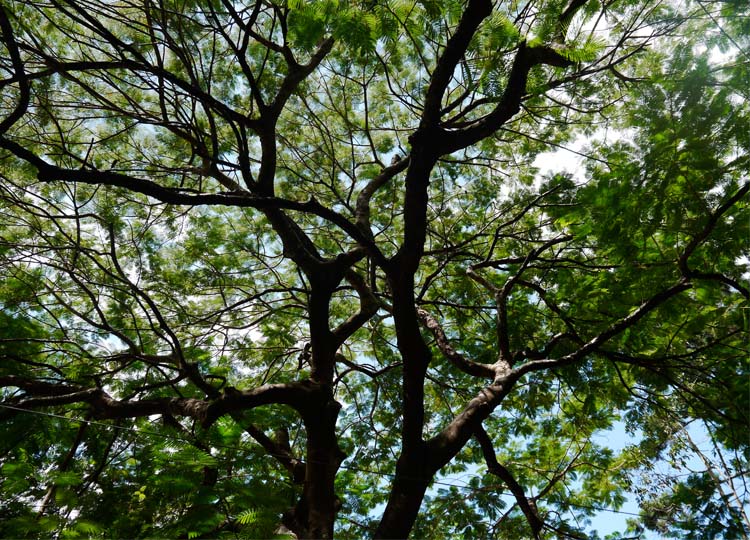
We rely on trees to cool and clean the air, and provide shade, fruit and flowers. Australians love our outdoor lifestyle and unique native species, yet when it comes to trees, our actions sometimes don’t match our words.

So it was a real surprise and delight for me to visit a place right in inner-Brisbane where trees are held in high esteem.

This is the Brisbane Quaker Arboretum.

Located on a half-hectare site in Kelvin Grove the property was purchased by the Quaker community in 1972.

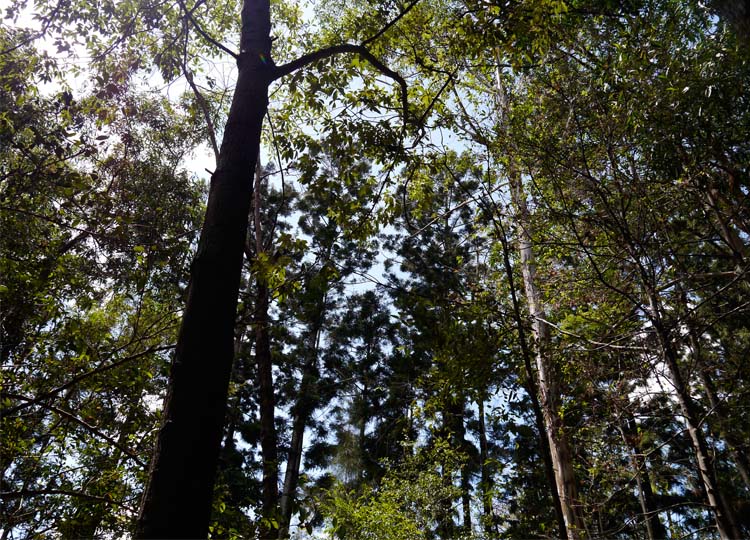
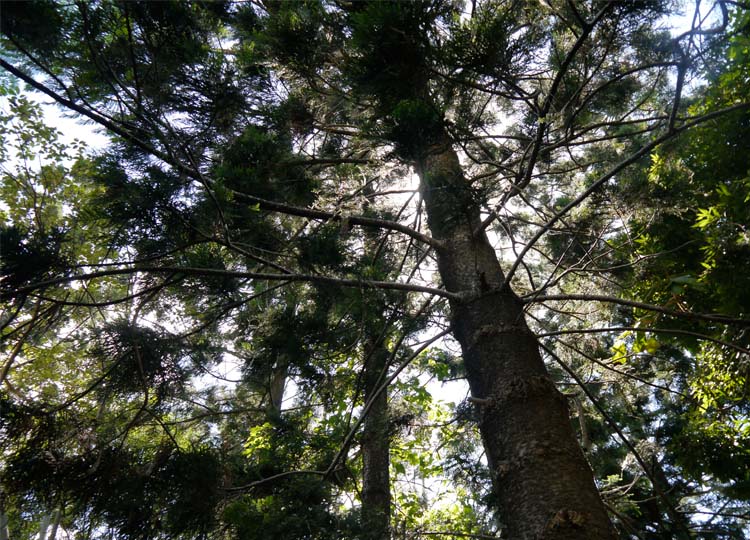
It had previously been owned by Storrie & Co., Joinery and Manufacturers, who had planted Hoop Pines (Araucaria cunninghamii) throughout the site.

Today 100 hoops remain, averaging in age from 80 to 90 years old.

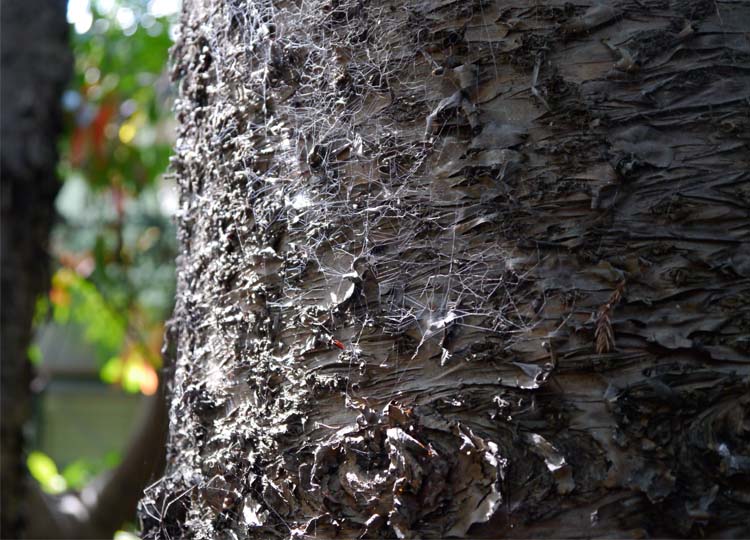
The Hoop Pine takes its name from the textured bark, which peels away in ribbons, or 'hoops'.

The Hoop Pine takes its name from the textured bark, which peels away in ribbons, or 'hoops'.

When the Quakers purchased the site it had become overgrown with weeds and introduced species. The task of cleaning it up began in the early 1990s.

Over many years the non-natives have been removed and the hillside site revegetated.

The revegetation work is ongoing.

The revegetation work is ongoing.

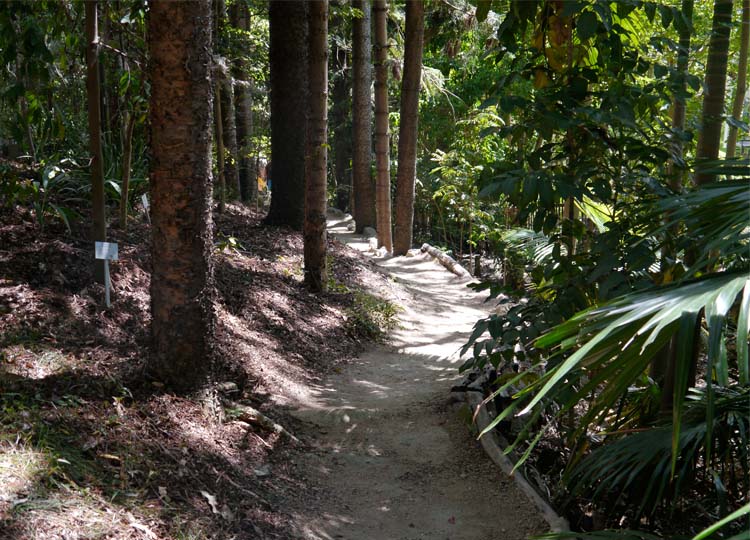
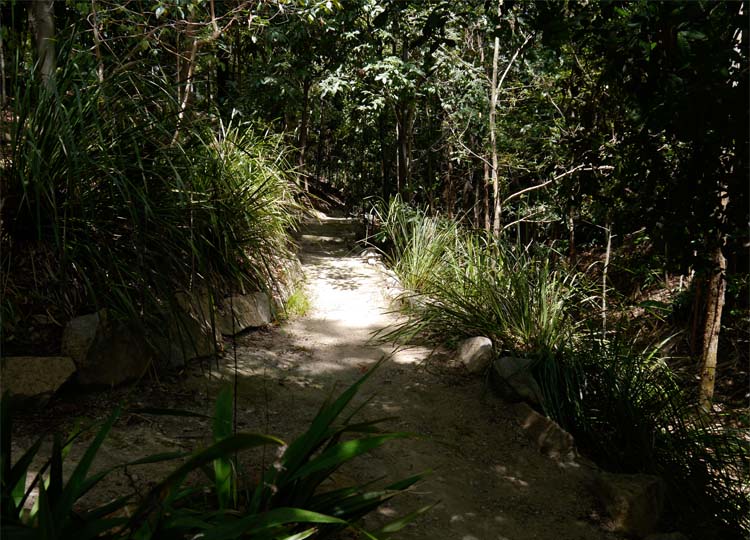
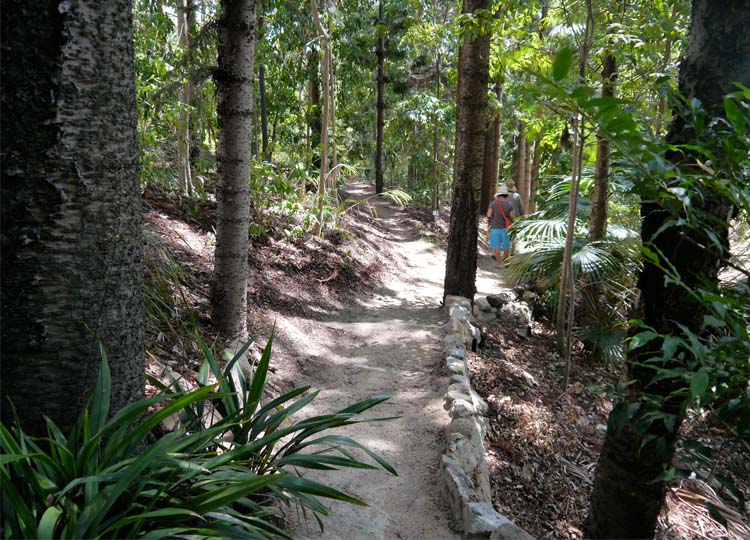
Tracks wind through, taking visitors up and down the slope, and offering numerous places to stop and sit.

The rockpool is near the bottom of the gully, surrounded by subtropical rainforest plantings.

The rockpool is near the bottom of the gully, surrounded by subtropical rainforest plantings.

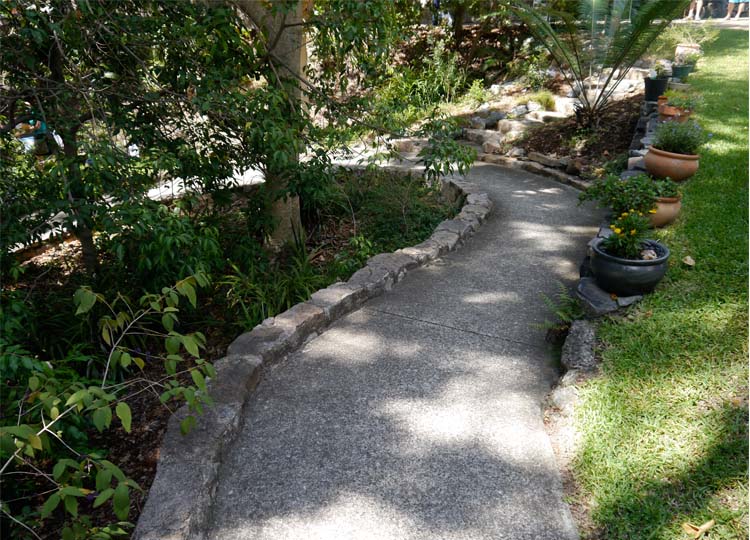
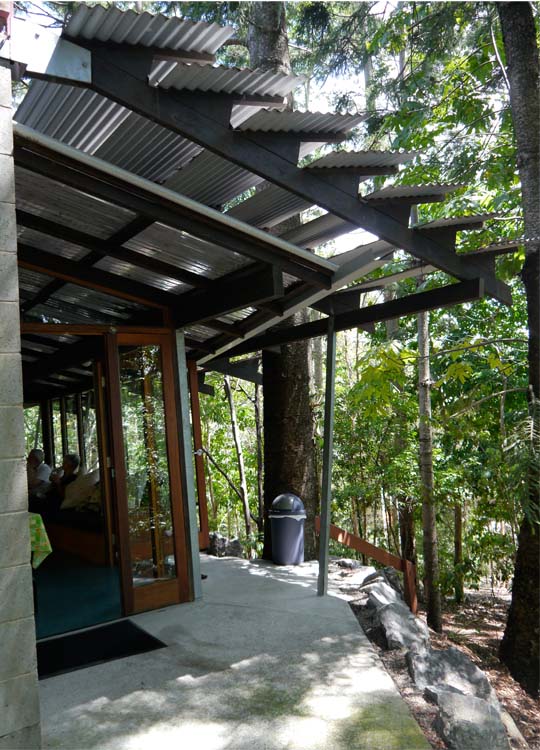
The paths themselves are edged in stone, a material that also appears as walls and steps throughout the arboretum.

After crossing this bridge the path leads up to a play area that includes a flying fox.

After crossing this bridge the path leads up to a play area that includes a flying fox.

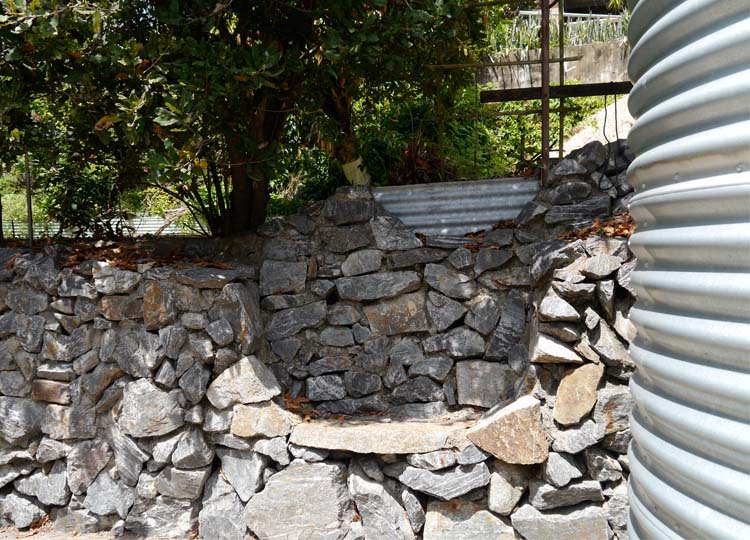
This dry stacked stone seat is integrated into a retaining wall near the front of the property.

This dry stacked stone seat is integrated into a retaining wall near the front of the property.

Amongst the planting are Lemon Scented Myrtles (Backhousia citriodora), a species named after Quaker James Backhouse, an English-born naturalist who travelled and worked throughout Australia between 1832 and 1838.

As I discovered, lemon scented myrtle can be used to make a bloody good cordial, a refreshment being savoured by many others enjoying their visit to the Quaker Arboretum as part of the Australian Open Gardens Scheme.

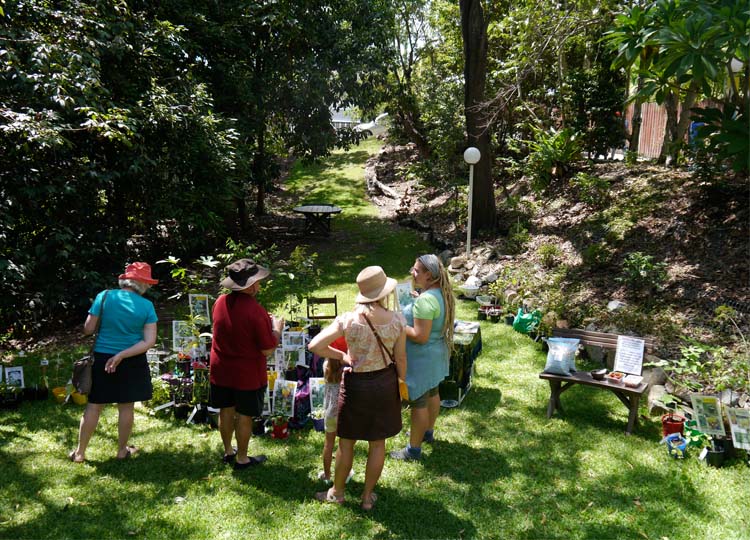
This is the third year the Arboretum has been open to the public, and a steady stream of visitors wandered the grounds, chatting to the people at the butterfly garden stand, and indulging in the holy grail of community events: homemade scones.

Learning about attracting butterflies to the garden.

Learning about attracting butterflies to the garden.

Scone HQ.

Scone HQ.

Barely three kilometers from the city centre, the Brisbane Quaker Arboretum is both a calming retreat and an inspirational example of how we can slowly, diligently and persistently care for our environment.

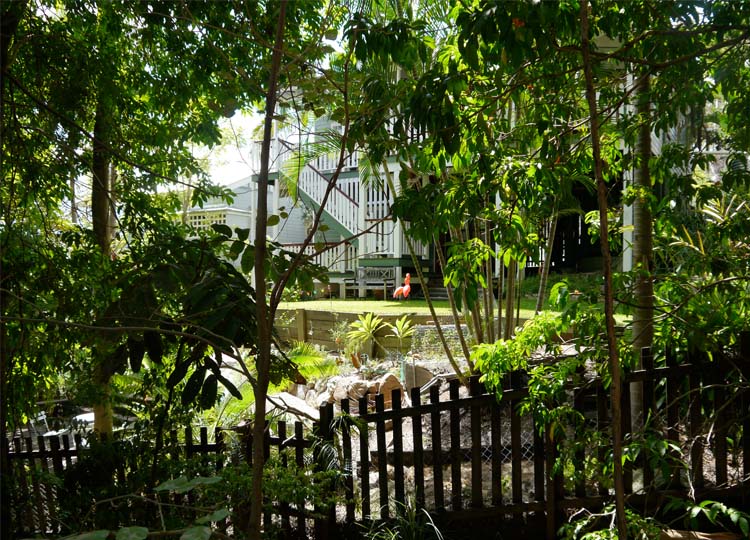
Brisbane's luckiest neighbours look onto the Arboretum from their house and garden.

Brisbane's luckiest neighbours look onto the Arboretum from their house and garden.

Solar panels on the carport roof. Water tanks collect rainwater from all buildings on site.

Solar panels on the carport roof. Water tanks collect rainwater from all buildings on site.

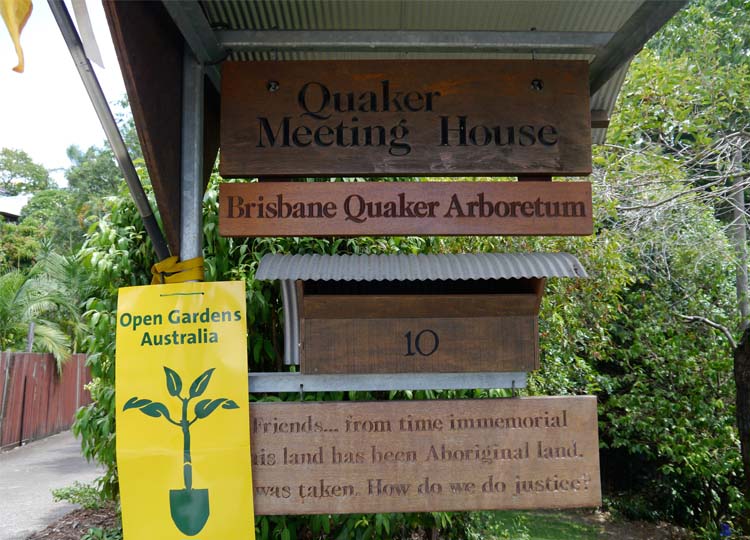
Marking the entry.

Marking the entry.

The inner-suburban street setting gives little clue to the oasis beyond.

The inner-suburban street setting gives little clue to the oasis beyond.

Now it’s over to you.

What did you think of the Brisbane Quaker Arboretum? Did you know that such a place existed, or were you as surprised as I was to discover this hidden treasure? Let me know your thoughts in the comments below.

In the spirit of sharing, if you know someone who might find this story interesting, please feel free to pass it along.

See you soon for more garden, landscape and design stories.


The Brisbane Quaker Arboretum is at 10 Hampson Street, Kelvin Grove. It is open to the public annually for one weekend as part of the Australian Open Garden Scheme.